
Marketing Data Governance Strategy For AI-powered Teams 2026
A robust marketing data governance strategy for AI-powered teams is no longer optional; it is a fundamental requirement for achieving sustainable growth and competitive advantage in today’s data-driven landscape. This strategy encompasses the policies, processes, and technologies that ensure the quality, security, and ethical use of marketing data, especially when leveraged by artificial intelligence. Effective data governance empowers AI models to deliver accurate insights, personalize customer experiences, and drive informed decision-making, while also mitigating risks associated with data privacy and compliance. It lays the groundwork for trust and efficiency across all marketing operations.
Defining Your Marketing Data Governance Framework for AI Success
To build a comprehensive marketing data governance framework for marketing analytics, organizations must establish clear roles, responsibilities, and policies for data collection, storage, usage, and disposal. This framework ensures that data used by AI is reliable, compliant, and ethically sourced, forming the bedrock of intelligent marketing decisions. Data governance defines the rules and processes that dictate how data is managed throughout its lifecycle.
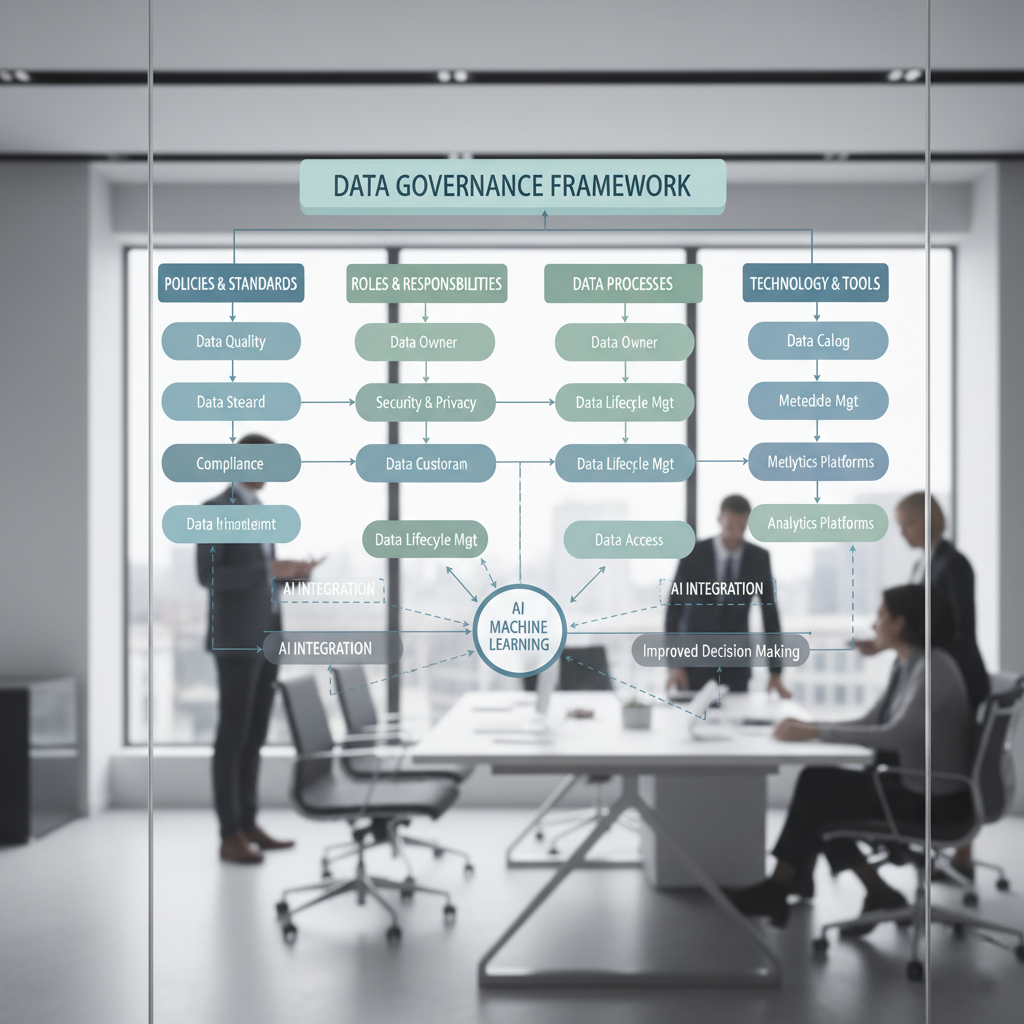
A successful framework begins with identifying key stakeholders across marketing, IT, legal, and data science teams. These individuals will collaborate to define data ownership, access controls, and data stewardship responsibilities. Establishing a data governance council can provide strategic oversight and ensure alignment with broader business objectives. Clear documentation of data dictionaries, metadata, and data lineage is also crucial. This transparency helps AI models understand data context and improves their interpretability. Furthermore, defining data classification standards allows for appropriate handling of sensitive information.
* Key Components of a Marketing Data Governance Framework:
* Data Stewardship: Assigning individuals or teams responsibility for specific data domains, ensuring data accuracy and compliance.
* Policy Enforcement: Implementing and regularly reviewing policies for data collection, usage, and retention.
* Metadata Management: Documenting data definitions, sources, and transformations to enhance data understanding.
* Data Quality Standards: Establishing metrics and processes to measure and improve data accuracy, completeness, and consistency.
* Access Controls: Defining who can access what data and under what conditions, crucial for security and privacy.
Building this framework also involves selecting the right technologies to support governance initiatives. This includes tools for data cataloging, master data management (MDM), and data quality monitoring. For AI-powered marketing, the framework must specifically address the unique demands of machine learning models, such as ensuring diverse and unbiased datasets to prevent algorithmic bias. It also needs to consider the velocity and volume of data generated by real-time marketing activities. Without a robust framework, AI initiatives risk operating on flawed data, leading to inaccurate predictions and ineffective campaigns.
* Steps to Establish a Governance Framework:
1. Assess Current State: Evaluate existing data practices, identify gaps, and understand data sources.
2. Define Vision & Goals: Clearly articulate what the data governance program aims to achieve for AI marketing.
3. Establish Roles & Responsibilities: Designate data owners, stewards, and a governance council.
4. Develop Policies & Standards: Create guidelines for data quality, security, privacy, and usage.
5. Implement Technology: Select and deploy tools for data cataloging, MDM, and quality.
6. Monitor & Iterate: Continuously review and refine the framework based on evolving needs and regulatory changes.
Establishing Data Ownership and Stewardship for Marketing Analytics
Effective data governance hinges on clearly defined data ownership and stewardship. Data owners are typically senior leaders responsible for the strategic value and compliance of specific data domains, such as customer data or campaign performance data. Data stewards, on the other hand, are operational roles responsible for the day-to-day management, quality, and integrity of the data within their assigned domain. This distinction ensures both strategic oversight and granular control over marketing data assets.
Developing Data Policies and Standards for AI-Driven Insights
Data policies and standards are the rules that govern how marketing data is collected, processed, stored, and used. For AI-driven insights, these policies must specifically address data bias, privacy, and ethical AI use. Standards dictate data formats, naming conventions, and quality thresholds, ensuring consistency and reliability across all datasets fed into AI models. Consistent policies prevent data silos and ensure a unified approach to data management.
Integrating Consent Management Platforms for Ethical Marketing Data
Consent management platform (CMP) integration for marketing data is paramount for ensuring compliance with global privacy regulations and building customer trust in an AI-powered marketing landscape. A CMP allows organizations to collect, manage, and respect user consent preferences for data collection and processing, especially critical for personalized AI initiatives. This integration ensures that all data fed into AI models for personalization or targeting has the necessary legal basis.
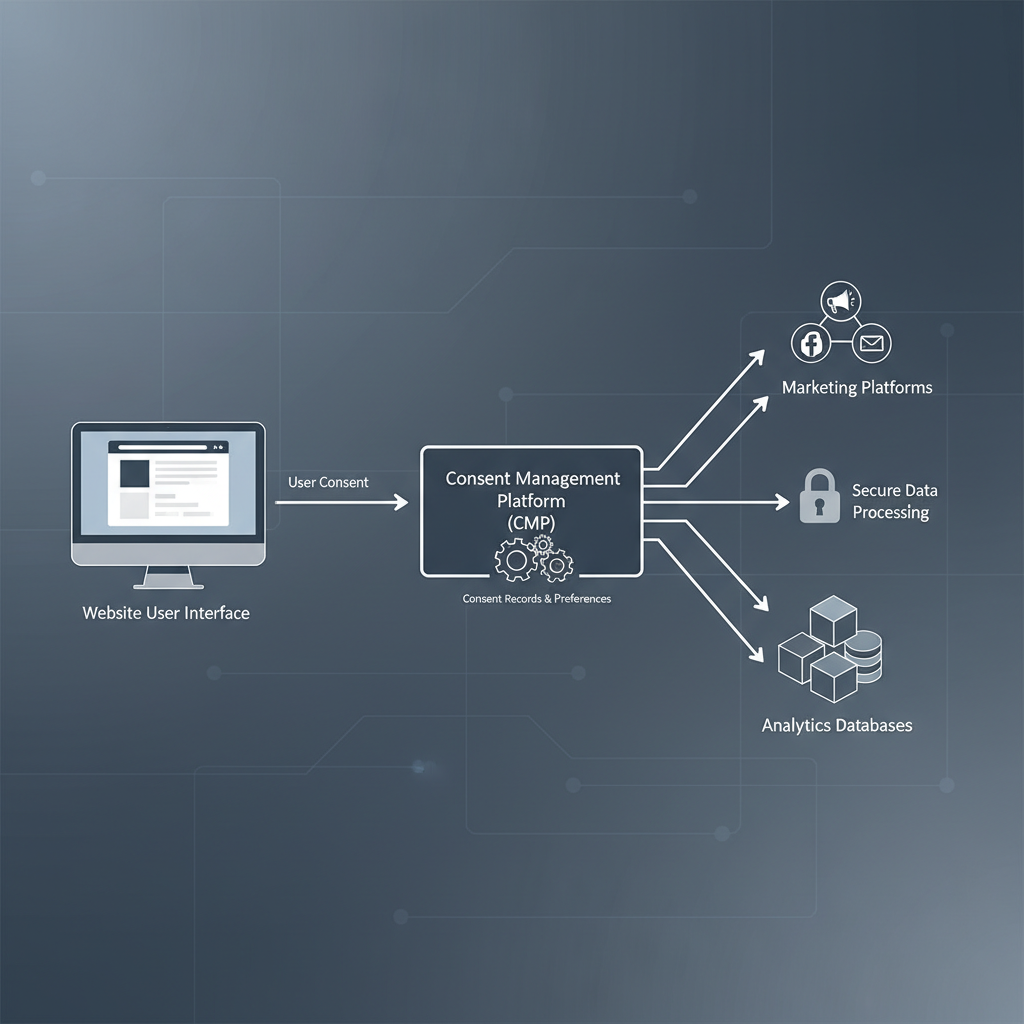
Modern privacy laws like GDPR, CCPA, and upcoming regulations mandate explicit consent for certain types of data processing. A CMP acts as the central hub for managing these consents, recording user choices, and communicating them to downstream marketing technologies, including customer data platforms (CDPs), analytics tools, and ad networks. Without proper CMP integration, AI-powered personalization efforts risk legal penalties and reputational damage. The platform provides a transparent mechanism for users to understand and control how their data is used.
* Benefits of CMP Integration for AI Marketing:
* Regulatory Compliance: Automatically adheres to global data privacy laws by managing user consent.
* Enhanced Trust: Builds customer confidence by offering transparency and control over their data.
* Reduced Risk: Minimizes the likelihood of fines and legal challenges associated with non-compliant data usage.
* Improved Data Quality: Ensures that only consented, ethically sourced data is used for AI training and personalization.
* Efficient Data Flow: Streamlines the process of communicating consent preferences across the marketing technology stack.
When integrating a CMP, it is crucial to map data flows meticulously. Understand which marketing systems collect and process personal data, and ensure the CMP can seamlessly transmit consent signals to these systems. This includes ensuring that AI models only access and process data for which explicit consent has been granted for the specific purpose. Regular audits of consent records and data processing activities are also essential to maintain compliance and adapt to evolving regulations. This proactive approach safeguards both the business and customer privacy.
Mapping Data Flows and Consent Requirements for AI Personalization
Mapping data flows involves identifying every touchpoint where customer data is collected, where it travels, and how it is processed within the marketing ecosystem. For AI personalization, this means understanding which data points (e.g., browsing history, purchase behavior, demographics) are used by AI models and ensuring that corresponding consent for these specific uses has been captured by the CMP. This detailed mapping ensures that personalization efforts are both effective and compliant.
Automating Consent Signals Across Marketing Technology Stack
Automating consent signals is vital for efficient and compliant AI-powered marketing. Once a user provides consent via the CMP, that signal must be automatically propagated to all relevant marketing tools, including CDPs, analytics platforms, and ad servers. This automation prevents the use of non-consented data by AI models, ensuring that personalized experiences are delivered only to eligible individuals. This seamless integration reduces manual effort and minimizes the risk of human error.
Implementing a Data Quality Strategy for AI Marketing Personalization Accuracy
A robust data quality strategy for AI marketing personalization accuracy is indispensable because AI models are only as good as the data they consume. Poor data quality, characterized by inaccuracies, inconsistencies, or incompleteness, can lead to flawed insights, ineffective personalization, and wasted marketing spend. Ensuring high-quality data directly translates to more precise AI predictions and more relevant customer experiences.
Data quality encompasses several dimensions, including accuracy, completeness, consistency, timeliness, and validity. For AI-driven personalization, the stakes are particularly high. If customer profiles are incomplete or contain outdated information, AI algorithms will struggle to segment audiences correctly or recommend relevant products. This can lead to irrelevant communications, customer frustration, and ultimately, churn. Therefore, a proactive approach to data quality is not just good practice; it’s a competitive necessity. Many organizations seek expert guidance to refine their data quality initiatives and enhance their Digital Marketing Services.
* Key Dimensions of Data Quality for AI Marketing:
* Accuracy: Data correctly reflects the real-world entity or event it represents (e.g., correct customer email address).
* Completeness: All required data fields are populated (e.g., full customer profile for segmentation).
* Consistency: Data values are uniform across different systems and over time (e.g., consistent product IDs).
* Timeliness: Data is up-to-date and available when needed for real-time personalization.
* Validity: Data conforms to defined formats, types, and ranges (e.g., email address follows a standard format).
Developing a data quality strategy involves several critical steps. First, define clear data quality standards and metrics relevant to AI marketing objectives. For instance, what percentage of customer profiles must be complete for effective personalization? Second, implement data validation rules at the point of entry to prevent bad data from entering the system. Third, regularly profile and audit existing data to identify and rectify quality issues. Data cleansing processes, often automated, can correct errors, remove duplicates, and standardize formats. Finally, establish continuous monitoring to track data quality over time and address new issues promptly. This iterative process ensures that AI models always have access to the best possible data.
| Data Quality Dimension | Impact on AI Personalization | Mitigation Strategy |
|---|---|---|
| Accuracy | Incorrect targeting, irrelevant recommendations | Data validation at source, regular data audits |
| Completeness | Limited segmentation, shallow personalization | Mandatory fields, data enrichment tools |
| Consistency | Conflicting profiles, fragmented customer view | Standardization rules, master data management (MDM) |
| Timeliness | Outdated offers, missed opportunities | Real-time data pipelines, frequent data refreshes |
| Validity | System errors, processing failures | Input masks, data type enforcement |
Establishing Data Validation and Cleansing Processes for AI Inputs
Data validation involves setting rules to ensure data conforms to expected formats and values at the point of collection or entry. Data cleansing, on the other hand, refers to the process of identifying and correcting errors, inconsistencies, and duplicates in existing datasets. For AI inputs, these processes are crucial to prevent “garbage in, garbage out,” ensuring that algorithms learn from clean, reliable information. Automated tools can significantly streamline these efforts.
Monitoring Data Quality Metrics for Continuous AI Optimization
Continuous monitoring of data quality metrics is essential for sustained AI optimization. Metrics might include the percentage of complete customer profiles, the error rate in email addresses, or the consistency of product categories. By tracking these metrics over time, marketing teams can identify trends, pinpoint data sources causing issues, and proactively address problems before they negatively impact AI model performance and personalization accuracy. This proactive approach ensures AI remains effective.
Developing a Marketing Data Architecture Strategy for a Unified Customer View
A well-designed marketing data architecture strategy for unified customer view is fundamental for AI-powered teams to gain a holistic understanding of their customers. This architecture integrates data from various sources into a cohesive and accessible format, enabling AI models to build comprehensive customer profiles and deliver truly personalized experiences. Without a unified view, AI efforts are fragmented and less effective.
The goal of a unified customer view is to break down data silos that often exist between different marketing channels, sales systems, and customer service platforms. This involves consolidating data from CRM, ERP, web analytics, social media, email marketing, and offline interactions into a central repository. Customer Data Platforms (CDPs) are increasingly central to this strategy, acting as intelligent hubs that ingest, unify, and activate customer data. By creating a single source of truth, AI models can access a complete historical record and real-time behavioral data for each customer.
* Components of a Unified Customer View Architecture:
* Data Ingestion Layer: Connectors and APIs to pull data from diverse sources (CRM, web, mobile, social).
* Data Transformation Layer: Processes to clean, standardize, and de-duplicate data.
* Customer Data Platform (CDP): A centralized platform for unifying customer profiles and managing consent.
* Data Lake/Warehouse: Long-term storage for raw and processed data, supporting advanced analytics and AI training.
* Activation Layer: Integrations with marketing automation, advertising platforms, and personalization engines.
When designing this architecture, prioritize scalability, flexibility, and security. The system must be able to handle increasing data volumes and velocity as the business grows and new data sources emerge. It should also be flexible enough to integrate new technologies and adapt to changing marketing strategies. Security protocols are paramount to protect sensitive customer information. Furthermore, the architecture must support real-time data processing for immediate personalization and dynamic campaign adjustments, which are critical capabilities for modern AI marketing. This strategic approach to data architecture ensures that AI has the rich, integrated data it needs to thrive.
Leveraging Customer Data Platforms (CDPs) for Data Unification
Customer Data Platforms (CDPs) are purpose-built to collect, unify, and activate customer data from all sources into a persistent, single customer view. For AI-powered marketing, CDPs provide the clean, comprehensive, and real-time data necessary for accurate segmentation, predictive modeling, and hyper-personalization. They act as the central nervous system for customer data, feeding consistent profiles to AI algorithms.
Designing Scalable and Secure Data Storage for AI-Powered Analytics
Designing scalable and secure data storage is critical for handling the vast amounts of data required by AI-powered analytics. This involves choosing appropriate technologies like data lakes or cloud data warehouses that can grow with data volume and support complex analytical queries. Security measures, including encryption, access controls, and regular audits, must be integrated at every layer to protect sensitive customer information and ensure compliance.
Ensuring Compliance and Future-Proofing Your AI Marketing Data Governance
Ensuring compliance and future-proofing your AI marketing data governance involves staying abreast of evolving data privacy regulations and proactively building adaptable systems and processes. The regulatory landscape is constantly shifting, and a robust governance strategy must anticipate future requirements to protect both the organization and its customers. This forward-thinking approach minimizes risk and maximizes long-term value.
Compliance extends beyond just privacy regulations; it also includes internal policies, industry standards, and ethical guidelines for AI use. For instance, ensuring AI models are transparent, explainable, and free from bias is becoming an increasingly important aspect of ethical data governance. Regular legal reviews and consultations are essential to ensure that data collection, processing, and AI application practices remain compliant. Establishing a clear process for data subject access requests (DSARs) and data deletion requests is also a critical component of compliance, demonstrating respect for individual data rights.
* Strategies for Future-Proofing Data Governance:
* Regular Regulatory Monitoring: Keep track of new and emerging data privacy laws globally.
* Privacy by Design: Integrate privacy considerations into the design of all new marketing systems and AI initiatives.
* Ethical AI Framework: Develop internal guidelines for the responsible and unbiased use of AI in marketing.
* Automated Compliance Tools: Leverage technology to automate consent management, data mapping, and audit trails.
* Cross-Functional Collaboration: Foster ongoing dialogue between legal, IT, marketing, and data science teams.
To truly future-proof your data governance, focus on building a culture of data responsibility within your organization. This means providing ongoing training for all employees on data privacy best practices and the ethical implications of AI. Implementing robust audit trails and logging mechanisms for all data access and processing activities provides accountability and transparency. Furthermore, regularly reviewing and updating your data governance policies and technologies ensures they remain relevant and effective in a rapidly changing environment. By adopting a proactive and adaptive stance, organizations can confidently navigate the complexities of AI marketing data governance.
Integrating Privacy by Design Principles into AI Marketing Workflows
Privacy by Design is an approach that embeds privacy considerations into the entire lifecycle of data, from initial collection to eventual disposal. For AI marketing workflows, this means designing systems and processes that prioritize data minimization, pseudonymization, and user control from the outset. This proactive integration ensures that privacy is not an afterthought but a core component of all AI-powered marketing initiatives.
Conducting Regular Data Governance Audits and Risk Assessments
Regular data governance audits and risk assessments are vital for identifying vulnerabilities and ensuring ongoing compliance. Audits review data handling practices against established policies and regulations, while risk assessments evaluate potential threats to data security and privacy. For AI-powered teams, these assessments should specifically examine the data used for AI training, model outputs, and potential biases, helping to mitigate risks before they escalate.
What is marketing data governance for AI-powered teams?
Marketing data governance for AI-powered teams refers to the comprehensive system of policies, processes, and technologies that manage the quality, security, and ethical use of marketing data, specifically when leveraged by artificial intelligence. It ensures data used by AI is reliable, compliant, and drives accurate insights while protecting privacy.
Why is data quality crucial for AI marketing personalization?
Data quality is crucial for AI marketing personalization because AI models rely entirely on the data they are trained on. Inaccurate, incomplete, or inconsistent data leads to flawed predictions, irrelevant recommendations, and ineffective personalization, ultimately wasting resources and frustrating customers. High-quality data is essential for precise AI outputs.
How does a Consent Management Platform (CMP) help with AI marketing?
A CMP helps with AI marketing by collecting, managing, and respecting user consent preferences for data processing. It ensures that AI models only use data for personalization and targeting for which explicit consent has been granted, thereby ensuring compliance with privacy regulations like GDPR and CCPA and building customer trust.
What role does data architecture play in achieving a unified customer view for AI?
Data architecture plays a critical role by integrating customer data from various sources (CRM, web, social, etc.) into a cohesive format. This unified view, often facilitated by a Customer Data Platform (CDP), provides AI models with a complete and consistent understanding of each customer, enabling more accurate segmentation and personalized experiences.
What are the key challenges in implementing marketing data governance for AI?
Key challenges include managing diverse data sources, ensuring data quality across fragmented systems, navigating complex and evolving privacy regulations, preventing algorithmic bias in AI models, and fostering cross-functional collaboration between marketing, IT, legal, and data science teams. Overcoming these requires a strategic and integrated approach.
How can organizations future-proof their AI marketing data governance?
Organizations can future-proof their AI marketing data governance by continuously monitoring regulatory changes, integrating privacy by design principles into all new initiatives, developing an ethical AI framework, leveraging automated compliance tools, and fostering a culture of data responsibility through ongoing training and cross-functional collaboration.
Building a robust marketing data governance strategy for AI-powered teams is a continuous journey, not a one-time project. It demands a proactive, integrated approach that places data quality, privacy, and ethical considerations at its core. By meticulously defining frameworks, integrating consent management, prioritizing data quality, and architecting for a unified customer view, organizations can unlock the full potential of AI in marketing. This strategic investment ensures that AI models operate on reliable, compliant, and ethical data, driving superior personalization and measurable business outcomes.
* Key Takeaways for AI Marketing Data Governance:
* Establish a clear data governance framework with defined roles and responsibilities.
* Integrate Consent Management Platforms (CMPs) for ethical data collection and usage.
* Prioritize a comprehensive data quality strategy for accurate AI personalization.
* Develop a unified marketing data architecture, often leveraging CDPs, for a holistic customer view.
* Ensure ongoing compliance with privacy regulations and build a culture of data responsibility.
* Continuously monitor, audit, and adapt your governance strategy to future challenges.
Embrace these principles to empower your AI initiatives, build customer trust, and secure a competitive edge in the evolving digital landscape.