

First-party Conversion Signals Meta Ads Guide
Understanding first-party conversion signals Meta ads is paramount for advertisers navigating today’s evolving digital landscape. These signals, collected directly from your website or app, provide a reliable and privacy-compliant way to measure and optimize your Meta ad campaigns. By embracing first-party data, businesses can overcome challenges posed by third-party cookie deprecation and privacy regulations, ensuring more accurate attribution, improved audience targeting, and ultimately, a higher return on ad spend. This article will explore the critical role of first-party signals, delve into advanced tracking methods like server-side tracking and Meta Advantage Plus, and outline strategies for effective implementation.
Why are First-Party Conversion Signals Crucial for Meta Ads Today?
First-party conversion signals are essential for accurate attribution and optimization in a privacy-first world, providing direct insights into customer behavior on your owned properties. These signals are collected directly from your users with their consent, offering a more reliable and privacy-compliant data source compared to traditional third-party methods. The shift towards first-party data has become non-negotiable for effective ad measurement. For more insights, check out our guide on Digital Marketing Services.

The Impact of Privacy Changes on Ad Performance
Recent privacy updates, such as Apple’s App Tracking Transparency (ATT) framework and the gradual deprecation of third-party cookies, have significantly impacted how advertisers track and attribute conversions. These changes have limited the ability of traditional client-side tracking pixels to capture complete user journeys, leading to underreported conversions and less effective ad optimization. Without robust first-party signals, Meta’s algorithms struggle to accurately understand which ads drive desired actions, hindering campaign performance. This environment necessitates a proactive approach to data collection.
Reclaiming Data Accuracy with First-Party Signals
By prioritizing first-party data, businesses can reclaim accuracy in their conversion tracking. First-party signals are more resilient to browser and device restrictions because they originate from your own server or directly from your website visitors with explicit consent. This direct relationship ensures a higher quality and more comprehensive dataset, allowing Meta’s advertising platform to make better optimization decisions. Implementing these signals helps to bridge the data gaps created by privacy changes, providing a clearer picture of campaign effectiveness. This improved data quality directly translates into more efficient ad spend and better campaign outcomes.
Implementing Meta Advantage Plus Conversion Tracking for Enhanced Performance
Meta Advantage Plus conversion tracking leverages Meta’s advanced AI capabilities and your first-party data to optimize campaigns for better performance, simplifying complex campaign management. This suite of tools, particularly Advantage+ Shopping Campaigns, is designed to automate and enhance various aspects of your advertising, from audience targeting to creative delivery, all while relying heavily on the quality of your conversion signals. Effective implementation ensures that Meta’s systems have the rich data they need to drive superior results.
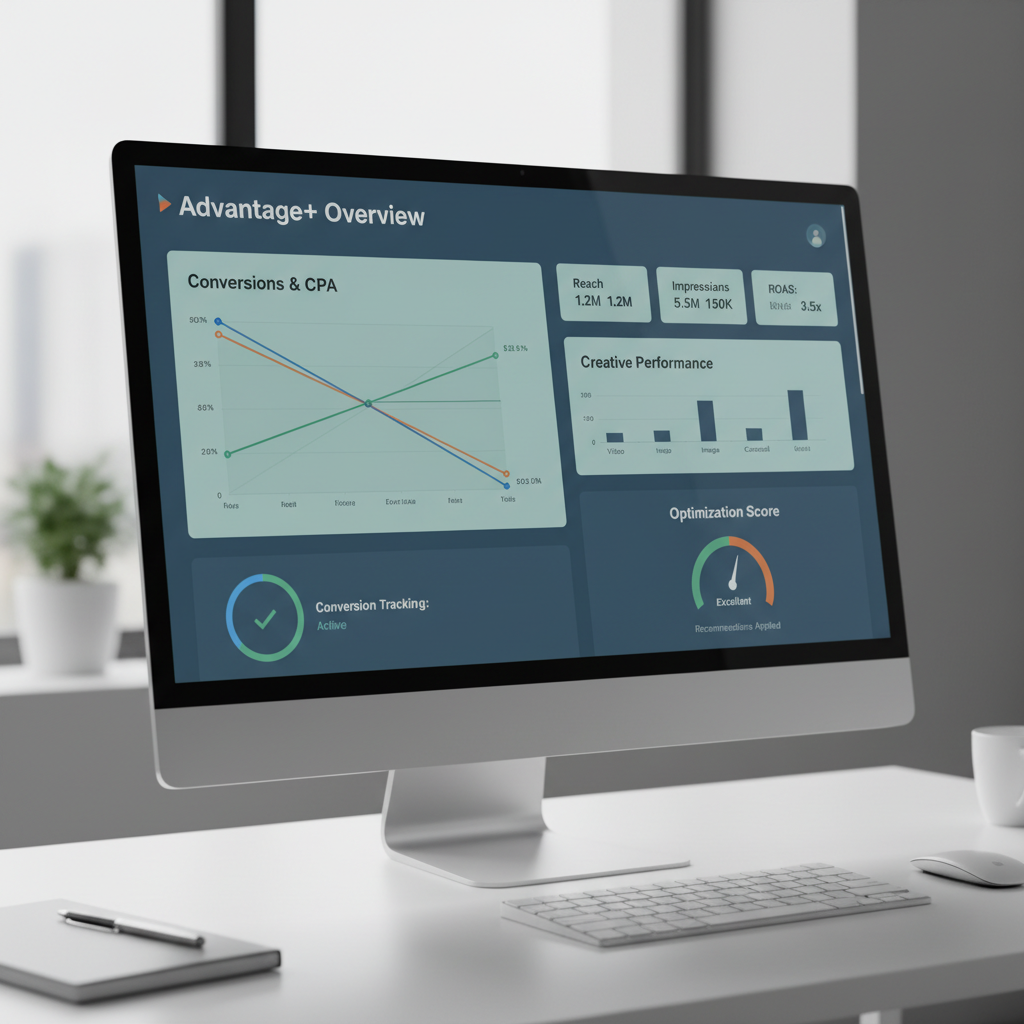
Understanding Advantage+ Shopping Campaigns and Data Flow
Advantage+ Shopping Campaigns are a prime example of how Meta is pushing for automation and AI-driven optimization. These campaigns streamline the ad creation process by consolidating multiple campaign objectives into a single setup, allowing Meta’s AI to dynamically allocate budget and optimize for conversions across a broad audience. The success of Advantage+ relies heavily on a consistent flow of high-quality first-party conversion signals. When your website sends accurate purchase, add-to-cart, and view content events, Advantage+ can learn faster and optimize more effectively, leading to improved ROAS. It’s a powerful tool that thrives on precise data inputs.
Setting Up and Optimizing Advantage Plus Tracking
To maximize the benefits of Meta Advantage Plus, a robust tracking setup is crucial. This involves ensuring your Meta Pixel is correctly installed and firing all standard events, but more importantly, complementing it with server-side tracking (Conversions API) to send first-party data directly to Meta. This dual approach provides redundancy and enhances data matching. When setting up Advantage+ campaigns, pay close attention to your conversion goals and ensure they align with the first-party signals you are sending. Regular monitoring of your Event Manager diagnostics is vital to identify and resolve any data quality issues. For businesses seeking comprehensive support in navigating these advanced setups, exploring specialized Digital Marketing Services can provide expert guidance and implementation.
Mastering Server-Side Tracking Meta Ads: The Power of CAPI
Server-side tracking Meta ads, primarily through the Conversions API (CAPI), sends data directly from your server to Meta, significantly improving data reliability and accuracy. This method bypasses many of the browser and device restrictions that impact traditional client-side pixel tracking, ensuring that more conversion events are captured and attributed correctly. Implementing CAPI is a strategic move for advertisers looking to maintain robust measurement in a privacy-centric environment. For more insights, check out our guide on Digital Marketing Services.
What is Meta Conversions API (CAPI) and How Does It Work?
Meta Conversions API (CAPI) is a tool that allows advertisers to send web events, app events, and offline conversions directly from their server to Meta’s advertising platform. Unlike the Meta Pixel, which relies on browser-side JavaScript, CAPI operates server-to-server. When a user performs an action on your website (e.g., a purchase), your server sends that event data directly to Meta’s API. This direct connection offers several advantages, including improved data matching, reduced impact from ad blockers, and greater control over the data shared. CAPI is a cornerstone of a resilient first-party data strategy.
Benefits of Server-Side Tracking Over Pixel-Only
Server-side tracking, specifically through CAPI, offers distinct advantages over relying solely on the Meta Pixel:
* Improved Data Reliability: CAPI is less susceptible to browser limitations, ad blockers, and network issues, leading to more complete and accurate data capture.
* Enhanced Data Matching: By sending more comprehensive customer information (hashed for privacy), CAPI improves Meta’s ability to match events to specific users, enhancing attribution.
* Greater Control: Advertisers have more control over what data is sent and when, allowing for better compliance with privacy regulations.
* Future-Proofing: As privacy regulations evolve and third-party cookies diminish, CAPI provides a more sustainable tracking solution.
Here’s a comparison of client-side (Pixel) vs. server-side (CAPI) tracking:
| Feature | Client-Side Tracking (Meta Pixel) | Server-Side Tracking (CAPI) |
|---|---|---|
| Data Source | Browser (JavaScript) | Your Server |
| Reliability | Impacted by ad blockers, browser restrictions | More resilient, less impacted by browser limitations |
| Data Matching | Relies on browser cookies | Enhanced with hashed customer information |
| Implementation | Easier to set up for basic events | Requires more technical expertise or integrations |
| Privacy Control | Less direct control over data flow | Greater control over data shared |
Developing a Robust CAPI Setup Strategy for Accurate Data Collection
A strong CAPI setup strategy involves meticulous planning of data points, choosing the most suitable implementation method, and continuous validation to ensure optimal data flow. This proactive approach is vital for maximizing the accuracy and effectiveness of your Meta ad campaigns. Without a clear strategy, CAPI implementation can be complex and may not yield the desired data quality improvements. For more insights, check out our guide on Digital Marketing Services.
Key Considerations for Your CAPI Implementation
Before diving into implementation, several key considerations will shape your CAPI strategy:
* Data Events: Identify all critical conversion events you want to track (e.g., purchases, leads, add-to-carts, page views). Map these events to Meta’s standard events or create custom ones.
* Customer Information: Determine what customer information (e.g., email, phone number, name, IP address – always hashed before sending) you can consistently collect and send with each event to improve data matching.
* Implementation Method: Choose the best method for your technical capabilities:
1. Direct Integration: For developers, sending events directly from your server using Meta’s API.
2. Partner Integrations: Utilizing existing integrations with platforms like Shopify, WooCommerce, or Segment.
3. Conversions API Gateway: A managed service that simplifies server-side event forwarding.
4. Tag Management Systems (e.g., Google Tag Manager Server-Side): A flexible option for managing server-side tags.
* Deduplication: Plan how you will deduplicate events sent via both the Meta Pixel and CAPI to prevent double-counting conversions. This is crucial for accurate reporting.
Step-by-Step CAPI Integration Methods
Implementing CAPI can be approached through various methods, each with its own technical requirements. Here’s a general outline of common integration paths:
1. Choose Your Method: Select the CAPI integration method that best fits your technical resources and existing tech stack (e.g., direct API, partner integration, server-side GTM).
2. Identify Event Data: Map out the specific conversion events and associated customer data parameters you intend to send to Meta. Ensure data is properly formatted and hashed where necessary.
3. Implement Event Sending:
* Direct API: Write code on your server to send HTTP POST requests to Meta’s Conversions API endpoint for each event.
* Partner Integration: Follow the setup instructions provided by your e-commerce platform or CRM (e.g., Shopify’s built-in CAPI integration).
* Server-Side GTM: Configure a server-side Google Tag Manager container to receive data from your website and forward it to Meta via a CAPI tag.
4. Set Up Deduplication: Implement event_id parameters to ensure that events sent via both the Meta Pixel and CAPI are correctly deduplicated in Meta’s Event Manager.
5. Test and Validate: Use Meta’s Event Manager and the Test Events tool to verify that events are being received correctly, deduplicated, and matched effectively.
6. Monitor and Refine: Continuously monitor the quality of your CAPI data in Event Manager and make adjustments as needed to optimize performance.
Leveraging First-Party Data in Paid Social Campaigns for Better ROI
Utilizing first-party data paid social campaigns allows for highly targeted audiences and personalized ad experiences, leading to significantly better return on investment. This approach moves beyond broad demographic targeting by focusing on individuals who have already interacted with your brand, signaling a higher intent. The power of first-party data lies in its relevance and accuracy, enabling advertisers to speak directly to their most valuable prospects.
Building Custom Audiences with Your First-Party Data
One of the most impactful ways to leverage first-party data is by creating Custom Audiences on Meta. You can upload customer lists (e.g., email addresses, phone numbers) directly from your CRM, website sign-ups, or purchase history. Meta then matches these identifiers to its user base, creating highly precise audiences for targeting. These audiences can include:
* Website Visitors: People who have visited specific pages or taken certain actions on your site.
* Customer Lists: Existing customers for retention or upselling campaigns.
* Lead Lists: Prospects who have shown interest but haven’t converted yet.
* App Users: Individuals who have interacted with your mobile application.
By targeting these warm audiences, you can significantly improve conversion rates and reduce customer acquisition costs.
Personalizing Ad Creative and Messaging with First-Party Insights
First-party data doesn’t just inform who you target; it also dictates how you communicate with them. Insights derived from past interactions allow for deep personalization of ad creative and messaging. For instance, if a user viewed a specific product but didn’t purchase, your ad can feature that exact product with a special offer. If they’re a repeat customer, you might show them complementary products or loyalty program benefits. This level of personalization resonates more strongly with users, making your ads feel less intrusive and more helpful. The goal is to create a seamless and relevant experience that guides the user further down the conversion funnel.
Here are some key benefits of using first-party data in paid social:
* Higher Relevance: Ads are shown to users who have a demonstrated interest in your brand or products.
* Improved Conversion Rates: Targeted messaging leads to more effective calls to action.
* Reduced Ad Spend Waste: Campaigns are more efficient, reaching the right people at the right time.
* Stronger Customer Relationships: Personalized experiences build trust and loyalty.
* Better Attribution: More accurate tracking of conversions back to specific ad interactions.
Overcoming Challenges in First-Party Data Implementation for Meta Ads
Common challenges in implementing first-party data for Meta ads include ensuring data quality, navigating technical complexities, and maintaining strict compliance with evolving privacy regulations. Addressing these hurdles proactively is crucial for building a sustainable and effective tracking infrastructure. Without careful planning and ongoing management, the benefits of first-party data can be undermined.
Addressing Data Matching and Deduplication Issues
One of the primary challenges in first-party data implementation is ensuring accurate data matching and effective deduplication. When sending data from both the Meta Pixel (client-side) and CAPI (server-side), it’s imperative to prevent double-counting conversions. This requires consistent use of the `event_id` parameter across both data sources for each unique event. If the `event_id` is missing or inconsistent, Meta’s system cannot accurately deduplicate, leading to inflated conversion numbers and skewed optimization. Furthermore, the quality of customer information sent (e.g., hashed email addresses, phone numbers) directly impacts Meta’s ability to match events to user profiles. Incomplete or poorly formatted data can reduce match rates, diminishing the effectiveness of your first-party signals. Regular auditing of your Event Manager diagnostics is essential to identify and rectify any data quality or deduplication issues promptly.
Maintaining Data Privacy and Compliance
As the digital landscape becomes increasingly privacy-focused, maintaining data privacy and compliance is paramount when implementing first-party conversion signals. Advertisers must ensure they have proper user consent mechanisms in place, such as clear cookie banners and privacy policies that explicitly state how data is collected and used. When sending data via CAPI, it’s crucial to hash personally identifiable information (PII) before it leaves your server. This anonymizes the data while still allowing Meta to match it to user profiles. Adhering to regulations like GDPR, CCPA, and other regional privacy laws is not just a legal requirement but also builds trust with your audience. Businesses must stay informed about evolving privacy standards and regularly review their data collection and sharing practices to remain compliant and ethical. This continuous effort ensures that your first-party data strategy is both effective and responsible.
What exactly are first-party conversion signals for Meta ads?
First-party conversion signals are data points collected directly from your website or app about user actions, such as purchases, sign-ups, or page views. This data is owned by you and is sent directly to Meta, providing a reliable and privacy-compliant way to measure ad performance. It contrasts with third-party data, which is collected by external entities.
How does Meta Advantage Plus conversion tracking differ from standard tracking?
Meta Advantage Plus conversion tracking, particularly through Advantage+ Shopping Campaigns, leverages Meta’s AI to automate and optimize campaigns more extensively. It relies heavily on high-quality first-party signals to make smarter decisions about audience targeting and budget allocation, aiming for higher efficiency and better ROAS compared to traditional manual campaign setups.
Why is server-side tracking Meta ads becoming so important?
Server-side tracking, primarily via the Conversions API (CAPI), is crucial because it bypasses many limitations of client-side tracking, such as ad blockers and browser privacy restrictions. This leads to more reliable and accurate data capture, improved attribution, and greater control over data shared, ensuring better optimization for Meta ad campaigns.
What is a CAPI setup strategy?
A CAPI setup strategy is a plan for implementing Meta’s Conversions API. It involves identifying key conversion events, deciding which customer data to send (hashed for privacy), choosing an integration method (e.g., direct API, partner integration, server-side GTM), and establishing a robust deduplication process to prevent double-counting conversions.
How can first-party data paid social campaigns improve ROI?
First-party data in paid social campaigns improves ROI by enabling highly targeted custom audiences based on actual customer interactions. This allows for personalized ad creative and messaging, which resonates more effectively with users, leading to higher conversion rates, reduced ad waste, and a stronger connection with your most valuable prospects.
What are the main benefits of using first-party data for Meta ads?
The main benefits include increased data accuracy and reliability, improved ad attribution, enhanced audience targeting capabilities, better campaign optimization through Meta’s AI, and greater resilience against evolving privacy regulations. It helps advertisers make more informed decisions and achieve better performance in a privacy-centric advertising landscape.
Is it necessary to use both Meta Pixel and CAPI?
Yes, it is highly recommended to use both the Meta Pixel and CAPI in tandem. The Pixel provides a foundational client-side layer, while CAPI offers a more robust, server-side backup. This dual approach ensures maximum data capture and redundancy, improving overall data quality and matching for Meta’s optimization algorithms, especially when deduplication is correctly implemented.
The shift towards first-party conversion signals represents a pivotal moment for Meta advertisers. Embracing these direct data streams is no longer optional but a fundamental requirement for sustained success in a privacy-aware digital ecosystem. By implementing robust strategies like server-side tracking through CAPI and leveraging the power of Meta Advantage Plus, businesses can regain control over their data, enhance attribution accuracy, and unlock superior campaign performance.
Key takeaways for your Meta ads strategy:
* Prioritize collecting and utilizing first-party data to counter privacy changes.
* Implement Meta Conversions API (CAPI) for reliable, server-side tracking.
* Leverage Meta Advantage Plus campaigns with strong first-party signals for AI-driven optimization.
* Build precise Custom Audiences using your first-party data for highly targeted campaigns.
* Continuously monitor and validate your tracking setup to ensure data quality and compliance.
By focusing on these areas, advertisers can build a resilient and effective measurement framework that drives real business growth on Meta’s platforms.