
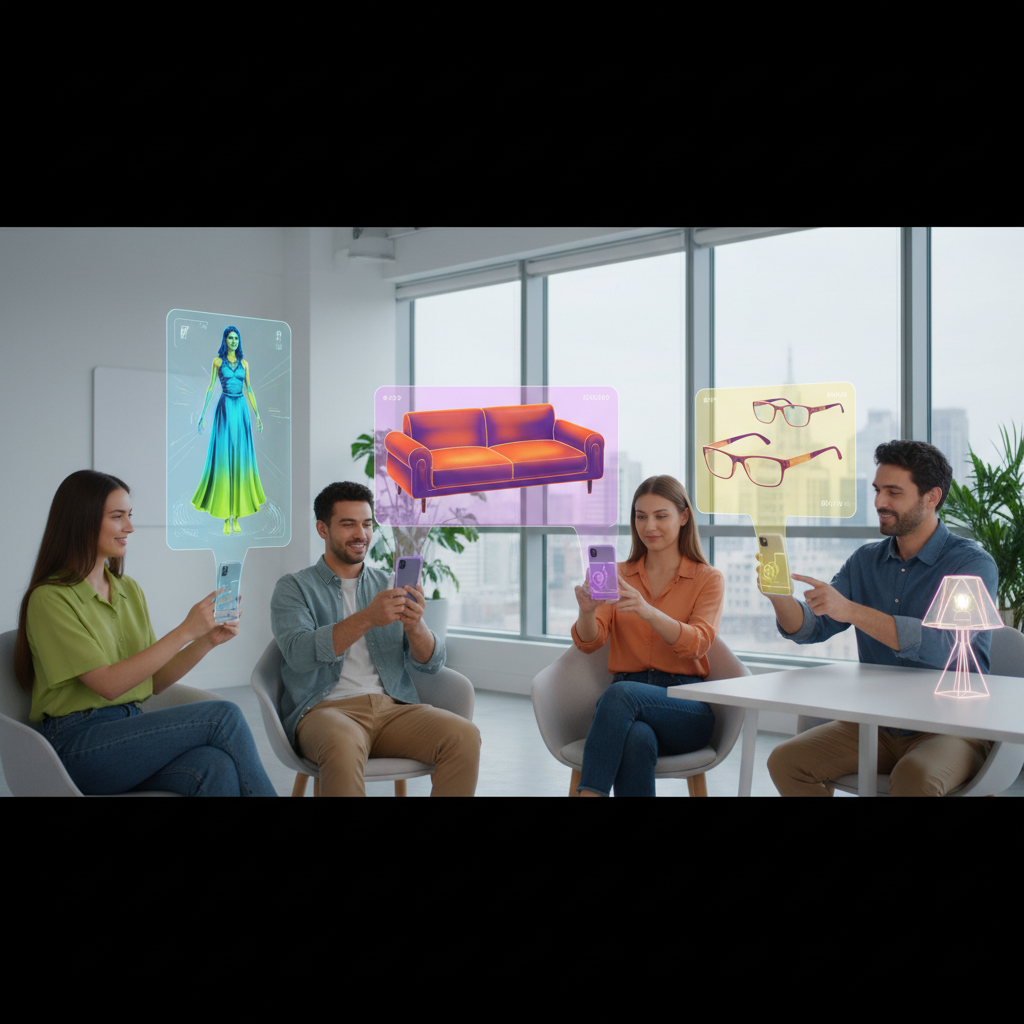
Augmented Reality Marketing Strategy For Ecommerce Product Try-on
An augmented reality marketing strategy for ecommerce product try-on is fundamentally transforming how consumers interact with products online, offering immersive virtual experiences that bridge the gap between digital browsing and physical interaction. This innovative approach allows customers to visualize products in their own environment or virtually try them on, significantly enhancing the online shopping journey. By integrating AR capabilities, e-commerce businesses can create more engaging, informative, and personalized experiences, leading to improved customer satisfaction and stronger brand loyalty. This article explores the core components and benefits of leveraging AR for product try-on in the competitive e-commerce landscape.
Why Implement AR Product Visualization in Your E-commerce Store?
Implementing AR product visualization in your e-commerce store directly addresses key online shopping pain points, such as uncertainty about product fit, size, and appearance in a real-world context. This technology allows customers to virtually place products in their homes or try items on themselves, creating a more confident purchasing decision. It significantly reduces return rates and boosts customer engagement by offering an interactive and memorable shopping experience.
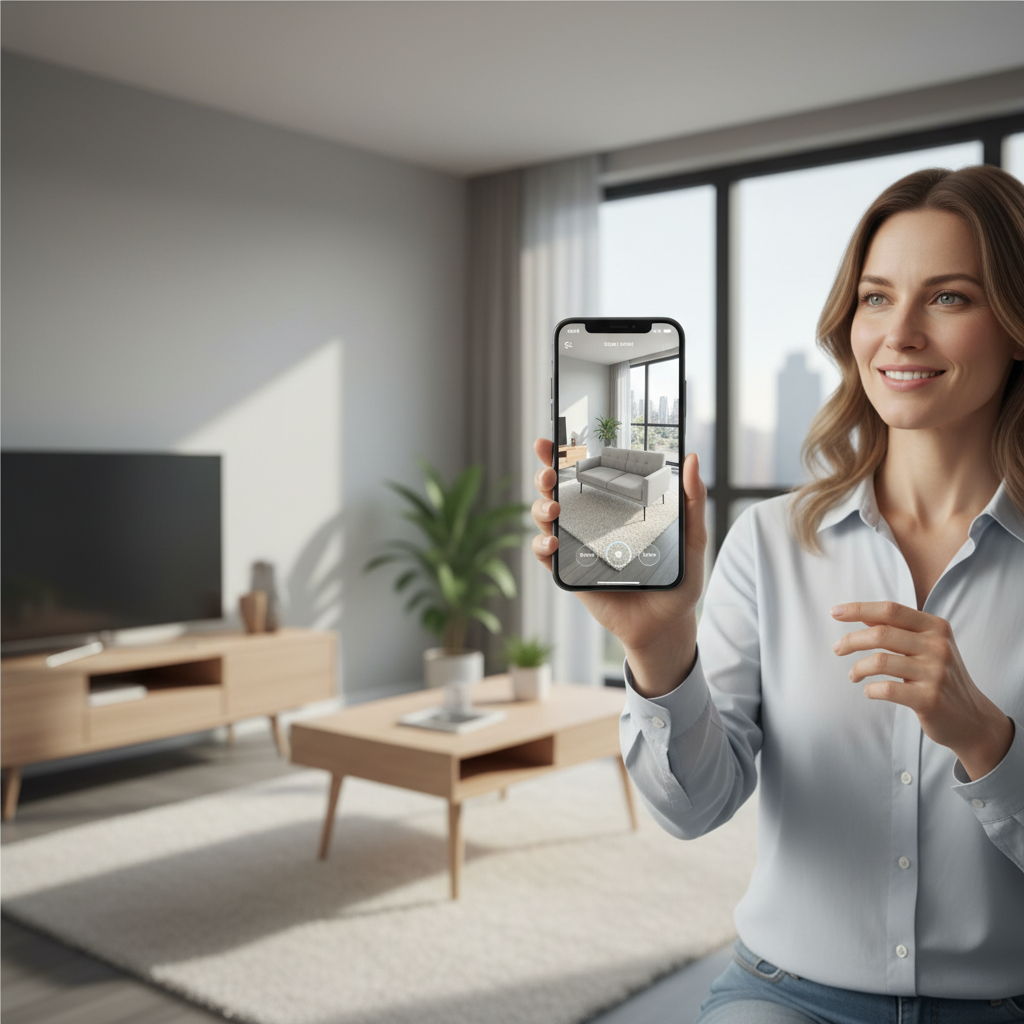
Augmented reality product visualization refers to the use of AR technology to overlay digital product models onto a user’s real-world environment, viewed through a device camera. This capability is crucial for categories like furniture, home decor, and even automotive, where scale and aesthetic integration are paramount. For instance, a shopper can see if a new dining table fits their space or if a specific rug complements their existing decor. This direct visualization eliminates guesswork, leading to higher satisfaction.
How to Add AR Product Visualization to E-commerce Store Platforms
Adding AR product visualization to an e-commerce store typically involves several steps, ranging from 3D model creation to platform integration. First, businesses need high-quality 3D models of their products, which can be created from scratch or by scanning existing items. These models must be optimized for AR, ensuring they are lightweight yet detailed. Next, companies can utilize AR SDKs (Software Development Kits) or third-party AR platforms that offer ready-made solutions for embedding AR experiences.
Common integration methods include:
* API Integration: Connecting the AR platform’s API with the e-commerce store’s backend.
* Plugin/Extension: Using pre-built plugins compatible with popular e-commerce platforms like Shopify, Magento, or WooCommerce.
* Custom Development: Building a bespoke AR solution for unique requirements, offering maximum flexibility.
Benefits of AR for Reducing Returns and Enhancing Customer Confidence
The ability for customers to “try before they buy” virtually is a powerful tool for mitigating common reasons for product returns. When shoppers can accurately assess how an item looks, fits, or functions in their own environment, they are less likely to be disappointed upon delivery. This is particularly true for items where color, texture, or size perception can be challenging online. For example, a shopper trying on virtual glasses can see how frames sit on their face, reducing the chance of ordering an unsuitable style. This enhanced confidence translates directly into fewer returns, saving businesses significant costs associated with logistics, restocking, and customer service. Moreover, a positive AR experience can foster greater trust in the brand, encouraging repeat purchases and positive word-of-mouth.
The Impact of AR Try-Before-You-Buy on Fashion E-commerce Conversion Rates
AR try-before-you-buy significantly boosts conversion rates for fashion brands by providing an interactive and personalized fitting room experience that overcomes the traditional limitations of online apparel shopping. This technology allows customers to virtually try on clothing, accessories, or makeup, helping them visualize how items look on their own body or face. This reduces purchase hesitation and increases buyer confidence. For more insights, check out our guide on Digital Marketing Services.

AR try-before-you-buy in fashion e-commerce enables consumers to use their device’s camera to superimpose virtual clothing, jewelry, or makeup onto their live image. This real-time visualization helps answer critical questions about fit, style, and compatibility with their personal aesthetic. For instance, a customer can see how a specific dress color complements their skin tone or if a pair of earrings suits their face shape, all without needing to physically possess the item. This immersive interaction makes the shopping experience more engaging and effective.
AR Try-Before-You-Buy Conversion Rate Impact for Fashion Brands
The direct impact of AR try-before-you-buy on conversion rates for fashion brands is substantial. Studies and early adopters have consistently reported increases in conversion rates, often ranging from 10% to 30% or even higher. This uplift is attributed to several factors:
* Reduced Uncertainty: Shoppers feel more confident in their choices after a virtual try-on.
* Enhanced Engagement: The interactive nature of AR keeps users on product pages longer.
* Personalization: Seeing products on oneself creates a strong personal connection.
* Fewer Returns: Better purchase decisions lead to fewer post-purchase disappointments.
For example, a shoe brand implementing AR try-on might see customers spending more time exploring different styles and ultimately completing purchases more frequently, as they can visualize the shoes on their feet from various angles.
Case Studies: Successful AR Try-On Implementations in Fashion
Numerous fashion brands have successfully integrated AR try-on experiences, demonstrating its commercial viability.
1. Warby Parker: A pioneer in virtual try-on for eyewear, allowing customers to see how glasses look on their face, which has been a cornerstone of their online success.
2. Sephora: Their “Virtual Artist” app lets users try on various makeup products, from lipstick shades to eyeshadows, using facial recognition technology. This has significantly enhanced product discovery and purchase intent.
3. Gucci: Experimented with AR for virtual shoe try-on, enabling customers to visualize sneakers on their feet, blending luxury with cutting-edge technology.
4. L’Oréal: Utilizes AR for hair color and makeup try-on, providing a highly personalized and risk-free way for consumers to experiment with different looks.
These examples highlight how AR try-on not only drives sales but also strengthens brand perception as innovative and customer-centric.
Choosing Between WebAR and App-Based AR Marketing for E-commerce
Deciding between WebAR and app-based AR marketing for e-commerce depends largely on your strategic goals, target audience, and the desired depth of the augmented reality experience. WebAR offers immediate accessibility without downloads, while app-based AR provides more robust features and deeper integration with device hardware. Both have distinct advantages and disadvantages that influence their suitability for different e-commerce applications.
WebAR, or web-based augmented reality, allows users to access AR experiences directly through a web browser on their smartphone or tablet, without the need to download a dedicated application. This technology leverages standard web technologies like HTML5, WebGL, and WebRTC. Conversely, app-based AR requires users to download and install a specific application from an app store (e.g., Apple App Store, Google Play Store) to access the augmented reality features. These apps can tap into more advanced device capabilities, such as specialized sensors and processing power, to deliver richer and more complex AR experiences.
WebAR vs App-Based AR Marketing: Which is Better for E-commerce?
The choice between WebAR and app-based AR for e-commerce marketing hinges on several factors:
| Feature | WebAR (Web-Based AR) | App-Based AR |
| :—————- | :—————————————————- | :—————————————————– |
| Accessibility | Instant, no download required, lower barrier to entry | Requires app download, higher barrier to entry |
| User Experience | Simpler, often less feature-rich | More immersive, complex, and potentially higher quality |
| Development Cost | Generally lower, faster deployment | Higher, more complex development and maintenance |
| Reach | Broader, accessible via URL/QR code | Limited to users who download the app |
| Features | Basic AR, limited access to device hardware | Advanced AR, full access to device sensors & processing |
| Data Analytics| Integrated with web analytics tools | Comprehensive in-app analytics |
| Offline Access| No | Yes (after initial download) |
For e-commerce, WebAR is often preferred for initial customer engagement and broad reach, especially for product try-on that doesn’t require highly complex interactions. Its “no friction” access means more users are likely to try the AR experience. However, for brands aiming to build a deeper, more personalized relationship with their customers, or for products requiring highly accurate and feature-rich AR (e.g., intricate jewelry try-on with precise material rendering), an app-based solution might be more appropriate. Many businesses adopt a hybrid strategy, using WebAR for quick interactions and an app for loyal customers seeking advanced features.
Implementation Considerations for Different E-commerce Verticals
The optimal AR approach varies by e-commerce vertical.
* Fashion & Beauty: WebAR is excellent for quick try-ons of clothes, glasses, or makeup, driving immediate conversions. For highly personalized beauty consultations or detailed virtual fittings, a dedicated app might offer superior precision.
* Furniture & Home Decor: WebAR is highly effective for “see in your space” features, as customers can instantly visualize items without downloading an app. The simplicity and speed are key here.
* Automotive: App-based AR often makes more sense for visualizing car configurations or exploring interior features, given the complexity and value of the product. These experiences often benefit from the enhanced graphics and persistent data an app can provide.
* Jewelry & Watches: While WebAR can show basic try-on, app-based AR might be chosen for high-end items to ensure maximum realism and detail in rendering, reflecting the product’s premium nature.
Understanding your product’s complexity and your customers’ willingness to download an app is crucial for making the right choice. Companies seeking comprehensive Digital Marketing Services often discuss these platform choices early in their strategy development.
Measuring Augmented Reality Marketing ROI for E-commerce Product Pages
Measuring the return on investment (ROI) for augmented reality marketing on e-commerce product pages involves tracking a combination of direct and indirect metrics that demonstrate the technology’s impact on sales, customer engagement, and operational efficiency. This includes analyzing conversion rate changes, average order value, return rates, and customer interaction data. A clear understanding of these metrics is essential for justifying AR investments and optimizing future strategies.
Augmented reality marketing ROI refers to the financial benefit derived from investing in AR solutions for marketing purposes, calculated by comparing the gain from the investment against its cost. For e-commerce product pages, this specifically means evaluating how AR features like virtual try-on or product visualization contribute to measurable business outcomes. The goal is to quantify the value AR brings to the customer journey and the bottom line.
Key Metrics for Measuring AR Marketing ROI for Product Pages
To effectively measure AR marketing ROI, e-commerce businesses should focus on a range of key performance indicators (KPIs):
* Conversion Rate: The most direct measure. Track the percentage of users who interact with AR and then make a purchase, compared to those who don’t.
* Average Order Value (AOV): Does AR encourage customers to buy more expensive items or add more products to their cart?
* Return Rate Reduction: Quantify the decrease in product returns for items that offered an AR try-on experience.
* Engagement Metrics:
* AR Session Duration: How long do users spend interacting with the AR feature?
* AR Feature Usage Rate: What percentage of product page visitors engage with AR?
* Interaction Depth: Are users rotating, scaling, or moving the AR models?
* Customer Satisfaction (CSAT) & Net Promoter Score (NPS): Gather feedback on the AR experience’s impact on overall satisfaction and likelihood to recommend.
* Brand Perception: While harder to quantify directly, positive AR experiences can enhance brand image as innovative and customer-focused.
For instance, if an e-commerce store invests $10,000 in AR development and sees a 5% increase in conversion rate, leading to an extra $30,000 in sales, alongside a 10% reduction in returns saving $5,000, the ROI can be calculated by factoring in the gross profit margins.
Attributing Sales and Reducing Returns with AR Analytics
Accurately attributing sales to AR interactions requires robust analytics tracking. This involves segmenting users who engaged with the AR feature versus those who did not, and then comparing their purchasing behavior. Modern analytics platforms can track user journeys, allowing businesses to see if an AR interaction preceded a purchase.
For reducing returns, businesses need to track return rates specifically for products that have an AR try-on option. A significant drop in returns for these products, compared to similar items without AR or historical data, indicates a positive impact. This data is critical for understanding the financial benefits of AR beyond just increased sales. By integrating AR analytics with existing e-commerce platforms, businesses can gain a holistic view of the customer journey and the precise influence of AR at various touchpoints. This detailed analysis is vital for optimizing AR content and future investment in 2026 and beyond.
Best Practices for Integrating AR Try-On Experiences into Your E-commerce Platform
Integrating AR try-on experiences into your e-commerce platform requires careful planning and execution to ensure a seamless user experience and maximize impact. Best practices involve prioritizing high-quality 3D models, optimizing for performance across devices, providing clear user instructions, and continuously gathering feedback. A well-integrated AR experience can significantly enhance customer engagement and drive conversions.
Integrating AR try-on experiences means embedding augmented reality functionalities directly within your online store, allowing customers to interact with virtual products in their real environment. This goes beyond simply displaying 3D models; it involves creating an intuitive flow from product page viewing to activating and using the AR feature. The goal is to make the AR experience feel like a natural extension of the shopping process, not a separate application.
Optimizing 3D Models and Performance for Seamless AR Product Try-On
The foundation of any successful AR try-on experience is the quality and optimization of your 3D product models.
* High-Fidelity Models: Models must be visually accurate, reflecting true-to-life textures, colors, and dimensions. Poor quality models can detract from the experience.
* Polygon Count Optimization: Keep polygon counts as low as possible without sacrificing visual detail. High polygon counts can lead to slow loading times and poor performance, especially on mobile devices.
* Texture Optimization: Use compressed textures where appropriate to reduce file size. Ensure textures are mapped correctly to avoid visual glitches.
* File Formats: Utilize AR-friendly file formats like USDZ for iOS and glTF for Android and WebAR to ensure broad compatibility and efficient rendering.
* Performance Testing: Rigorously test AR experiences across a range of devices, operating systems, and network conditions to identify and resolve performance bottlenecks. Smooth, lag-free interaction is paramount for user satisfaction.
User Experience Design for Intuitive AR Try-On Functionality
An intuitive user experience (UX) is critical for widespread adoption of AR try-on features.
1. Clear Call to Action (CTA): Prominently display a “Try in AR” or “See in Your Space” button on product pages.
2. Simple Instructions: Provide brief, easy-to-understand instructions on how to activate and use the AR feature. This might include “Scan your room” or “Point camera at your face.”
3. Realistic Scaling: Ensure AR models appear at their correct real-world scale to prevent misleading perceptions.
4. Interactive Elements: Allow users to rotate, move, and potentially customize the virtual product within the AR environment.
5. Seamless Transition: The shift from a standard product page to the AR view should be smooth and quick, minimizing loading screens.
6. Error Handling: Gracefully handle situations where AR might not be supported or permissions are denied, providing helpful guidance.
7. Feedback Mechanisms: Offer a way for users to provide feedback on the AR experience, helping you continuously improve.
By focusing on these best practices, e-commerce businesses can create AR try-on experiences that are not only technologically impressive but also genuinely useful and enjoyable for their customers.
Future Trends in AR for E-commerce and Retail Personalization
The future of AR in e-commerce and retail is poised for significant advancements, driven by more sophisticated hardware, AI integration, and a growing demand for hyper-personalization. These trends will lead to even more realistic, interactive, and seamlessly integrated augmented reality experiences, blurring the lines between online and offline shopping. Businesses that embrace these emerging technologies will be well-positioned to capture market share and build stronger customer relationships.
Future trends in AR for e-commerce and retail personalization encompass the evolution of augmented reality technology to deliver increasingly tailored and immersive shopping journeys. This involves leveraging advancements in spatial computing, artificial intelligence, and haptic feedback to create experiences that are not just visual but also highly interactive and responsive to individual customer needs and preferences. The goal is to move beyond simple product visualization to comprehensive virtual environments that anticipate and fulfill shopper desires.
AI-Powered AR Personalization and Predictive Try-On
The integration of Artificial intelligence (AI) with AR is a game-changer for personalization. AI can analyze customer data, preferences, and even body measurements to offer highly tailored AR try-on suggestions.
* Predictive Try-On: AI could suggest optimal sizes or styles based on past purchases, browsing history, and real-time body scans. Imagine trying on a shirt virtually, and AI automatically adjusts the fit to your exact measurements, suggesting the best size.
* Personalized Recommendations: Beyond just try-on, AI can power AR experiences that recommend complementary products or outfits based on what the customer is virtually trying on. For example, trying on a dress in AR could trigger recommendations for matching shoes or accessories, also available for virtual try-on.
* Dynamic Product Customization: AI could enable real-time customization of products within AR, allowing customers to change colors, materials, or features and see the changes instantly in their environment.
This level of intelligent personalization transforms AR from a novelty into an indispensable tool for guiding purchase decisions and enhancing satisfaction.
The Rise of Persistent AR and Digital Twins in Retail
Persistent AR and the concept of digital twins are set to revolutionize how products are managed and experienced in retail.
* Persistent AR: This refers to AR experiences that remain anchored in a real-world location over time, even after the user leaves and returns. Imagine a virtual furniture showroom that stays exactly where you placed it in your living room, accessible anytime. For retail, this means creating digital storefronts or product displays that exist persistently in public spaces, offering interactive experiences to passersby.
* Digital Twins: A digital twin is a virtual replica of a physical object, process, or service. In e-commerce, creating digital twins of products allows for extremely accurate AR representations that can be updated in real-time with information about inventory, customization options, or even material properties. This ensures the virtual product is always an exact match for its physical counterpart.
* Metaverse Integration: As the metaverse evolves, AR experiences will increasingly integrate with these persistent virtual worlds, allowing customers to buy digital assets that have physical counterparts, or to experience products in shared virtual spaces before purchasing them for the real world. This convergence promises a truly omnichannel shopping future.
These advancements will make AR an even more integral part of the e-commerce journey, offering unprecedented levels of engagement, personalization, and convenience for shoppers.
What is augmented reality marketing?
Augmented reality marketing uses AR technology to create interactive and immersive experiences for consumers, often by overlaying digital content onto the real world. This helps brands engage customers, demonstrate products, and enhance the overall shopping journey by making it more interactive and memorable.
How does AR try-on work for online shopping?
AR try-on for online shopping typically uses a smartphone or tablet camera to capture the user’s environment or body. Then, a 3D digital model of a product, like clothing or furniture, is superimposed onto the live camera feed, allowing the user to virtually “try on” or place the item in their space in real-time.
Is WebAR suitable for all types of e-commerce products?
WebAR is highly suitable for many e-commerce products, especially those where immediate visualization is key, like furniture, home decor, and fashion accessories. However, for highly complex products requiring precise interactions or advanced graphics, an app-based AR solution might offer a superior and more detailed experience.
Can AR marketing reduce product returns for e-commerce businesses?
Yes, AR marketing, particularly through try-before-you-buy experiences, can significantly reduce product returns. By allowing customers to accurately visualize products in their own context before purchase, it minimizes discrepancies between expectation and reality, leading to more informed buying decisions and fewer post-purchase disappointments.
What are the main benefits of an augmented reality marketing strategy?
The main benefits include increased customer engagement, higher conversion rates, reduced product returns, enhanced brand loyalty, and a more personalized shopping experience. AR helps differentiate brands in a crowded market by offering innovative and memorable ways for customers to interact with products.
How expensive is it to implement AR for an e-commerce store?
The cost of implementing AR for an e-commerce store varies widely. Factors include the complexity of the AR experience (WebAR vs. app), the number and complexity of 3D models required, and whether you use off-the-shelf solutions or custom development. Initial investments can range from a few thousand to tens of thousands of dollars or more.
Augmented reality is no longer a futuristic concept but a vital component of a forward-thinking e-commerce strategy, particularly for product try-on. By embracing an augmented reality marketing strategy for ecommerce product try-on, businesses can unlock significant competitive advantages. The ability to offer immersive, interactive, and personalized shopping experiences directly addresses customer pain points, fostering greater confidence and satisfaction.
Key takeaways for integrating AR into your e-commerce platform include:
* Prioritizing high-quality, optimized 3D models for seamless performance.
* Strategically choosing between WebAR and app-based solutions based on product and audience needs.
* Focusing on intuitive user experience design to maximize adoption and engagement.
* Rigorously measuring ROI through conversion rates, AOV, and return rate reductions.
* Staying ahead of future trends like AI-powered personalization and persistent AR.
As technology continues to evolve, AR will only become more sophisticated and accessible. E-commerce businesses that invest in these capabilities now will be well-positioned to lead the market, creating richer, more engaging customer journeys that drive both immediate sales and long-term brand loyalty.