
B2B SaaS Free Trial Conversion Optimization Strategy 2026 Guide
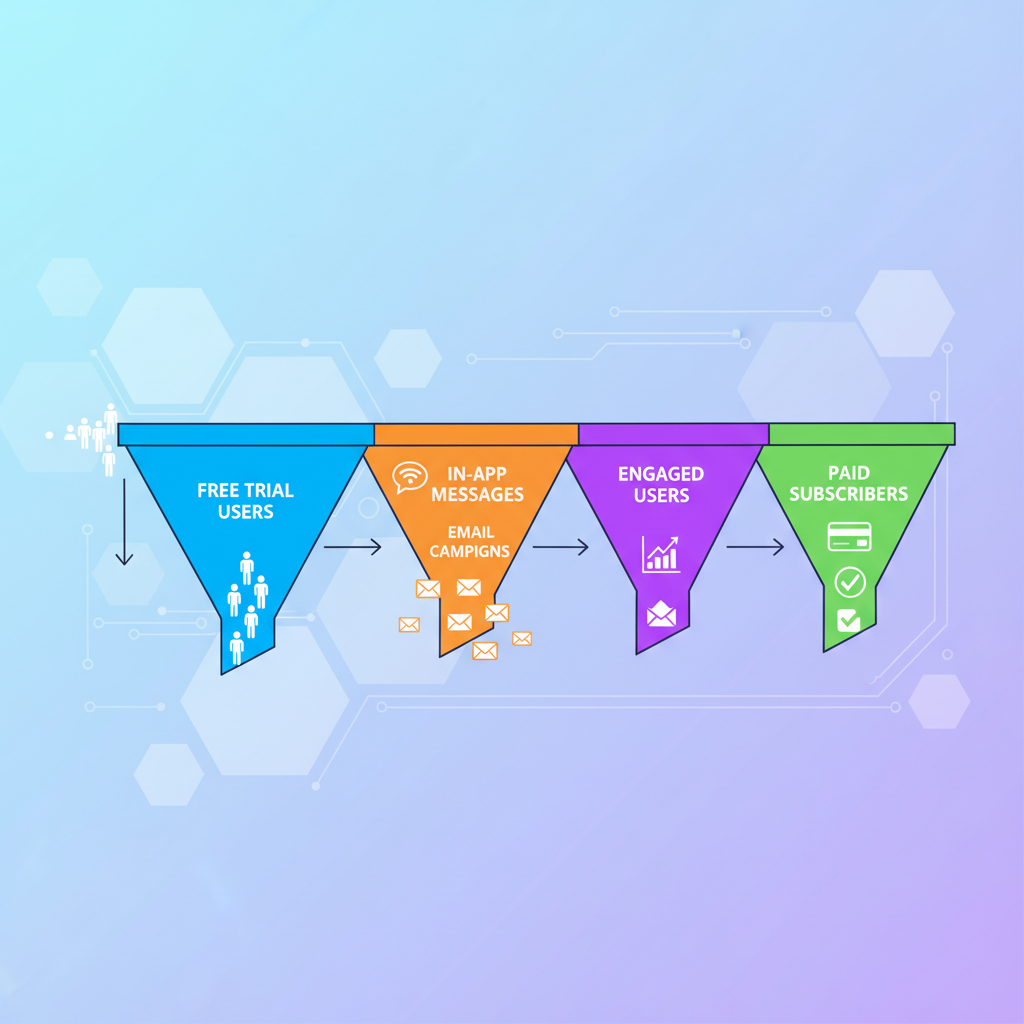
Converting free trial users into loyal, paying customers is a critical growth lever for any B2B SaaS company. A robust B2B SaaS free trial conversion optimization strategy focuses on guiding users to experience core product value quickly, demonstrating clear ROI, and nurturing them effectively through their trial journey. This involves a blend of in-product experiences, targeted communication, and data-driven adjustments to maximize trial-to-paid rates and ensure sustainable business expansion.
Understanding Trial Conversion: Why It Matters for SaaS Growth
Understanding trial conversion is crucial because it directly impacts a B2B SaaS company’s revenue, customer acquisition cost (CAC), and long-term viability. A higher conversion rate means more paying customers from the same number of sign-ups, significantly improving profitability and allowing for more aggressive marketing investments.
Defining Free Trial Conversion in B2B SaaS
Free trial conversion in B2B SaaS refers to the percentage of users who sign up for a free trial of a software product and subsequently become paying subscribers. This metric is a key indicator of product-market fit, the effectiveness of the onboarding process, and the perceived value of the software. An optimal B2B SaaS free trial conversion optimization strategy focuses on reducing friction points and highlighting value throughout the user journey. It’s not just about getting sign-ups; it’s about transforming curious users into committed customers.
Key Metrics for Measuring Trial Success
To effectively optimize free trial conversions, businesses must track several key metrics beyond the raw conversion rate. These metrics provide deeper insights into user behavior and potential areas for improvement. Monitoring these indicators helps identify where users drop off and what features resonate most.
Here are essential metrics to track:
* Activation Rate: The percentage of users who complete a key “aha!” moment or critical action within the trial.
* Feature Adoption Rate: How many trial users engage with core features of the product.
* Trial Completion Rate: The percentage of users who use the product until the end of their trial period.
* Time to Value (TTV): The duration it takes for a new user to experience the primary benefit of the product.
* Churn Rate (during trial): The percentage of users who abandon the trial before converting.

The Impact of High Conversion Rates on SaaS Business Models
High conversion rates are foundational to the success of a B2B SaaS business model. They reduce the reliance on constant new lead generation, making customer acquisition more efficient and sustainable. A strong conversion rate also indicates a healthy product that delivers tangible value, leading to better customer retention and advocacy in the long run. By prioritizing B2B SaaS free trial conversion optimization strategy, companies can build a robust customer base and achieve predictable revenue growth. It also frees up resources that might otherwise be spent on acquiring new leads, allowing for investment in product development or enhanced customer success initiatives.
How to Convert Free Trial Users to Paid with In-Product Marketing Techniques
Converting free trial users to paid customers effectively hinges on leveraging powerful in-product marketing techniques that guide users to value, address potential roadblocks, and subtly prompt conversion. These strategies ensure users experience the “aha!” moment and understand the full potential of the software.
Designing an Intuitive First-Run Experience
An intuitive first-run experience is paramount for engaging trial users and setting the stage for conversion. This involves designing a seamless onboarding flow that minimizes friction and helps users quickly achieve initial success with the product. A clear path to value encourages continued exploration.
Key elements of an intuitive first-run experience include:
* Guided Tours: Short, interactive product tours that highlight essential features and their benefits.
* Checklists: Simple, actionable checklists that break down the initial setup into manageable steps.
* Progress Bars: Visual indicators that show users how much of the onboarding process they have completed.
* Contextual Tooltips: Small, on-demand explanations that appear when a user hovers over a new feature, providing immediate help.
Implementing Effective In-App Messaging for Engagement
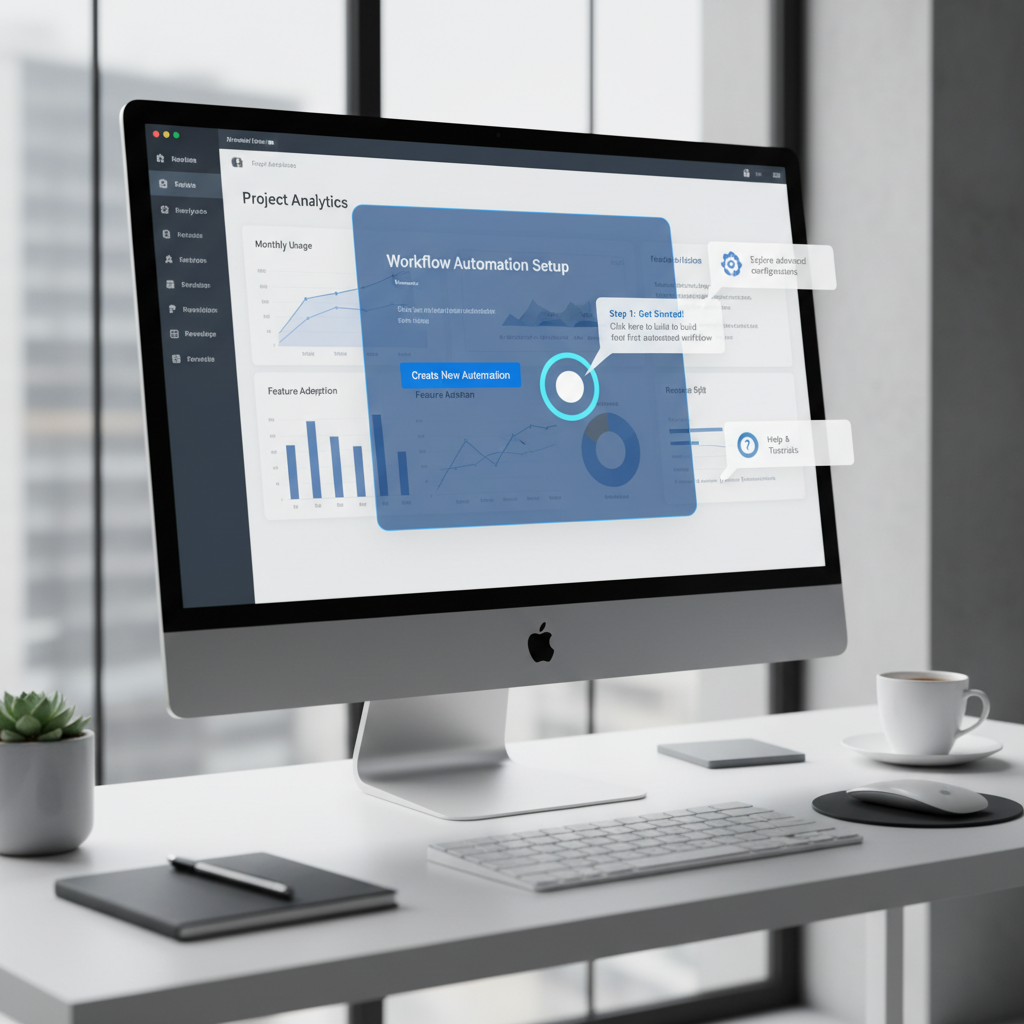
An in-app messaging strategy for free trial conversion optimization is crucial for keeping users engaged and informed throughout their trial. These messages should be highly contextual, appearing at the right time to offer assistance, celebrate milestones, or nudge users towards conversion. Effective in-app messages guide users without overwhelming them.
Types of effective in-app messages:
* Welcome Messages: A personalized greeting upon first login, setting expectations for the trial.
* Feature Spotlights: Messages highlighting underutilized but valuable features relevant to the user’s observed behavior.
* Usage Tips: Contextual tips that appear when a user is performing a related action, helping them work more efficiently.
* Nudges for Action: Gentle prompts to complete an important task or explore a specific module.
* Trial Expiry Reminders: Timely notifications about the remaining trial period, often coupled with a clear call to action to upgrade.
Showcasing Value and ROI Within the Product
To convert free trial users, it’s essential to continuously showcase the value and return on investment (ROI) that the product delivers. This goes beyond just listing features; it involves demonstrating how the product solves specific pain points and contributes to the user’s success. This is a core component of how to convert free trial users to paid with in-product marketing. Users need to see tangible results and understand the benefits they gain from using the software. This can be achieved through dashboards that show progress, success stories integrated into the UI, or personalized reports demonstrating efficiency gains. For businesses seeking to refine these and other digital strategies, exploring comprehensive Digital Marketing Services can provide expert guidance.
Examples of in-product value showcasing:
* Personalized Dashboards: Displaying metrics relevant to the user’s goals, showing progress or savings.
* Success Stories/Testimonials: Short, in-app snippets of how other users achieved success with the product.
* ROI Calculators: Interactive tools within the app that help users quantify their potential savings or gains.
* Feature Usage Reports: Showing users which features they’ve used most and suggesting how to leverage others for greater benefit.
Trial Onboarding Email Sequence Strategy for SaaS Activation and Retention
A well-crafted trial onboarding email sequence strategy for SaaS activation is indispensable for guiding users through their free trial, ensuring they discover the product’s value, and ultimately converting them into paying customers. These emails serve as a vital communication bridge, offering support, education, and gentle nudges. For more insights, check out our guide on Digital Marketing Services.
Crafting Engaging Welcome and Setup Emails
The initial emails in an onboarding sequence are critical for setting the right tone and providing immediate value. The welcome email should express gratitude and confirm the trial details, while subsequent setup emails should guide users through the initial configuration steps. These emails should be concise, action-oriented, and personalized. They are the first direct communication touchpoints outside the product itself.
Key elements for engaging welcome and setup emails:
* Personalized Greeting: Address the user by name.
* Clear Next Steps: Outline 1-2 immediate actions the user should take.
* Value Proposition Reminder: Briefly reiterate the core benefit of the product.
* Support Resources: Provide links to help documentation, FAQs, or contact support.
* Short, Digestible Content: Avoid overwhelming users with too much text.
Educating Users on Core Features and Use Cases
Throughout the trial, emails should educate users about the product’s core features and demonstrate how they can solve specific problems or achieve desired outcomes. This helps users move beyond basic exploration and truly understand the depth of the software’s capabilities. Each email can focus on a particular feature or a common use case. This proactive education is a cornerstone of any effective B2B SaaS free trial conversion optimization strategy.
Consider including:
* Feature Highlight Emails: Deep dives into specific functionalities with screenshots or short GIFs.
* Use Case Scenarios: Illustrating how different customer segments leverage the product.
* Best Practice Guides: Sharing tips and tricks to maximize product utility.
* Webinar Invitations: Offering live sessions for more in-depth learning and Q&A.
Implementing Timely Nudges and Expiry Reminders
As the trial progresses, timely nudges and expiry reminders become crucial for prompting action and preventing passive churn. These emails should gently remind users of the remaining trial period, highlight benefits they might miss, and provide a clear path to upgrade. The goal is to create a sense of urgency without being aggressive.
An effective sequence for nudges and expiry reminders:
* Mid-Trial Check-in (e.g., Day 7 of 14): “How are things going? Here’s how to get more value…”
* Trial Ending Soon (e.g., 3 days left): “Your trial ends in 3 days. Don’t lose your progress!”
* Last Chance (e.g., 24 hours left): “Final reminder: Upgrade now to continue seamless operations.”
* Trial Expired (after trial ends): “Your trial has ended. Reactivate your account to continue.”
Product-Led Marketing Strategy for Improving Trial-to-Paid Rates
A product-led marketing strategy for improving trial-to-paid rates places the product itself at the center of the customer acquisition, activation, and retention efforts. This approach emphasizes user experience, intrinsic value demonstration, and self-service, allowing the product to drive conversion organically.
Empowering Self-Service and Discovery
Empowering users with self-service capabilities and fostering independent discovery are fundamental to a product-led approach. This means designing the product and its supporting resources so that users can find answers, learn features, and achieve success without constant intervention from sales or support. This minimizes friction and allows users to explore at their own pace.
Elements that empower self-service:
* Comprehensive Knowledge Base: Easily searchable articles and FAQs within the product or accessible via a link.
* Interactive Demos/Tutorials: On-demand guides that users can access anytime.
* Contextual Help: Small “i” icons or question marks that provide immediate explanations for specific UI elements.
* Sandbox Environments: A safe space for users to experiment with features without affecting live data.
Leveraging Usage Data for Personalized Paths
A core tenet of product-led growth is leveraging user usage data to create personalized trial paths and experiences. By analyzing how users interact with the product, businesses can identify patterns, predict potential roadblocks, and proactively offer relevant guidance. This data-driven personalization is key to a sophisticated B2B SaaS free trial conversion optimization strategy. Understanding user behavior allows for targeted interventions.
Examples of personalized paths based on data:
* Feature Recommendations: Suggesting features based on a user’s role or industry.
* Automated Workflows: Triggering in-app messages or emails when a user completes a specific action or gets stuck.
* Customized Dashboards: Presenting data most relevant to the user’s initial setup or stated goals.
* Segmented Communication: Sending different email sequences to users who have activated versus those who haven’t.
Integrating Sales Assist for High-Value Trials
While product-led emphasizes self-service, integrating a “sales assist” model for high-value trials can significantly boost conversion rates. This involves identifying trial users who show strong engagement but might need a human touch to overcome specific hurdles or unlock advanced use cases. The sales team acts as a supportive resource rather than a pushy salesperson. This delicate balance is vital for maximizing trial-to-paid rates.
Criteria for sales assist intervention:
* High Feature Usage: Users actively engaging with multiple core features.
* Specific Feature Exploration: Users repeatedly accessing advanced features that might require explanation.
* Account Size/Potential: Companies fitting the ideal customer profile with significant revenue potential.
* Direct Inquiries: Users reaching out to support with complex questions that suggest deeper needs.
| Product-Led Approach | Sales-Led Approach |
|---|---|
| Product drives user acquisition and conversion. | Sales team drives user acquisition and conversion. |
| Focus on user self-service and in-app experience. | Focus on demos, calls, and direct outreach. |
| Value demonstrated through product usage. | Value demonstrated through sales presentations. |
| Lower CAC, higher scalability. | Higher CAC, often more personalized initially. |
| Ideal for complex products with clear use cases. | Ideal for enterprise sales with long cycles. |
In-App Messaging Strategy for Free Trial Conversion Optimization Best Practices
An effective in-app messaging strategy for free trial conversion optimization is about delivering the right message to the right user at the right time, directly within the product interface. This contextual communication minimizes distractions and maximizes the chances of users taking desired actions, ultimately boosting trial-to-paid conversions.
Contextual Messaging for User Milestones and Roadblocks
Contextual messaging is paramount for guiding users through their trial journey. Messages should appear precisely when a user reaches a significant milestone, such as completing a setup step, or encounters a roadblock, like struggling with a particular feature. This proactive assistance prevents frustration and reinforces positive progress. The goal is to anticipate user needs and provide immediate, relevant support.
Examples of contextual messages:
* Milestone Celebrations: “Great job! You’ve completed your first project. Here’s what’s next…”
* Feature Discovery Prompts: “It looks like you’re working on [Task X]. Did you know [Feature Y] can help you do this faster?”
* Error Prevention/Correction: “It seems there’s an issue with your data import. Here’s how to fix it.”
* Usage Reinforcement: “You’ve used [Feature Z] 5 times this week! Keep up the great work.”
Personalizing Messages Based on User Behavior
Personalization elevates in-app messaging from generic announcements to highly relevant, impactful communications. By segmenting users based on their in-product behavior, demographics, or stated goals, businesses can deliver messages that resonate deeply with individual needs. This tailored approach is a critical component of how to convert free trial users to paid with in-product marketing. Personalized messages make users feel understood and valued.
Methods for personalizing in-app messages:
* Role-Based Messaging: Different messages for administrators versus end-users.
* Feature Engagement: Messages promoting features that complement those a user is already actively using.
* Inactivity Prompts: Gentle nudges for users who haven’t logged in for a while, reminding them of value.
* Goal-Oriented Messages: Helping users achieve specific outcomes they indicated during onboarding.
Designing Clear Calls to Action and Upgrade Paths
Every in-app message, especially those aimed at conversion, must include clear and compelling calls to action (CTAs) and an obvious upgrade path. Users should never be left guessing about what to do next or how to transition to a paid plan. The easier the upgrade process, the higher the likelihood of conversion. This direct guidance is essential for any effective B2B SaaS free trial conversion optimization strategy.
Best practices for CTAs and upgrade paths:
* Prominent Placement: CTAs should be visually distinct and easy to find.
* Benefit-Oriented Language: Focus on what the user gains by upgrading (e.g., “Unlock Advanced Analytics,” “Save More Time”).
* Multiple Touchpoints: Offer upgrade options at various relevant points within the product.
* Seamless Transition: Ensure the upgrade process is quick, secure, and requires minimal steps.
* Transparent Pricing: Link directly to a clear pricing page that outlines different plans and features.
Leveraging Analytics and A/B Testing for Continuous Optimization
Leveraging analytics and A/B testing is fundamental for continuous B2B SaaS free trial conversion optimization strategy. These practices provide data-driven insights into user behavior, allowing companies to identify areas for improvement, test hypotheses, and refine their strategies for maximum impact on trial-to-paid rates.
Analyzing User Behavior and Drop-Off Points
Deep analysis of user behavior data is the cornerstone of understanding why trials succeed or fail. By tracking every interaction, from initial sign-up to feature engagement and eventual conversion (or drop-off), businesses can pinpoint critical moments in the user journey. Identifying common drop-off points allows for targeted interventions and improvements. This is where a robust analytics setup truly shines.
Key areas for analysis include:
* Onboarding Flow Completion: Where do users abandon the initial setup process?
* Feature Adoption Funnels: Are users discovering and utilizing core features as expected?
* Time Spent in Product: How engaged are users, and what activities correlate with conversion?
* Path Analysis: What sequence of actions do converting users typically take?
* Cohort Analysis: Comparing the behavior of different groups of trial users over time.
Implementing A/B Tests for Onboarding and Messaging
A/B testing is an invaluable tool for validating assumptions and optimizing specific elements of the trial experience. By testing variations of onboarding flows, email sequences, or in-app messages, companies can scientifically determine what resonates best with their target audience and drives higher conversion rates. This iterative process is crucial for refining any B2B SaaS free trial conversion optimization strategy. Small changes can lead to significant improvements over time.
Examples of A/B tests:
* Onboarding Flow Variations: Testing different numbers of steps or types of introductory content.
* Email Subject Lines: Comparing open rates and click-through rates for different email titles.
* CTA Button Copy/Color: Assessing which variations lead to more clicks on upgrade buttons.
* In-App Message Placement/Timing: Experimenting with when and where messages appear.
* Trial Length: Testing the impact of 7-day vs. 14-day trials on conversion.
Iterative Refinement Based on Performance Data
The process of conversion optimization is never truly finished; it’s an ongoing cycle of analysis, hypothesis, testing, and refinement. Performance data from analytics and A/B tests should inform continuous improvements to the product, onboarding, and communication strategies. This iterative refinement ensures that the B2B SaaS free trial conversion optimization strategy remains effective and adapts to evolving user needs and market conditions. Regularly reviewing data and making adjustments is key to sustained growth.
Steps in iterative refinement:
1. Analyze Data: Identify underperforming areas or unexpected user behavior.
2. Formulate Hypothesis: Propose a change that could improve a specific metric.
3. Design Experiment: Set up an A/B test or other controlled experiment.
4. Execute Test: Run the experiment for a statistically significant period.
5. Evaluate Results: Determine if the hypothesis was proven or disproven.
6. Implement or Discard: Roll out successful changes or learn from failures and iterate.
What is the average free trial conversion rate for B2B SaaS?
The average free trial conversion rate for B2B SaaS varies significantly by industry, product complexity, and trial type (opt-in vs. opt-out). Generally, benchmarks range from 10% to 30%, with some highly optimized products achieving even higher rates. Understanding your specific product and target audience is crucial for setting realistic goals.
How can I improve my SaaS free trial activation rate?
To improve your SaaS free trial activation rate, focus on simplifying the onboarding process, providing clear “aha!” moments early on, and using in-app guidance. Personalized welcome messages, interactive product tours, and a concise setup checklist can significantly boost initial user engagement and lead to higher activation.
What is an “aha! moment” in a free trial?
An “aha! moment” in a free trial is the point where a user first experiences the core value or primary benefit of your product. It’s the moment they understand how the software solves their problem or makes their life easier. Identifying and accelerating this moment is central to a successful B2B SaaS free trial conversion optimization strategy.
Should free trials require a credit card upfront?
Whether free trials should require a credit card upfront depends on your business model and target audience. “Opt-out” trials (requiring a credit card) typically have lower sign-up rates but higher conversion rates, as users are more committed. “Opt-in” trials (no credit card) attract more sign-ups but often yield lower conversion rates.
How long should a B2B SaaS free trial last?
The ideal length for a B2B SaaS free trial varies, but common durations are 7, 14, or 30 days. The best length allows users enough time to experience the product’s value and achieve their “aha! moment” without being so long that urgency is lost. Complex products might benefit from longer trials, while simpler tools can thrive with shorter ones.
What role does customer support play in free trial conversion?
Customer support plays a vital role in free trial conversion by providing timely assistance, answering questions, and resolving issues that might prevent users from experiencing the product’s full value. Proactive support, such as live chat or dedicated trial success managers, can significantly improve user confidence and conversion rates.
Optimizing your B2B SaaS free trial conversion strategy is a continuous journey that blends product excellence with strategic communication and data-driven insights. By focusing on a seamless user experience, delivering timely and relevant in-product messages, and nurturing users through a well-designed email sequence, businesses can significantly improve their trial-to-paid rates. A product-led approach, coupled with a commitment to analytics and iterative testing, ensures that your conversion efforts are always evolving and maximizing their impact.
Key takeaways for boosting your free trial conversions:
* Prioritize an intuitive first-run experience to help users quickly discover value.
* Implement a robust in-app messaging strategy for free trial conversion optimization to guide users contextually.
* Craft a thoughtful trial onboarding email sequence strategy for SaaS activation that educates and nudges.
* Embrace a product-led marketing strategy for improving trial-to-paid rates, empowering self-service and personalization.
* Continuously analyze user behavior and leverage A/B testing to refine your approach.
By integrating these strategies, your B2B SaaS can transform more curious trial users into loyal, long-term customers, fueling sustainable growth and maximizing your return on investment.