

Mastering Your Employee Advocacy LinkedIn Strategy
An effective employee advocacy LinkedIn strategy empowers your workforce to share company content and insights, significantly amplifying your brand’s reach and credibility. This approach transforms employees into trusted brand ambassadors, leveraging their personal networks to extend your message far beyond traditional marketing channels. By formalizing this process, businesses can tap into an authentic and highly influential source of promotion, fostering stronger connections with their target audience and driving measurable results.
Why Implement a LinkedIn Employee Advocacy Program?
Implementing a LinkedIn employee advocacy program is crucial for businesses aiming to enhance their online presence, build trust, and generate leads in today’s digital landscape. This strategy leverages the collective power of your employees’ networks, which are often larger and more diverse than a company’s official page, to distribute content authentically. When employees share company news, achievements, or thought leadership, it resonates more strongly with their connections than a direct corporate post. This organic amplification significantly boosts brand visibility and credibility.

Employee advocacy extends your brand’s reach by tapping into the trusted relationships employees have cultivated. People are more likely to engage with content shared by an individual they know than by a faceless corporation. This personal touch makes your brand more relatable and human, fostering deeper connections with potential clients and partners. Furthermore, an active employee advocacy program can attract top talent by showcasing a vibrant company culture and engaged workforce. It demonstrates that employees are proud to be associated with the organization.
The Impact of Employee Advocacy on Brand Trust and Credibility
Employee advocacy directly impacts brand trust and credibility by providing authentic endorsements. When employees share content, it acts as a powerful third-party validation, which consumers find far more trustworthy than traditional advertising. This trust is a critical component in B2B sales cycles, where relationships and reputation play a significant role. A consistent stream of employee-shared content reinforces your brand’s expertise and commitment.
Boosting Organic Reach and Engagement on LinkedIn
Employee advocacy is a powerful method for boosting organic reach and engagement on LinkedIn. The platform’s algorithm often prioritizes content shared by individuals, giving it greater visibility in news feeds compared to company page posts. Each employee share opens up a new avenue for your content to be discovered, leading to increased likes, comments, and shares. This expanded engagement not only broadens your audience but also signals to LinkedIn that your content is valuable, potentially leading to even greater organic exposure.
Developing a Robust B2B Employee Content Strategy for LinkedIn
Developing a robust B2B employee content strategy for LinkedIn involves creating clear guidelines, providing engaging content, and empowering employees to share effectively. This strategy ensures that employee advocacy efforts are aligned with overall business objectives and maintain brand consistency. It also helps employees understand what kind of content is appropriate and most impactful for their professional networks. A well-defined strategy is the backbone of any successful employee advocacy initiative, especially in the B2B space where nuanced communication is key. For more insights, check out our guide on Digital Marketing Services.
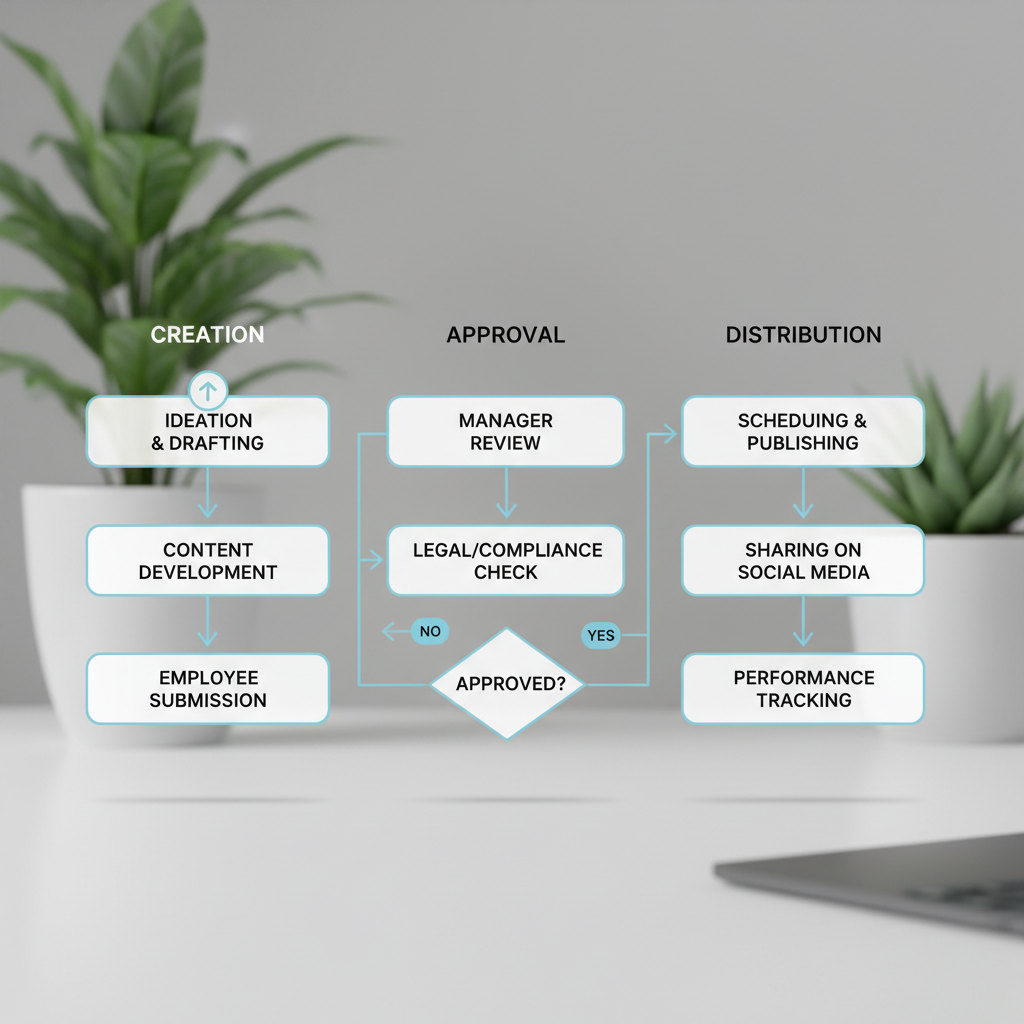
The first step is to define the types of content employees should share. This might include company blog posts, industry news, case studies, job openings, or personal insights related to their work. Providing a diverse content library ensures employees have options that resonate with their individual networks. It is also vital to establish a simple content submission and approval process to maintain quality and brand voice. This balance of freedom and guidance is essential for a thriving program.
Curating Engaging Content for Employee Sharing
Curating engaging content for employee sharing is paramount to the success of your B2B employee content strategy. Content should be informative, relevant to your industry, and offer value to the employee’s network. Think beyond purely promotional material; focus on thought leadership, industry trends, and problem-solving content that positions your company as an expert. This type of content is more likely to be shared and engaged with, as it enhances the employee’s personal brand as well. Consider creating easily digestible formats like infographics, short videos, or compelling articles.
Providing Clear Guidelines and Resources for Employees
Providing clear guidelines and resources for employees is fundamental to a successful LinkedIn employee advocacy program. Employees need to understand the ‘what,’ ‘why,’ and ‘how’ of sharing content. This includes brand voice dos and don’ts, legal considerations, and best practices for writing engaging captions. Offering a centralized content library, pre-approved messaging, and even suggested hashtags can significantly lower the barrier to participation. Regularly updated resources ensure employees feel confident and supported in their advocacy efforts, leading to more consistent and effective sharing.
Training Employees for Effective Employee Social Selling on LinkedIn
Training employees for effective employee social selling LinkedIn techniques is vital for converting advocacy efforts into tangible business results. Social selling involves leveraging social media platforms to connect with prospects, build relationships, and ultimately drive sales. It moves beyond simply sharing content to actively engaging with networks, identifying opportunities, and nurturing leads through authentic interactions. Equipping your sales team and other customer-facing roles with these skills can dramatically impact your pipeline and revenue.
Effective training should cover optimizing LinkedIn profiles, understanding target audience needs, and initiating meaningful conversations. It’s not just about broadcasting; it’s about listening, responding, and adding value. Employees should learn how to use LinkedIn’s features, such as advanced search and InMail, to identify and engage with key decision-makers. This strategic approach transforms casual sharing into a powerful sales tool. Businesses looking to enhance their market presence and deliver strong results often consider investing in comprehensive Digital Marketing Services to help refine their social selling strategies.
Optimizing LinkedIn Profiles for Social Selling Success
Optimizing LinkedIn profiles for social selling success is the foundational step in training. An employee’s profile acts as their personal brand storefront, showcasing their expertise, experience, and professional credibility. Training should guide employees on crafting compelling headlines, writing informative summaries that highlight their value proposition, and populating their experience sections with relevant achievements. A professional profile makes a strong first impression, signaling to prospects that they are interacting with a knowledgeable and trustworthy individual. This also includes using high-quality profile pictures and engaging cover photos.
Best Practices for Engaging with Prospects and Building Relationships
Best practices for engaging with prospects and building relationships on LinkedIn are centered around authenticity and value. Employees should be trained to move beyond generic connection requests and instead personalize their outreach, referencing shared interests or mutual connections. Engagement should focus on providing insights, answering questions, and participating in relevant industry discussions, rather than overt selling. This approach builds trust over time, establishing the employee as a valuable resource and thought leader. Consistent, thoughtful interaction is key to nurturing relationships that can lead to future business opportunities.
Measuring Success and Optimizing Your LinkedIn Brand Reach Strategy
Measuring success and optimizing your LinkedIn brand reach strategy is essential for demonstrating ROI and continuously improving your employee advocacy efforts. This involves tracking key metrics, analyzing performance data, and making data-driven adjustments to your program. Without proper measurement, it’s challenging to understand what’s working, what needs improvement, and how employee advocacy contributes to your broader marketing and sales goals. A clear measurement framework provides the insights needed to refine your strategy and maximize its impact.
Key metrics to track include employee participation rates, content shares, total reach, engagement rates (likes, comments, shares), website traffic generated from employee posts, and lead generation. Many employee advocacy platforms offer built-in analytics to simplify this process. Regularly reviewing these metrics allows you to identify top-performing content, the most active advocates, and areas where additional training or support might be needed. This iterative process of measurement and optimization ensures your strategy remains effective and aligned with business objectives.
Key Metrics for Tracking Employee Advocacy Performance
Key metrics for tracking employee advocacy performance include reach, engagement, and conversion. Reach measures the total number of unique individuals who saw content shared by employees. Engagement metrics, such as likes, comments, and shares, indicate how well the content resonated with the audience. Conversion metrics, like website clicks, form submissions, or demo requests originating from employee shares, directly link advocacy efforts to business outcomes. Tracking these metrics provides a holistic view of your employee advocacy LinkedIn strategy’s effectiveness and helps justify its continued investment.
Iterative Optimization: Adjusting Your Strategy Based on Data
Iterative optimization involves continually adjusting your strategy based on performance data. If certain content types consistently perform well, create more of them. If participation rates are low, investigate potential barriers such as lack of time, unclear guidelines, or insufficient content variety. Analyze which employees are most active and successful, and consider using them as internal champions or mentors. This data-driven approach allows you to refine your content strategy, improve training, and enhance incentives, ensuring your LinkedIn brand reach strategy evolves for maximum impact and efficiency over time.
Overcoming Common Challenges in LinkedIn Employee Advocacy
Overcoming common challenges in LinkedIn employee advocacy requires proactive planning, clear communication, and ongoing support for participants. Many organizations encounter hurdles such as low employee participation, concerns about brand consistency, or difficulty measuring ROI. Addressing these issues head-on is crucial for building a sustainable and impactful LinkedIn employee advocacy program. By anticipating potential problems, businesses can implement strategies to mitigate them before they derail the program.
One significant challenge is encouraging consistent employee participation. This often stems from employees feeling unsure about what to share, lacking time, or not understanding the personal and professional benefits. Providing easy-to-use tools, pre-approved content, and clear communication about the program’s value can significantly boost engagement. It’s also important to acknowledge and reward active participants to foster a positive and motivating environment. Building a culture where advocacy is seen as a valuable contribution is key.
Addressing Low Participation and Engagement
Addressing low participation and engagement in an employee advocacy LinkedIn strategy involves understanding and removing barriers for employees. Start by clearly communicating the “why” – how advocacy benefits both the company and the individual’s professional brand. Simplify the sharing process by providing a curated content library and one-click sharing tools. Offer training that builds confidence and demonstrates best practices. Consider gamification or recognition programs to incentivize participation. Regularly solicit feedback from employees to identify pain points and make necessary adjustments to the program.
Maintaining Brand Consistency and Compliance
Maintaining brand consistency and compliance is a critical aspect of any B2B employee content strategy. This can be achieved through comprehensive guidelines that outline approved messaging, tone of voice, and legal considerations. Provide employees with pre-approved content and templates to ensure alignment with brand standards. Implement a clear review process for any original content employees wish to share. Regular training on compliance policies, especially regarding sensitive information or industry regulations, is also essential. This balance ensures employees feel empowered while safeguarding the brand’s reputation.
| Aspect | Traditional Marketing | Employee Advocacy on LinkedIn |
|---|---|---|
| Reach | Limited by ad spend and company page followers | Exponentially expanded through collective employee networks |
| Credibility | Often perceived as promotional | Highly trusted, personal recommendations |
| Cost | Can be high (paid ads, agency fees) | Lower operational cost, high ROI |
| Engagement | Varies, often lower for corporate posts | Higher engagement due to personal connections |
| Authenticity | Controlled corporate messaging | Organic, genuine, human voice |
What is employee advocacy on LinkedIn?
Employee advocacy on LinkedIn is the practice of encouraging and empowering employees to share company-related content, insights, and news through their personal LinkedIn profiles. It leverages their trusted networks to amplify brand messages, enhance credibility, and expand organic reach beyond official company channels. This strategy transforms employees into authentic brand ambassadors.
Why is a LinkedIn employee advocacy program important for B2B companies?
A LinkedIn employee advocacy program is crucial for B2B companies because it builds trust and credibility in a competitive market. B2B buyers often rely on peer recommendations and expert insights. When employees share content, it acts as a trusted endorsement, humanizing the brand and significantly extending its reach to key decision-makers and industry professionals.
How can I encourage employees to participate in an employee advocacy program?
To encourage participation, clearly communicate the benefits for both the company and the employee’s personal brand. Provide easy-to-use tools and a curated content library. Offer training, recognition, and incentives for active participation. Make it simple, rewarding, and ensure employees feel supported and valued in their advocacy efforts.
What kind of content should employees share for social selling?
For social selling, employees should share valuable, insightful content that positions them as thought leaders. This includes industry news, educational articles, case studies, company blog posts, and personal perspectives on relevant topics. The focus should be on providing value and building relationships, not overt selling. Content that sparks conversation is ideal.
How do you measure the success of a LinkedIn brand reach strategy?
Success is measured by tracking key metrics such as employee participation rates, content shares, total organic reach, engagement (likes, comments, shares), website traffic generated from employee posts, and lead conversions. Utilizing analytics from advocacy platforms or LinkedIn itself can provide valuable insights into the program’s overall effectiveness and ROI.
What are the common challenges in implementing employee advocacy?
Common challenges include low employee participation, ensuring brand consistency across diverse voices, and accurately measuring the return on investment. Other hurdles can be a lack of time for employees to participate, insufficient training, or difficulty in providing a steady stream of engaging content. Proactive strategies can mitigate these issues.
Implementing a robust employee advocacy LinkedIn strategy is no longer optional for businesses aiming for sustained growth and a powerful online presence. It’s a strategic imperative that transforms your workforce into your most authentic and effective marketing channel. By empowering employees to share, you unlock unparalleled brand reach, build trust, and drive meaningful engagement.
Key takeaways for a successful program include:
* Prioritize training: Equip employees with the skills for effective social selling and content sharing.
* Curate valuable content: Provide diverse, engaging, and relevant content that employees are proud to share.
* Establish clear guidelines: Ensure brand consistency and compliance with easy-to-understand rules.
* Measure and optimize: Continuously track performance metrics to refine your strategy and demonstrate ROI.
* Foster a culture of advocacy: Recognize and reward participation to maintain enthusiasm and engagement.
Embrace employee advocacy to amplify your brand’s voice and connect with your audience on a deeper, more human level. Start building your empowered advocate team today.