
Chatbot Marketing Strategy For Lead Qualification And Conversion
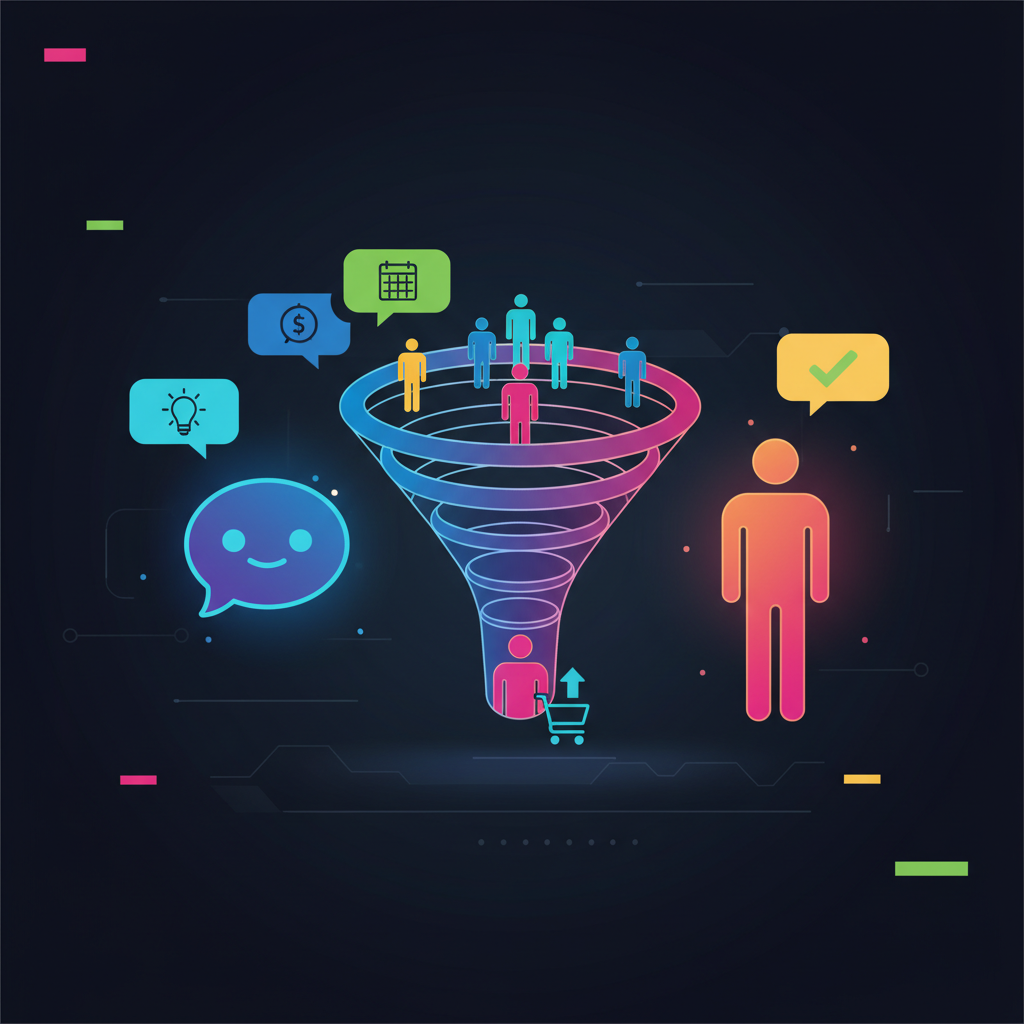
A robust chatbot marketing strategy is essential for businesses aiming to streamline lead qualification and boost conversion rates. Chatbots, powered by artificial intelligence, offer an interactive and immediate way to engage website visitors, gather crucial information, and guide them through the sales funnel. By automating initial interactions, businesses can significantly improve efficiency, reduce response times, and ensure that sales teams focus only on the most promising leads. This approach not only enhances the user experience but also provides valuable data for optimizing marketing efforts.
How to Use AI Chatbots to Qualify Leads on Landing Pages Effectively
AI chatbots are highly effective at qualifying leads directly on landing pages by engaging visitors in real-time conversations and collecting essential data points. They serve as an immediate point of contact, ensuring that no potential lead is lost due to slow response times or form fatigue. This proactive engagement helps identify visitor intent and suitability for your product or service from the very first interaction. For more insights, check out our guide on Digital Marketing Services.
Implementing an AI chatbot on your landing page transforms a static experience into a dynamic one. The chatbot can ask a series of predefined questions to assess a visitor’s needs, budget, timeline, and authority. This process, often called conversational lead qualification, allows businesses to gather more nuanced information than traditional forms, leading to a richer understanding of each prospect. For example, a chatbot can inquire about specific pain points or project requirements, providing sales teams with valuable context before a human interaction.

Designing Engaging Conversational Flows for Lead Qualification
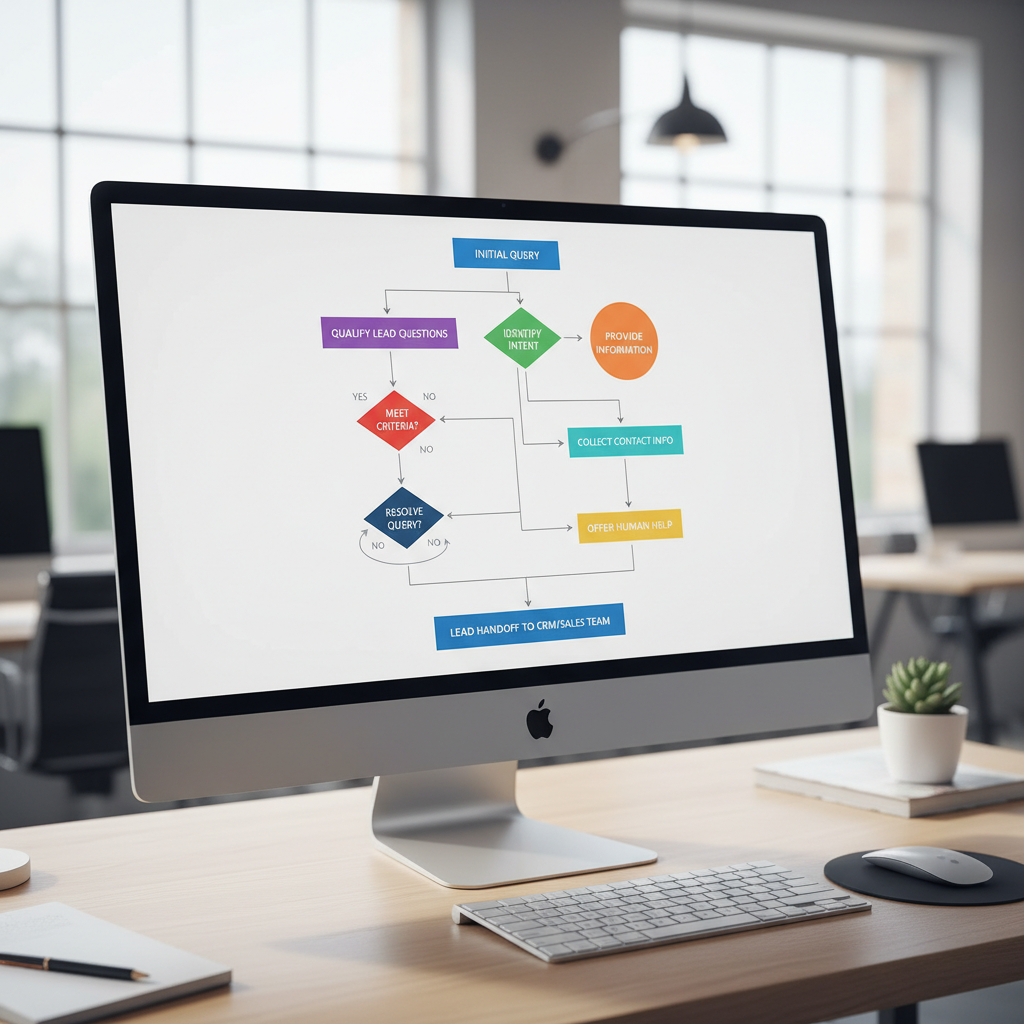
To effectively qualify leads, design your chatbot’s conversational flow to be intuitive and goal-oriented. Start with a warm welcome, then progressively ask qualifying questions. Use conditional logic to tailor the conversation based on user responses, ensuring a personalized experience. For instance, if a user expresses interest in “pricing,” the chatbot can immediately offer a demo or connect them with a sales representative, bypassing less relevant questions.
Integrating Chatbot Data with CRM Systems for Seamless Handoff
Seamless integration of your chatbot with customer relationship management (CRM) systems is crucial for an efficient lead qualification process. Once a lead is qualified by the chatbot, all collected data should automatically populate the CRM. This ensures that sales teams have immediate access to comprehensive lead profiles, allowing them to follow up with highly personalized and relevant communications. Such integration minimizes manual data entry and reduces the risk of information loss.
Developing a Conversational Marketing Chatbot Strategy for B2B Websites
A robust conversational marketing chatbot strategy for B2B websites focuses on delivering immediate value and personalized interactions to potential business clients, guiding them through complex sales cycles. These chatbots act as 24/7 virtual assistants, providing instant answers to common questions and collecting critical information that helps sales teams prioritize and engage with high-value prospects. This strategy significantly enhances the user experience by offering convenience and speed.
For B2B companies, the sales process often involves multiple stakeholders and a longer decision-making journey. Chatbots can play a pivotal role by providing on-demand information about products, services, case studies, and pricing. They can also schedule meetings, offer resource downloads, or even initiate a live chat with a sales representative when a prospect reaches a certain level of engagement. This continuous availability ensures that businesses can capture interest at any time, regardless of office hours.
Crafting Persona-Specific Chatbot Interactions for B2B Audiences
Tailoring chatbot interactions to specific B2B buyer personas is key to success. Understand the typical roles, challenges, and information needs of your target audience. For example, a chatbot interacting with a CTO might focus on technical specifications and integration capabilities, while one engaging a Marketing Director might highlight ROI and competitive advantages. This targeted approach makes the chatbot feel more relevant and helpful.
Leveraging Chatbots for Content Distribution and Resource Access
Chatbots can effectively distribute valuable B2B content, such as whitepapers, e-books, and webinars, directly to interested prospects. Instead of making visitors search for resources, the chatbot can proactively offer relevant materials based on their queries or expressed interests. This not only provides immediate value to the user but also allows the marketing team to track content engagement and identify specific areas of interest for each lead. It’s a proactive way to nurture leads through informative content.
Optimizing Chatbot to Human Handoff Strategy for High-Intent Lead Conversion
An optimized chatbot to human handoff strategy is crucial for converting high-intent leads by ensuring a smooth, context-rich transition from automated interaction to a live sales or support agent. This seamless transfer prevents frustration and leverages the chatbot’s initial qualification efforts to empower human agents with valuable pre-conversation insights. The goal is to make the customer feel understood and valued throughout their journey.
The moment a lead signals high intent – perhaps by asking about pricing, requesting a demo, or expressing a specific problem – the chatbot should be programmed to facilitate an immediate handoff. This transition should not feel abrupt. Instead, the chatbot should inform the user about the upcoming transfer and assure them that a human expert will continue the conversation with full context. This proactive communication manages expectations and maintains a positive user experience.
Establishing Clear Handoff Triggers and Protocols
Define precise triggers that signal when a chatbot should initiate a human handoff. These triggers could include specific keywords (e.g., “pricing,” “demo,” “speak to sales”), a certain number of qualifying questions answered, or a direct request to speak with a person. Once a trigger is met, the chatbot should execute a predefined protocol, such as notifying the appropriate sales team and transferring the conversation history.
Providing Contextual Data to Human Agents During Handoff
For a truly effective handoff, human agents must receive all relevant contextual data collected by the chatbot. This includes the user’s name, company, previous questions, expressed interests, and any qualification scores. This information allows the human agent to pick up the conversation exactly where the chatbot left off, avoiding repetitive questions and demonstrating a deep understanding of the lead’s needs. This personalized approach significantly increases the likelihood of conversion. When looking to enhance these processes, exploring comprehensive Digital Marketing Services can provide additional expertise and tools.
Seamless WhatsApp and Web Chatbot Integration Strategy for Marketing Teams
A seamless WhatsApp and web chatbot integration strategy for marketing teams extends conversational marketing reach, allowing businesses to engage leads on their preferred platforms and consolidate communication channels. This integrated approach ensures consistent messaging and a unified customer experience, regardless of where the interaction begins. It taps into the widespread popularity of messaging apps like WhatsApp, meeting customers where they already are.
Integrating chatbots across both web and WhatsApp platforms provides immense flexibility. A user might start a conversation on your website, then continue it on WhatsApp later, or vice-versa. This cross-platform continuity is vital for nurturing leads over time, as it allows for follow-ups and personalized communication without requiring the user to return to a specific website. Marketing teams can leverage this to send targeted promotions, updates, and reminders directly to a user’s messaging app.
Strategies for Cross-Platform Chatbot Consistency
Maintaining consistency across WhatsApp and web chatbots is paramount. Ensure that your chatbot’s persona, tone of voice, and core functionalities are identical on both platforms. While platform-specific features might exist (e.g., rich media on WhatsApp), the underlying conversational logic and lead qualification questions should remain uniform. This consistency builds trust and reinforces brand identity across all touchpoints.
Leveraging WhatsApp for Post-Qualification Nurturing and Engagement
WhatsApp chatbots are particularly effective for post-qualification nurturing and ongoing engagement. After a lead has been qualified on your website, you can offer them the option to continue receiving updates or relevant content via WhatsApp. This allows for a more direct and personal channel for sending product updates, event invitations, customer support, or even personalized offers, keeping your brand top-of-mind.
Measuring and Optimizing Chatbot Performance for Enhanced Lead Nurturing
Measuring and optimizing chatbot performance is critical for enhancing lead nurturing by providing actionable insights into user interactions and identifying areas for improvement in the conversational flow. Regular analysis of chatbot data allows marketing teams to refine their strategies, improve lead qualification accuracy, and ultimately boost conversion rates. This data-driven approach ensures the chatbot continuously evolves to meet business objectives.
Key performance indicators (KPIs) for chatbots include conversation completion rates, lead qualification rates, handoff success rates, and customer satisfaction scores. By tracking these metrics, businesses can understand how effectively their chatbots are engaging users and moving them through the sales funnel. For instance, a low conversation completion rate might indicate that the chatbot’s questions are too long or confusing, prompting a need for simplification.
| Metric | Description | Impact on Lead Nurturing |
|---|---|---|
| Conversation Completion Rate | Percentage of users who complete a full chatbot conversation. | Indicates engagement and flow effectiveness. Higher rates suggest better user experience. |
| Lead Qualification Rate | Percentage of conversations resulting in a qualified lead. | Directly measures the chatbot’s efficiency in identifying valuable prospects. |
| Handoff Success Rate | Percentage of successful transfers from chatbot to human agent. | Reflects the seamlessness of the transition and agent availability. |
| Customer Satisfaction (CSAT) | User feedback on their chatbot experience. | Reveals user perception and identifies areas for improvement in tone or responses. |
| Conversion Rate (Chatbot-influenced) | Percentage of chatbot-qualified leads that convert to customers. | Ultimate measure of the chatbot’s contribution to revenue generation. |
Analyzing Chatbot Transcripts for User Intent and Friction Points
Regularly reviewing chatbot transcripts is invaluable for understanding user intent and identifying friction points in the conversation. Transcripts reveal common questions, misunderstandings, and areas where users abandon the chat. This qualitative data complements quantitative metrics, offering deeper insights into how users interact with the chatbot and where improvements can be made to enhance lead qualification and nurturing.
A/B Testing Chatbot Flows and Messaging for Optimal Results
A/B testing different chatbot conversational flows, question sequences, and messaging styles is crucial for continuous optimization. By testing variations, marketing teams can identify which approaches yield higher engagement, better qualification rates, and improved user satisfaction. For example, testing two different opening messages can reveal which one encourages more users to proceed with the qualification process.
Leveraging Advanced Chatbot Features for Personalized Lead Engagement
Leveraging advanced chatbot features, such as natural language processing (NLP), sentiment analysis, and predictive analytics, enables highly personalized lead engagement and more sophisticated qualification processes. These capabilities allow chatbots to understand user intent more accurately, adapt conversations in real-time, and anticipate future needs, leading to deeper connections and higher conversion potential. Advanced features move beyond simple rule-based interactions.
Modern chatbots can do much more than just answer FAQs. With NLP, they can interpret complex queries and respond contextually, making interactions feel more human-like. Sentiment analysis allows the chatbot to detect a user’s emotional state, enabling it to adjust its tone or escalate to a human agent if a user expresses frustration. Predictive analytics can even suggest relevant products or services based on a user’s past behavior or expressed preferences, creating a truly personalized experience.
Implementing NLP and AI for Deeper User Understanding
Integrating Natural Language Processing (NLP) and Artificial Intelligence (AI) into your chatbots allows them to understand and process human language more effectively. This means chatbots can interpret variations in phrasing, recognize synonyms, and grasp the underlying intent behind a user’s query. This deeper understanding leads to more accurate responses and a smoother conversational flow, significantly improving the user experience and lead qualification accuracy.
Utilizing Chatbots for Proactive Outreach and Personalized Follow-ups
Advanced chatbots can be programmed for proactive outreach, initiating conversations with website visitors based on their browsing behavior (e.g., time spent on a product page, repeated visits). Furthermore, they can deliver highly personalized follow-up messages, reminding users about abandoned carts, offering tailored recommendations, or providing additional information relevant to their previous interactions. This proactive and personalized engagement keeps leads warm and guides them towards conversion.
What is a chatbot marketing strategy?
A chatbot marketing strategy involves using automated conversational programs to engage with website visitors and potential customers. Its primary goals are to qualify leads, provide instant support, and guide users through the marketing and sales funnels, ultimately increasing conversions and improving customer experience. It integrates chatbots into various touchpoints of the customer journey.
How do AI chatbots qualify leads on landing pages?
AI chatbots qualify leads on landing pages by initiating interactive conversations with visitors. They ask a series of predefined questions about needs, budget, and timeline. Based on the responses, the chatbot assesses the lead’s suitability and intent, categorizing them for further nurturing or immediate handoff to a human sales representative, streamlining the initial qualification process.
What is conversational marketing for B2B websites?
Conversational marketing for B2B websites uses chatbots and live chat to engage business prospects in real-time, personalized conversations. It focuses on providing immediate answers, gathering qualification data, and building relationships to accelerate the B2B sales cycle. This approach aims to make the B2B buying journey more efficient and user-friendly, catering to complex needs.
When should a chatbot hand off to a human agent?
A chatbot should hand off to a human agent when a lead demonstrates high intent, such as asking for pricing, requesting a demo, or explicitly asking to speak with a person. The handoff should also occur if the chatbot cannot understand a complex query or if the user expresses frustration, ensuring a seamless transition to expert human assistance.
Can WhatsApp be used for chatbot marketing?
Yes, WhatsApp is an excellent platform for chatbot marketing, especially for post-qualification nurturing and direct engagement. Integrating a chatbot with WhatsApp allows businesses to reach customers on their preferred messaging app, send personalized updates, answer queries, and provide support, fostering stronger relationships and driving conversions through a highly accessible channel.
How can I measure the success of my chatbot strategy?
The success of your chatbot strategy can be measured using various KPIs, including conversation completion rates, lead qualification rates, handoff success rates, and customer satisfaction scores. Analyzing chatbot transcripts for user intent and conducting A/B tests on different conversational flows also provide valuable insights for continuous optimization and improved performance.
Implementing a well-crafted chatbot marketing strategy is no longer optional but a necessity for businesses aiming to thrive in the competitive digital landscape. By strategically deploying chatbots, companies can significantly enhance their lead qualification processes and boost conversion rates.
Key takeaways for a successful chatbot strategy:
* Automate Initial Qualification: Use AI chatbots to efficiently qualify leads on landing pages, capturing essential data instantly.
* Personalize B2B Interactions: Design conversational flows that cater specifically to B2B buyer personas, providing relevant information and resources.
* Optimize Handoffs: Establish clear triggers and protocols for seamless chatbot to human handoffs, ensuring sales teams receive context-rich leads.
* Integrate Across Platforms: Leverage WhatsApp and web chatbot integration for consistent communication and extended reach.
* Measure and Refine: Continuously analyze chatbot performance metrics and user transcripts to identify areas for improvement and optimize for better results.
* Embrace Advanced Features: Utilize NLP, sentiment analysis, and predictive analytics for deeper user understanding and truly personalized engagement.
By focusing on these strategic pillars, businesses can transform their lead generation efforts, create more engaging customer experiences, and drive sustainable growth.