

Mastering Meta Ads Creative Fatigue Score for Sustained Growth
The Meta ads creative fatigue score is a critical metric indicating when your ad creatives are losing effectiveness due to overexposure to your audience. Understanding and proactively managing this score is essential for any advertiser aiming to maintain optimal campaign performance on platforms like Facebook and Instagram. Ignoring creative fatigue can lead to diminishing returns, increased costs, and ultimately, wasted ad spend. This article will delve into what creative fatigue means for your Meta ad campaigns and provide actionable strategies to keep your audience engaged and your results strong.
Understanding the Meta Ads Creative Fatigue Score: How It Impacts Ad Performance
The Meta ads creative fatigue score measures how frequently your target audience has seen your specific ad creatives, indicating when they might be becoming overexposed. A high score suggests that your audience is seeing the same ad too often, leading to decreased engagement and higher costs. This metric is crucial because it directly correlates with the efficiency and profitability of your ad campaigns. For more insights, check out our guide on Digital Marketing Services.
When an audience becomes fatigued, they are less likely to interact with your ads. This phenomenon manifests as declining click-through rates (CTR) and conversion rates, while simultaneously increasing your cost per click (CPC) and cost per acquisition (CPA). Essentially, you are paying more for diminishing returns as your message loses its novelty and impact. Meta’s algorithms are designed to deliver relevant content, and ads that generate low engagement can be penalized with reduced reach and higher delivery costs. Therefore, understanding and actively managing this score is fundamental to maintaining healthy ad performance and maximizing your return on ad spend (ROAS).

What is Ad Frequency and Why Does it Matter for Creative Fatigue?
Ad frequency refers to the average number of times a unique user sees your ad within a given period. While a certain level of frequency is necessary for brand recall and message penetration, excessive frequency is a primary driver of creative fatigue. Meta’s platforms provide frequency metrics within their ad reporting tools. Monitoring this metric closely helps you anticipate when your creatives might start to burn out. A general rule of thumb is to keep frequency below 3-4 impressions per person per week for broad audiences, though this can vary significantly based on your niche and ad objective. High frequency can quickly lead to audience saturation, making your ads feel repetitive and intrusive rather than engaging.
How Meta’s Algorithms Respond to Creative Fatigue
Meta’s ad delivery system prioritizes ads that generate positive engagement and provide a good user experience. When your ads experience creative fatigue, engagement metrics like CTR and relevance scores decline. In response, Meta’s algorithms may reduce the reach of your fatigued ads, making it harder for them to be shown to your target audience. Furthermore, the cost of delivering these underperforming ads can increase as the system struggles to find receptive users. This creates a negative feedback loop: fatigue leads to lower performance, which leads to higher costs and even less effective delivery. Proactive management of your creative assets ensures that Meta’s algorithms work in your favor, optimizing for both reach and cost-efficiency.
Identifying the Signs of Facebook Ad Fatigue: Early Detection Strategies
Facebook ad fatigue analysis involves closely monitoring key performance indicators (KPIs) to spot the tell-tale signs that your audience is growing tired of your ad creatives. Early detection is crucial for mitigating negative impacts on your campaign performance and preventing significant drops in ROI. The sooner you identify fatigue, the quicker you can implement corrective measures. For more insights, check out our guide on Digital Marketing Services.
The primary indicators of ad fatigue are often found in your ad reports. You’ll typically observe a gradual decline in click-through rates (CTR) and conversion rates (CVR), coupled with an increase in your cost per click (CPC) and cost per acquisition (CPA). These metrics signal that your audience is becoming less responsive to your message. Furthermore, a rising frequency metric, which indicates how many times your average user has seen your ad, is a strong precursor to fatigue. Keeping a vigilant eye on these trends allows advertisers to intervene before campaign performance significantly degrades.
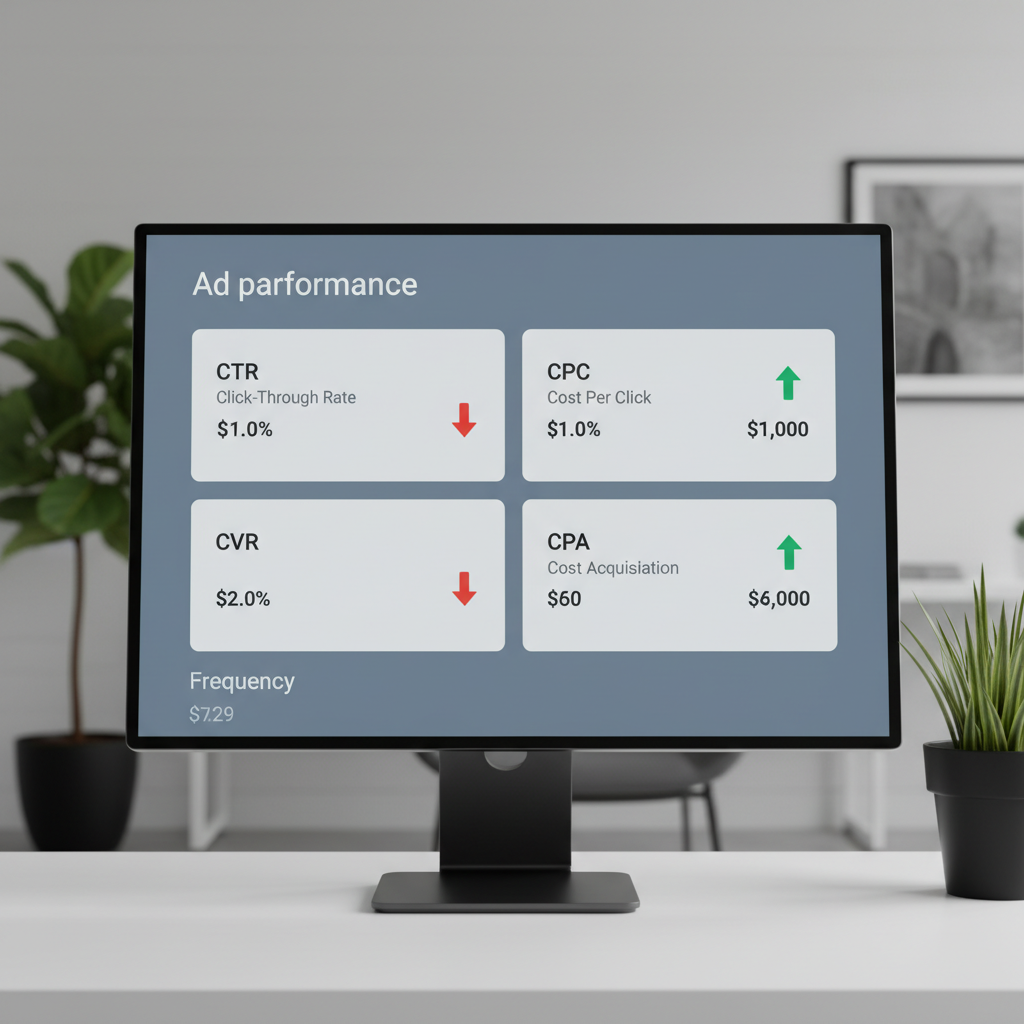
Key Performance Indicators (KPIs) for Monitoring Ad Fatigue
Several KPIs are paramount for conducting effective Facebook ad fatigue analysis. Monitoring these metrics regularly provides a clear picture of your creative health:
* Frequency: The average number of times a unique user has seen your ad. A frequency above 3-4 often suggests impending fatigue.
* Click-Through Rate (CTR): The percentage of people who clicked on your ad after seeing it. A declining CTR is a primary indicator that your ad is losing its appeal.
* Cost Per Click (CPC): The average cost you pay for each click on your ad. Rising CPC often accompanies declining CTR as Meta struggles to find engaged users.
* Cost Per Acquisition (CPA) / Cost Per Lead (CPL): The cost to acquire a customer or lead. An increasing CPA/CPL directly impacts profitability and signals inefficiency.
* Conversion Rate (CVR): The percentage of people who completed a desired action after clicking your ad. A drop here means your message isn’t resonating enough to drive conversions.
* Relevance Score/Quality Ranking: Meta’s internal metric assessing the perceived quality and relevance of your ad. A declining score often precedes other fatigue symptoms.
Setting Up Alerts and Automated Monitoring for Fatigue
Proactive monitoring is key to preventing severe creative fatigue. Advertisers should set up custom alerts within Meta Ads Manager or use third-party tools to notify them when specific KPIs cross predefined thresholds. For instance, an alert could be triggered if frequency exceeds 3 within a 7-day period, or if CTR drops below a certain percentage. Automated rules can also be implemented to pause ad sets or campaigns when these thresholds are met, preventing further wasted spend. Regularly scheduled reports focusing on these fatigue-related metrics should also be part of your routine. This systematic approach ensures that you catch signs of fatigue early and can react swiftly.
Implementing a Robust Creative Testing Framework for Meta Ads to Prevent Burnout
A robust creative testing framework for Meta ads is essential for continuously delivering fresh, engaging content to your audience and preventing ad burnout. This framework involves systematically testing different ad elements to identify what resonates best with your target segments, ensuring a constant pipeline of high-performing creatives. By establishing a structured approach, you can proactively combat the inevitable decline in performance caused by creative fatigue.
The core of a successful framework lies in its ability to generate insights into what works and what doesn’t. This isn’t just about A/B testing; it’s about a continuous cycle of hypothesis generation, testing, analysis, and iteration. Without a clear framework, advertisers often resort to guesswork, leading to inconsistent results and inefficient ad spend. A well-defined process allows you to isolate variables, understand audience preferences, and consistently produce winning creatives, thereby extending the lifespan of your campaigns and improving overall ROI.
Designing Effective A/B Tests for Ad Creatives
Effective A/B testing is fundamental to any creative testing framework for Meta ads. When designing tests, focus on isolating single variables to understand their impact. These variables can include:
* Visuals: Different images, videos, carousels, or graphic styles.
* Headlines: Varying hooks, value propositions, or calls to action.
* Primary Text: Different opening lines, benefit statements, or storytelling approaches.
* Call-to-Action (CTA) Buttons: “Shop Now,” “Learn More,” “Get Offer,” etc.
* Audience Segments: Testing the same creative on different, but related, audience groups.
Ensure your test groups are statistically significant and run for a sufficient duration to gather reliable data. Avoid changing multiple elements at once, as this makes it impossible to attribute performance changes to a specific variable. For example, test two distinct images with the same copy, then test two different headlines with the winning image.
Structuring Your Creative Testing Process
A structured creative testing process should follow a clear cycle:
1. Hypothesis: Formulate a clear hypothesis about which creative element will perform better and why. (e.g., “A video ad will outperform a static image ad for product X because it better demonstrates its features.”)
2. Design Test: Create the ad variations, ensuring only one variable is changed per test.
3. Launch Test: Run the test with appropriate budget and duration, targeting relevant audiences.
4. Analyze Results: Evaluate key performance metrics (CTR, CVR, CPC, frequency) to determine the winner.
5. Implement & Iterate: Deploy the winning creative and use the insights gained to inform your next test.
This iterative process ensures that you are constantly learning and improving your creative assets. Consider using a naming convention for your ad sets and creatives to easily track test results. For a comprehensive approach to optimizing your digital presence, including robust ad creative strategies, you might explore various Digital Marketing Services that offer expert guidance and implementation.
Optimizing Ad Creative Performance Metrics for Better Engagement and ROI
Optimizing ad creative performance metrics is vital for maximizing engagement and achieving a higher return on investment (ROI) from your Meta ad campaigns. This involves not just monitoring metrics but actively using the data to refine and improve your creative assets. By focusing on the right indicators, you can ensure your ads consistently resonate with your audience and drive desired outcomes. For more insights, check out our guide on Digital Marketing Services.
Effective optimization goes beyond simply replacing fatigued creatives; it’s about understanding why certain creatives perform better than others. This deeper insight allows you to develop a strategic approach to creative development, moving away from reactive fixes to proactive, data-driven improvements. When you continuously optimize based on performance metrics, you build a library of effective creative elements and themes, making future ad creation more efficient and successful. This iterative refinement process is the cornerstone of sustainable ad campaign success.
Analyzing Key Metrics Beyond Frequency for Creative Insights
While frequency is a crucial indicator of fatigue, a deeper dive into other ad creative performance metrics provides richer insights into why an ad is performing or underperforming.
* ThruPlay (Video Views): For video ads, ThruPlay (15-second views or completion) indicates how engaging your video content is. Low ThruPlay might suggest the video isn’t captivating early on.
* Engagement Rate: This metric combines likes, comments, shares, and saves. High engagement signals strong audience connection and relevance.
* Landing Page View Rate: The percentage of people who clicked your ad and then successfully loaded your landing page. A low rate could indicate issues with your ad copy setting false expectations or technical problems.
* Conversion Breakdowns: Analyzing conversions by demographic, placement, or time of day can reveal specific segments or contexts where your creative performs exceptionally well or poorly.
* Negative Feedback: Monitoring “Hide Ad,” “Report Ad,” or “Don’t show me this again” feedback can directly point to irritation or irrelevance.
By analyzing these metrics in conjunction, you can pinpoint specific creative elements that are excelling or failing, guiding your optimization efforts with precision.
Utilizing Data to Refine and Iterate Ad Creatives
The insights gathered from your performance metrics should directly inform your creative refinement process. Here’s how to utilize data effectively:
* Identify Winning Elements: Pinpoint headlines, visuals, or calls to action that consistently achieve high CTR or CVR. Isolate these elements and test incorporating them into new creative variations.
* Address Weak Points: If a particular ad has a high CTR but low CVR, the creative might be great at grabbing attention, but the message doesn’t align with the landing page or the offer. Adjust the creative to better manage expectations.
* Segment-Specific Optimization: If an ad performs exceptionally well with one demographic but poorly with another, consider creating tailored versions of the ad for each segment, using language and visuals that resonate specifically with them.
* Iterate on Themes: Instead of completely overhauling an ad, try iterating on successful themes. For example, if a testimonial ad performs well, create more testimonial ads with different customers or products. This allows you to extend the life of a successful creative concept without causing immediate fatigue.
| Metric Category | High Performance Indicates | Low Performance Suggests |
|---|---|---|
| Awareness/Reach | High Impressions, Low Frequency | Low Impressions, High Frequency (Fatigue) |
| Engagement | High CTR, High Engagement Rate | Low CTR, Low Engagement Rate |
| Conversion | High CVR, Low CPA/CPL | Low CVR, High CPA/CPL |
| Relevance | High Quality Ranking | Low Quality Ranking, High Negative Feedback |
Strategies to Refresh Meta Ads Creatives and Re-engage Your Audience
To refresh Meta ads creatives and effectively re-engage your audience, a multi-faceted approach is required, moving beyond simple cosmetic changes. This involves systematically introducing new variations, entirely different concepts, and strategically segmenting your audience to deliver fresh messages. The goal is to reignite interest and prevent the stagnation that leads to creative fatigue.
Simply swapping out an image occasionally might offer a temporary reprieve, but true creative refreshment involves a deeper understanding of your audience’s evolving preferences and market trends. By implementing a diverse set of strategies, you can ensure a continuous flow of novel and compelling content that keeps your campaigns performing optimally. This proactive stance not only extends the lifespan of your ad sets but also helps you discover new winning creative angles that might not have been apparent before.
Tactics for Introducing New Creative Variations
When it’s time to refresh Meta ads creatives, consider these tactical approaches for introducing new variations:
1. Angle Shift: Present your product or service from a different perspective. If you focused on features, try highlighting benefits or pain points it solves.
2. Format Change: Transform static images into short videos, carousels, or collection ads. Convert long-form copy into bullet points or vice versa.
3. Visual Overhaul: Use entirely new imagery, models, color schemes, or graphic styles. Experiment with user-generated content (UGC) if you haven’t already.
4. Copy Rewrites: Draft completely new headlines and primary text, focusing on different hooks, emotional triggers, or calls to action.
5. Offer Variations: Test different incentives, discounts, or bundles. Even subtle changes to an offer can make an old creative feel new.
6. Testimonials & Social Proof: Introduce new customer testimonials, reviews, or case studies. Leverage influencer content if applicable.
When to Rotate and Retire Ad Creatives
Knowing when to rotate and retire ad creatives is as important as creating new ones. There isn’t a universal “expiration date,” but rather a point determined by your ad creative performance metrics and frequency:
* High Frequency: When your ad frequency reaches a critical threshold (e.g., 3-4 within 7 days for a cold audience), it’s a strong signal to rotate.
* Declining CTR & CVR: A sustained drop in engagement and conversion rates, even with a stable budget, indicates fatigue.
* Rising CPC & CPA: Increasing costs for clicks and conversions are clear financial signals that the creative is no longer efficient.
* Negative Feedback: An uptick in “hide ad” or “report ad” actions from your audience is a definitive sign of burnout.
When these indicators appear, it’s time to either pause the creative and introduce a new one, or significantly modify it. Don’t be afraid to retire underperforming creatives; holding onto them only drains your budget. Regularly review your ad sets and prune those that are showing clear signs of fatigue to maintain campaign health.
Advanced Techniques for Monitoring and Managing Ad Fatigue Across Campaigns
Effectively monitoring and managing ad fatigue across multiple campaigns requires advanced techniques that go beyond basic frequency checks. These strategies involve leveraging deeper data analysis, audience segmentation, and sophisticated ad set structures to maintain optimal performance and extend the lifespan of your creatives. By adopting these advanced methods, advertisers can achieve more sustainable and efficient results, especially when running numerous campaigns simultaneously.
Moving beyond simple reactive measures, advanced fatigue management focuses on predictive analysis and proactive creative deployment. This means not just identifying fatigue when it occurs, but anticipating it and having a robust system in place to counteract its effects before they significantly impact your budget and ROI. Such a holistic approach ensures that your ad spend is always working towards maximum effectiveness, minimizing waste and maximizing audience engagement across all your marketing efforts.
Leveraging Audience Segmentation for Targeted Creative Delivery
One of the most powerful advanced techniques for managing ad fatigue is robust audience segmentation. Instead of showing the same creative to a broad audience repeatedly, segment your audience based on various factors:
* Engagement Level: Create segments for highly engaged users, moderately engaged users, and cold audiences. Deliver different creative messages tailored to their level of familiarity with your brand.
* Demographics & Psychographics: Develop creatives that speak directly to specific age groups, interests, or behaviors within your target market.
* Placement Targeting: Optimize creatives for specific placements (e.g., Instagram Stories vs. Facebook Feed) as audience behavior and expectations differ across platforms.
* Custom Audiences & Lookalikes: Use retargeting campaigns with fresh creatives for custom audiences, and introduce new creatives to lookalike audiences to prevent early fatigue.
By tailoring creatives to smaller, more specific segments, you reduce overall frequency for any single creative and ensure the message is always highly relevant, thus delaying the onset of fatigue. This approach also allows for more precise creative testing framework for Meta ads, as you can analyze performance within highly specific groups.
Implementing Dynamic Creative Optimization (DCO) and Automated Rules
Dynamic Creative Optimization (DCO) is a powerful tool within Meta Ads Manager that allows you to automate the creation and testing of ad variations. With DCO, you upload multiple images, videos, headlines, primary texts, and calls to action. Meta’s system then automatically generates thousands of combinations and delivers the best-performing ones to your audience. This significantly reduces manual effort in creative testing and helps in constantly finding fresh, high-performing combinations.
In addition to DCO, automated rules are invaluable for managing fatigue at scale:
* Frequency-Based Pausing: Set rules to automatically pause ad sets when their frequency exceeds a certain threshold (e.g., 3.5 within 7 days).
* Performance-Based Pausing: Create rules to pause ads or ad sets if CTR drops below a specific percentage, or if CPA rises above a predefined limit.
* Budget Adjustments: Automatically adjust budgets for ad sets that are performing well and showing no signs of fatigue, or reduce budgets for those nearing burnout.
These automated systems act as a safety net, ensuring that your campaigns remain efficient even when you’re not actively monitoring them. They provide a continuous Facebook ad fatigue analysis and take immediate action, protecting your budget and maintaining optimal campaign health.
What is a good Meta ads creative fatigue score?
Meta does not provide a single “score” number for creative fatigue. Instead, it’s inferred from metrics like frequency, declining CTR, and rising CPC. A low frequency (e.g., under 3-4 impressions per person per week) coupled with stable or improving engagement metrics indicates healthy creative performance.
How often should I refresh my Meta ad creatives?
The frequency for refreshing creatives depends on your audience size, budget, and campaign duration. For smaller audiences or high-budget campaigns, you might need to refresh weekly or bi-weekly. For larger audiences, monthly or bi-monthly might suffice. Monitor your ad creative performance metrics for specific signals.
Does ad fatigue affect all audiences equally?
No, ad fatigue often affects smaller, highly targeted audiences more quickly than broad audiences. Retargeting audiences, who are already familiar with your brand, can also experience fatigue faster if not shown fresh, relevant content. Audience segmentation is key to managing this.
Can I prevent ad fatigue entirely?
It’s nearly impossible to prevent ad fatigue entirely, as all creatives eventually lose their novelty. However, you can significantly delay and mitigate its effects through continuous creative testing, audience segmentation, and proactive monitoring. The goal is management, not complete prevention.
What is the difference between ad fatigue and audience saturation?
Ad fatigue refers to your audience becoming bored or annoyed with a specific creative. Audience saturation means you’ve reached most of your target audience, and there are few new people to show your ads to. While related, fatigue is about the creative, saturation is about the audience pool.
Should I pause an ad creative showing signs of fatigue immediately?
Not always immediately. If an ad is still converting profitably, you might reduce its budget or rotate it with other creatives. However, if costs are skyrocketing and performance is plummeting, pausing it to prevent further wasted spend and introducing a new creative is often the best course of action.
The Meta ads creative fatigue score is not a static number but a dynamic indicator of your audience’s engagement with your advertising. Proactive management is paramount for sustained success.
Here are the key takeaways:
* Monitor relentlessly: Keep a close eye on frequency, CTR, CVR, CPC, and CPA to detect early signs of fatigue.
* Implement a testing framework: Systematically test creative elements to understand what resonates and build a library of winning assets.
* Diversify your creatives: Continuously introduce new angles, formats, and messages to keep your audience engaged.
* Leverage segmentation: Tailor creatives to specific audience segments to enhance relevance and reduce overexposure.
* Automate where possible: Utilize DCO and automated rules to efficiently manage and optimize creatives at scale.
By integrating these strategies into your Meta ad campaigns, you can effectively combat creative fatigue, maintain high engagement, and ensure your advertising budget delivers maximum impact. Start implementing these practices today to elevate your ad performance and achieve your marketing objectives.