
Marketing Budget Allocation Strategy For Full-funnel Digital Camp
A robust marketing budget allocation strategy for full-funnel digital campaigns is essential for businesses aiming to maximize their return on investment (ROI) in the competitive digital landscape. This strategy involves carefully distributing financial resources across various marketing channels and customer journey stages, from initial awareness to post-purchase loyalty. By systematically planning and optimizing spending, companies can ensure their marketing efforts are efficient, effective, and aligned with overarching business goals. A well-defined allocation plan prevents wasted spend and drives sustainable growth by engaging prospects at every touchpoint.
Understanding the Full-Funnel Approach in Digital Marketing
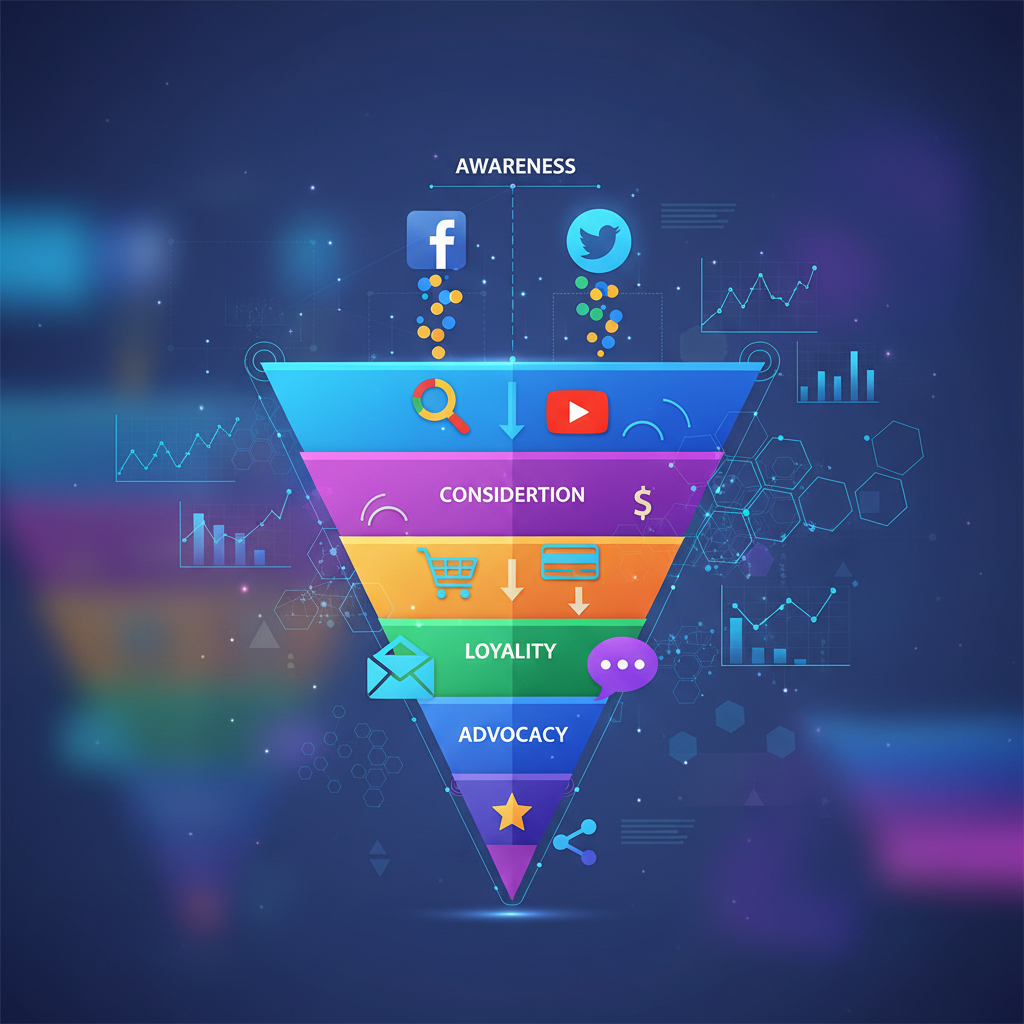
The full-funnel approach in digital marketing acknowledges that customers interact with a brand at various stages before making a purchase and beyond. It is a comprehensive strategy that targets potential customers at every phase of their journey, from initial exposure to becoming a loyal advocate. This methodology ensures that marketing efforts are cohesive and address specific user needs and behaviors at each stage, maximizing engagement and conversion potential.

Effective budget allocation across the full funnel requires understanding the distinct objectives and appropriate channels for each stage.
* Awareness Stage: At the top of the funnel, the goal is to introduce the brand or product to a broad audience who may not yet know about it. This stage focuses on generating interest and visibility.
* Tactics for Awareness: Common tactics include display advertising, social media campaigns (organic and paid), influencer marketing, and content marketing (blog posts, infographics). The budget here is often allocated to reach and impressions.
* Consideration Stage: Once potential customers are aware, the next step is to nurture their interest and help them evaluate the brand’s offerings. This stage involves providing more detailed information and building trust.
* Tactics for Consideration: This includes retargeting ads, email marketing, educational webinars, detailed product pages, and comparison content. Budget allocation shifts towards engagement metrics like clicks, video views, and time on site.
* Conversion Stage: The conversion stage is where prospects are encouraged to take a desired action, such as making a purchase, signing up for a service, or requesting a demo. This is the critical point for generating direct revenue.
* Tactics for Conversion: Search engine marketing (SEM) with strong calls to action, highly targeted social media ads, landing page optimization, and special offers are key. Budget focuses on cost per acquisition (CPA) and conversion rates.
* Loyalty and Advocacy Stage: The journey doesn’t end with a sale. Fostering customer loyalty and encouraging advocacy drives repeat business and organic growth. This stage builds long-term relationships.
* Tactics for Loyalty: Email newsletters, loyalty programs, customer support, exclusive content, and user-generated content campaigns are effective. Budget supports customer retention and lifetime value (LTV).
A balanced budget ensures resources are not disproportionately skewed towards just one stage, which can create bottlenecks in the customer journey. For example, too much focus on conversion without sufficient awareness efforts will limit the pool of potential customers. Conversely, extensive awareness campaigns without strong consideration and conversion paths will result in wasted impressions.
Defining Customer Journey Touchpoints for Budgeting
Identifying every potential customer touchpoint is crucial for precise budget allocation. A touchpoint is any interaction a customer has with your brand, whether direct or indirect. These can range from seeing a social media ad to reading a product review or contacting customer service. Mapping these touchpoints helps marketers understand where and when to engage with their audience. This understanding allows for strategic investment in channels that are most impactful at specific points in the journey.
Allocating Resources to Top, Middle, and Bottom of Funnel Activities
Effective allocation involves segmenting the budget based on funnel stages. Top-of-funnel (TOFU) activities, like brand awareness campaigns, often require broader reach and therefore a larger initial investment in impressions. Middle-of-funnel (MOFU) activities, such as lead nurturing, focus on engagement and require resources for content creation and retargeting. Bottom-of-funnel (BOFU) efforts, aimed at conversion, demand highly targeted campaigns and efficient conversion rate optimization (CRO). The exact split depends on business goals, target audience, and current market position.
Optimizing Marketing Budget Split Between Brand and Performance
Determining how to split marketing budget between brand and performance is a critical decision for digital marketers, especially in 2026, as the digital landscape continues to evolve rapidly. The optimal split ensures both long-term brand equity and immediate sales growth are addressed. Brand marketing focuses on building awareness, perception, and loyalty over time, while performance marketing is geared towards immediate, measurable actions and conversions.
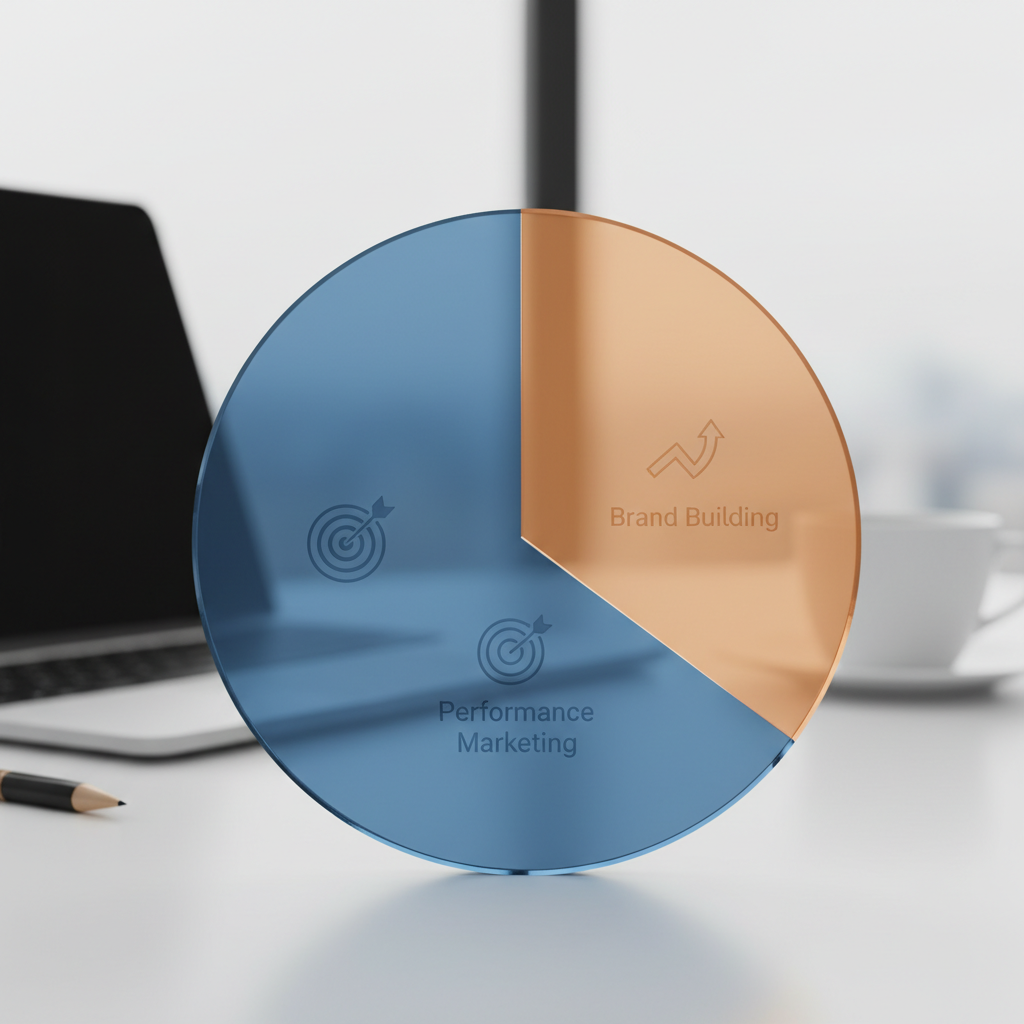
A common recommendation, often cited in industry discussions, suggests a split where a significant portion, perhaps 40-60%, is dedicated to brand building, with the remainder allocated to performance. However, this is not a one-size-fits-all solution; the ideal ratio varies significantly based on factors such as industry, business maturity, competitive landscape, and specific business objectives. For instance, a new startup might initially lean more heavily into performance marketing to quickly generate sales and prove viability, while an established brand might invest more in brand building to maintain market leadership and customer loyalty.
* Brand Marketing Investment: This includes activities like content marketing, public relations, influencer collaborations, and large-scale awareness campaigns on platforms like YouTube or TikTok. The goal is to create emotional connections and long-term value. Metrics for success often include brand recall, sentiment, website traffic, and organic search visibility, which can be harder to attribute directly to immediate sales but contribute significantly to future performance.
* Performance Marketing Investment: This encompasses channels such as paid search (Google Ads), social media advertising (conversion campaigns), affiliate marketing, and display retargeting. These campaigns are highly measurable, with clear KPIs like cost per click (CPC), cost per lead (CPL), and return on ad spend (ROAS). The focus is on driving immediate, trackable actions.
The interplay between brand and performance is crucial. Strong brand equity can significantly reduce performance marketing costs by increasing click-through rates (CTRs) and conversion rates, as consumers are more likely to engage with brands they recognize and trust. Conversely, successful performance campaigns can introduce new customers to the brand, expanding the audience for future brand-building efforts. Therefore, viewing them as complementary rather than competing investments is key to a holistic marketing budget allocation strategy for full-funnel digital campaigns.
Balancing Short-Term Gains with Long-Term Brand Equity
Achieving the right balance between short-term sales and long-term brand growth is a continuous challenge. Short-term performance marketing can deliver immediate revenue, which is vital for business operations. However, neglecting brand building can lead to diminishing returns on performance campaigns over time, as customer acquisition costs rise and brand differentiation erodes. A strategic approach involves allocating enough budget to performance to meet immediate sales targets while simultaneously investing in brand initiatives that secure future growth and reduce reliance on paid channels.
Factors Influencing the Ideal Brand vs. Performance Split
Several factors dictate the optimal budget split. A new product launch might require a heavier emphasis on brand awareness initially, followed by performance marketing to drive early adoption. Highly competitive industries may necessitate consistent brand investment to stand out. The target audience’s digital behavior also plays a role; if they primarily discover products through social media, brand-focused video campaigns might be more effective. Regular analysis of market trends, competitor strategies, and internal data is essential to adjust this split dynamically.
Crafting a Digital Marketing Budget Planning Framework for Leaders
Developing a robust digital marketing budget planning framework for CMOs and directors is fundamental for strategic resource allocation and achieving business objectives. This framework provides a structured approach to budgeting, ensuring that all marketing investments are aligned with the company’s overarching goals and deliver measurable results. It moves beyond simple expenditure tracking to a proactive, data-driven planning cycle.
A comprehensive framework typically involves several key steps:
1. Define Business Objectives: Clearly articulate what the business aims to achieve (e.g., 20% revenue growth, 15% increase in market share, 10% improvement in customer retention). These objectives directly inform marketing goals.
2. Set Marketing Goals: Translate business objectives into specific, measurable, achievable, relevant, and time-bound (SMART) marketing goals (e.g., increase website traffic by 30%, reduce customer acquisition cost by 10%).
3. Audience and Market Analysis: Understand the target audience, their digital behavior, competitor strategies, and market trends. This informs channel selection and messaging.
4. Channel Selection and Strategy: Identify the most effective digital channels to reach the target audience and achieve marketing goals. Develop specific strategies for each channel.
5. Budget Allocation: Distribute funds across channels, campaigns, and funnel stages based on projected ROI, historical performance, and strategic priorities. This is where the marketing budget allocation strategy for full-funnel digital campaigns comes into play.
6. Measurement and Reporting: Establish key performance indicators (KPIs) for each campaign and channel. Implement robust tracking and reporting mechanisms to monitor performance.
7. Optimization and Iteration: Continuously analyze data, identify areas for improvement, and adjust the budget and strategies as needed. This iterative process ensures agility and maximizes efficiency.
This structured approach empowers CMOs and directors to make informed decisions, justify marketing spend, and demonstrate tangible value to the organization. It also fosters accountability and transparency within the marketing team. For companies seeking to enhance their capabilities in this area, exploring comprehensive Digital Marketing Services can provide valuable insights and support in developing and implementing such frameworks.
Integrating OKRs and KPIs into Budget Decisions
Objective Key Results (OKRs) and Key Performance Indicators (KPIs) are vital for guiding budget decisions. OKRs define ambitious goals and measurable outcomes, while KPIs track performance against specific metrics. By linking budget allocations directly to these, leaders can ensure that every dollar spent contributes to achieving strategic objectives. For example, if an OKR is to “Increase lead generation by 25%,” the budget might prioritize channels and campaigns known for effective lead capture, such as paid search and content syndication, with KPIs like CPL and lead volume being closely monitored.
Forecasting ROI and Justifying Marketing Spend
Forecasting the return on investment (ROI) for marketing activities is crucial for justifying budget requests. This involves estimating potential revenue generated versus the cost of campaigns. While not always an exact science, using historical data, industry benchmarks, and predictive analytics can provide reasonable projections. CMOs and directors must be able to articulate the expected ROI for different initiatives, demonstrating how marketing spend directly contributes to the company’s financial health and growth. This often involves scenario planning and presenting various investment options with their corresponding potential returns.
Implementing AI-Driven Budget Pacing for Always-On Campaigns
An AI-driven budget pacing strategy for always-on digital campaigns is becoming indispensable for optimizing ad spend in real-time and ensuring continuous campaign effectiveness. AI-driven pacing refers to the automated adjustment of marketing budgets and bids across various channels based on performance data, market conditions, and predicted outcomes. This dynamic approach allows campaigns to maintain optimal spending levels throughout their duration, preventing overspending or underspending and maximizing ROI.
Traditional manual budget pacing can be challenging, especially for complex, multi-channel campaigns running 24/7. AI algorithms, however, can process vast amounts of data points, including historical performance, seasonality, competitor activity, and audience behavior, to make intelligent adjustments. This ensures that budget is allocated to the highest-performing segments and channels at the most opportune times. For example, if an AI system detects a surge in conversion rates during specific hours or on particular days, it can automatically increase bids or allocate more budget to capitalize on that opportunity. Conversely, it can reduce spend during periods of low performance to avoid waste.
Key benefits of AI-driven budget pacing include:
* Real-time Optimization: Adjusts spend and bids moment-by-moment, reacting to live data.
* Improved Efficiency: Minimizes wasted spend by reallocating budget from underperforming areas to high-potential opportunities.
* Enhanced Performance: Drives better results by ensuring campaigns are always running at their most effective.
* Scalability: Manages complex campaigns across numerous channels without manual oversight.
* Predictive Capabilities: Uses machine learning to forecast future performance and proactively adjust strategy.
This capability is particularly valuable for “always-on” campaigns, which run continuously and require constant monitoring and optimization to remain effective. AI tools can identify subtle trends and patterns that human analysts might miss, leading to more granular and impactful budget adjustments.
Leveraging Machine Learning for Dynamic Budget Adjustments
Machine learning algorithms are at the core of AI-driven budget pacing. These algorithms learn from past campaign performance, user interactions, and external factors to predict future outcomes. They can identify optimal times to increase or decrease bids, reallocate budget between channels, or even pause underperforming ad sets. This continuous learning and adaptation ensure that marketing spend is always aligned with the most promising opportunities, maximizing the efficiency of the marketing budget allocation strategy for full-funnel digital campaigns.
Integrating AI Tools for Cross-Channel Budget Optimization
Effective AI-driven pacing extends beyond individual channels to optimize budgets across an entire portfolio of campaigns. Integrating AI tools allows for a holistic view of performance across paid search, social media, display, and other channels. These tools can identify which channels are delivering the best ROI at any given moment and dynamically shift budget accordingly. This cross-channel optimization prevents siloed spending and ensures that the overall marketing budget is working cohesively to achieve full-funnel objectives, making the most of every dollar.
Strategic Marketing Budget Allocation by Channel for Ecommerce
For ecommerce brands, a strategic marketing budget allocation by channel is paramount for driving sales and sustainable growth. The diverse array of digital channels each offers unique advantages for reaching customers at different stages of the purchase journey. Effective allocation requires understanding the strengths of each channel and how they contribute to the overall full-funnel strategy.
Here’s a breakdown of common channels and their typical roles in an ecommerce budget:
| Channel | Primary Funnel Stage | Typical Budget % (Illustrative) | Key Considerations for Ecommerce |
|---|---|---|---|
| Paid Search (SEM) | Consideration, Conversion | 25-40% | High intent users, competitive bids, product-specific keywords, shopping ads are crucial. |
| Paid Social Media | Awareness, Consideration, Conversion | 20-35% | Audience targeting, visual content, retargeting, influencer collaborations, dynamic product ads. |
| Email Marketing | Consideration, Conversion, Loyalty | 5-15% | High ROI, nurture leads, abandoned cart recovery, loyalty programs, segmentation. |
| Content Marketing (SEO) | Awareness, Consideration | 10-20% | Long-term organic traffic, authority building, product guides, blog posts, video content. |
| Affiliate Marketing | Consideration, Conversion | 5-10% | Performance-based, broad reach through partners, commission structures. |
| Display Advertising | Awareness, Retargeting | 5-10% | Brand visibility, audience segmentation, visual impact, remarketing to site visitors. |
Ecommerce brands often heavily invest in paid search due to its ability to capture high-intent buyers actively searching for products. Paid social media is crucial for both demand generation through broad targeting and conversion through retargeting and dynamic product ads. Email marketing consistently delivers high ROI, particularly for abandoned carts and customer retention. Content marketing and SEO are vital for long-term organic visibility and establishing brand authority. The specific percentages will fluctuate based on the product, target audience, competitive landscape, and overall business goals for 2026. A new brand might allocate more to paid channels for rapid customer acquisition, while an established brand might lean more into loyalty programs and content.
Allocating Budget for Paid Search and Social Media for Ecommerce Growth
Paid search and social media typically command a significant portion of an ecommerce marketing budget. Paid search (Google Ads, Bing Ads) targets users with explicit intent, making it highly effective for bottom-of-funnel conversions. Budget allocation here focuses on competitive keywords, product listing ads (PLAs), and strong calls to action. Paid social media (Facebook, Instagram, TikTok, Pinterest Ads) excels at audience targeting, allowing brands to reach specific demographics, interests, and behaviors. It’s powerful for both awareness through engaging content and conversion via dynamic retargeting. The balance between these two depends on product type, audience behavior, and the brand’s creative assets.
Investing in Email Marketing and SEO for Long-Term Ecommerce Success
While paid channels offer immediate results, investing in email marketing and SEO provides long-term, sustainable growth for ecommerce. Email marketing boasts one of the highest ROIs, driving repeat purchases, nurturing leads, and recovering abandoned carts. Budget here supports platform costs, segmentation tools, and creative content. SEO ensures organic visibility, attracting qualified traffic without direct ad spend. Allocations for SEO go towards content creation, technical optimization, and link building. These channels build owned audiences and assets, reducing reliance on paid media over time and strengthening the overall marketing budget allocation strategy for full-funnel digital campaigns.
Continuous Measurement, Optimization, and Iteration in Budgeting
Effective marketing budget allocation strategy for full-funnel digital campaigns is not a one-time task but an ongoing, iterative process of measurement, optimization, and adaptation. Digital marketing is dynamic, with constant shifts in algorithms, consumer behavior, and competitive landscapes. Therefore, a static budget plan quickly becomes obsolete. Continuous monitoring and adjustment are crucial to ensure resources are always deployed efficiently and effectively.
The cycle of measurement, optimization, and iteration involves:
1. Establishing Clear KPIs: Before launching any campaign, define specific key performance indicators (KPIs) that align with the campaign’s objectives and overall business goals. These might include cost per acquisition (CPA), return on ad spend (ROAS), customer lifetime value (CLTV), conversion rates, click-through rates (CTR), and engagement metrics.
2. Implementing Robust Tracking: Utilize analytics platforms (e.g., Google Analytics, CRM systems, ad platform dashboards) to meticulously track campaign performance across all channels and funnel stages. Ensure proper attribution models are in place to understand the true impact of each touchpoint.
3. Regular Performance Review: Conduct frequent (weekly, bi-weekly, or monthly) reviews of campaign data. Identify what’s working well and what isn’t. Look for trends, anomalies, and opportunities for improvement.
4. Data-Driven Optimization: Based on performance insights, make data-driven adjustments to the budget. This could involve:
* Shifting budget from underperforming channels or campaigns to those exceeding expectations.
* Adjusting bids and targeting parameters.
* Optimizing creative assets and landing pages.
* Testing new channels or strategies.
5. Iterative Planning: Incorporate learnings from past campaigns into future budget planning cycles. This ensures that the framework itself evolves, becoming more sophisticated and accurate over time. This iterative approach is a cornerstone of any effective digital marketing budget planning framework for CMOs and directors.
This continuous feedback loop allows marketers to be agile, responsive, and proactive. It prevents significant budget waste and ensures that marketing investments are consistently driving the best possible outcomes, adapting to new market conditions or emerging opportunities.
Utilizing Attribution Models for Accurate Budget Insights
Attribution models are critical for understanding which marketing touchpoints contribute to conversions and, therefore, for making informed budget decisions. Different models (e.g., first-click, last-click, linear, time decay, position-based, data-driven) assign credit to various interactions along the customer journey. Choosing the right attribution model, or even a combination, provides a more accurate picture of channel effectiveness than relying solely on last-click data. This insight allows marketers to allocate budget more strategically to channels that truly influence conversions, rather than just those that get the final click.
Adapting Budget Strategy to Market Shifts and Competitive Landscape
The digital marketing landscape is constantly evolving, necessitating a flexible budget strategy. Market shifts, such as new platform features, changes in consumer privacy regulations, or economic downturns, can significantly impact campaign performance. Similarly, monitoring competitor activities and their budget allocations can reveal opportunities or threats. An agile budget framework allows for rapid reallocation of funds to capitalize on new trends or mitigate risks. This responsiveness ensures that the marketing budget allocation strategy for full-funnel digital campaigns remains relevant and effective in a dynamic environment.
FAQ Section: Marketing Budget Allocation
What is a full-funnel marketing budget allocation strategy?
A full-funnel marketing budget allocation strategy involves distributing financial resources across all stages of the customer journey, from initial awareness to post-purchase loyalty. It ensures every touchpoint is optimized to engage potential customers and drive them towards conversion and retention, maximizing overall marketing effectiveness.
How do you determine the ideal split between brand and performance marketing budget?
The ideal split between brand and performance marketing budget depends on factors like business maturity, industry, and specific goals. While a 40-60% brand to performance ratio is often suggested, newer businesses might lean more towards performance for quick sales, while established brands may invest more in brand building for long-term equity.
What is an AI-driven budget pacing strategy?
An AI-driven budget pacing strategy uses artificial intelligence and machine learning algorithms to dynamically adjust marketing spend and bids across channels in real-time. It optimizes budget allocation based on performance data, market conditions, and predictive analytics to maximize ROI for always-on digital campaigns.
Why is a digital marketing budget planning framework important for CMOs?
A digital marketing budget planning framework provides CMOs and directors with a structured, data-driven approach to allocate resources. It ensures marketing investments align with business objectives, facilitates performance tracking, justifies spend, and enables continuous optimization for better results and accountability.
How should ecommerce brands allocate their marketing budget by channel?
Ecommerce brands typically allocate significant budget to paid search and social media for immediate sales. They also invest in email marketing for high ROI on retention and abandoned carts, and SEO/content marketing for long-term organic growth. The exact channel mix depends on product, audience, and competitive landscape.
What role does attribution play in budget allocation?
Attribution models are crucial for understanding which marketing touchpoints genuinely contribute to conversions. By using models like data-driven or time-decay, marketers can accurately credit different channels, allowing them to make more informed decisions about where to allocate budget for maximum impact across the full funnel.
Optimizing your marketing budget allocation strategy for full-funnel digital campaigns is not merely about cutting costs; it’s about intelligent investment for maximum impact. By embracing a data-driven, iterative approach, businesses can ensure every dollar spent contributes meaningfully to their objectives.
* Embrace the Full Funnel: Allocate resources strategically across awareness, consideration, conversion, and loyalty stages.
* Balance Brand and Performance: Find the optimal split that supports both immediate sales and long-term brand equity.
* Implement a Robust Framework: Use a structured planning process to align marketing spend with business goals.
* Leverage AI: Utilize AI-driven pacing for dynamic, real-time budget optimization, especially for always-on campaigns.
* Optimize by Channel: Understand the unique strengths of each digital channel for specific ecommerce goals.
* Prioritize Measurement: Continuously track KPIs, utilize attribution models, and adapt your strategy based on performance insights.
By integrating these principles, marketers can build agile, effective, and highly accountable budget strategies that drive sustainable growth in the evolving digital landscape.