

LinkedIn Sales Navigator Marketing Strategy for B2B Lead Generation
Unlocking high-quality B2B leads requires a sophisticated approach, and a robust LinkedIn Sales Navigator marketing strategy for B2B lead generation is at its core. This powerful platform transforms how sales and marketing teams identify, engage, and convert prospects. By leveraging its advanced features, businesses can pinpoint ideal customer profiles, monitor crucial intent signals, and craft highly personalized outreach. Implementing a strategic framework ensures that every effort contributes to a stronger, more efficient lead generation pipeline. This article explores how to maximize Sales Navigator for unparalleled B2B growth and consistent revenue generation.
Optimizing LinkedIn Sales Navigator for Account-Based Marketing Success
Optimizing LinkedIn Sales Navigator for account-based marketing (ABM) success involves using its precise filtering and tracking capabilities to identify, understand, and engage target accounts and key stakeholders. ABM is a strategic approach where marketing and sales teams work together to target specific high-value accounts with personalized campaigns. Sales Navigator provides the tools necessary to execute this strategy effectively, allowing businesses to move beyond broad targeting to focus on accounts most likely to convert.
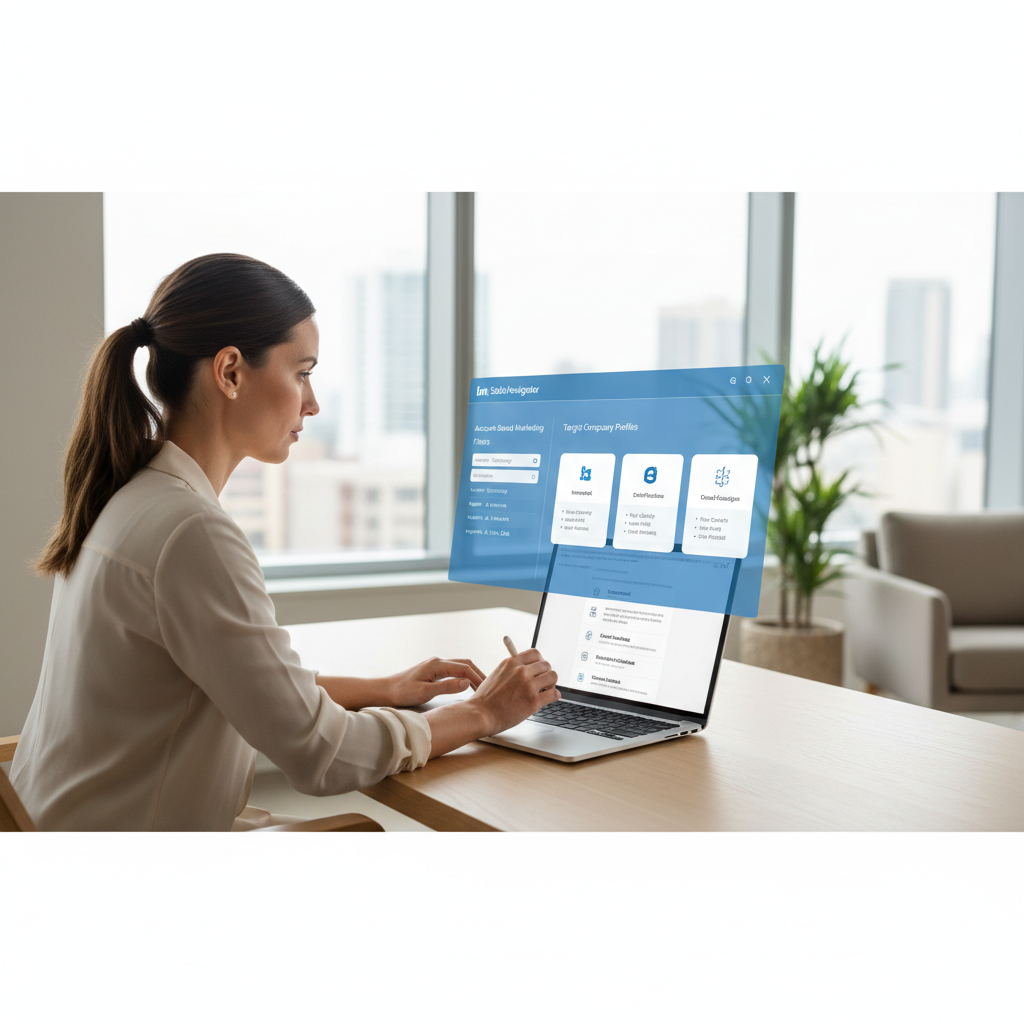
How to Use LinkedIn Sales Navigator for Account-Based Marketing Strategy Development
To develop an effective ABM strategy with Sales Navigator, start by defining your ideal customer profile (ICP) and target accounts. Sales Navigator’s advanced search filters allow you to identify companies based on industry, size, growth rate, technology used, and even specific keywords in job descriptions. This granular control ensures your efforts are concentrated on accounts that align perfectly with your service offerings. You can then save these searches as custom lists, enabling continuous monitoring of new prospects within your target accounts. This proactive approach ensures you are always aware of potential opportunities.
Building Target Account Lists and Identifying Key Stakeholders
Once target accounts are identified, Sales Navigator helps in building comprehensive lists and pinpointing key decision-makers within those organizations. Use the “Lead Builder” and “Account Builder” functions to create highly segmented lists of individuals and companies. Filters such as job title, seniority level, department, and years in current position are invaluable for finding the right people. Furthermore, Sales Navigator provides insights into who has recently changed jobs or received promotions, offering opportune moments for outreach. Understanding the organizational structure and key influencers within each target account is crucial for a successful ABM campaign.
Tracking Account Activity and Engagement for Personalized Outreach
Sales Navigator excels at tracking account activity, providing insights into content engagement and company news. Monitoring these signals allows for highly personalized and timely outreach. You can see when employees at your target accounts mention your competitors, engage with industry-relevant content, or announce new projects. These insights inform your messaging, making your outreach more relevant and increasing the likelihood of a positive response. For instance, if a target account announces a new product, you can tailor your message to explain how your solution complements their innovation.
Integrating Sales Navigator with Content Marketing for SDRs
Integrating Sales Navigator and content marketing integration strategy for SDRs (Sales Development Representatives) empowers them to deliver highly relevant content to prospects at the opportune moment, significantly enhancing engagement and conversion rates. SDRs can leverage Sales Navigator’s insights to understand a prospect’s interests and pain points, then use this knowledge to share tailored content that addresses those specific needs. This strategic alignment transforms generic outreach into valuable, problem-solving interactions.

How SDRs Use Sales Navigator to Identify Content Opportunities
SDRs can use Sales Navigator to identify prime content opportunities by monitoring prospect activity and company updates. Sales Navigator provides a feed that highlights when prospects interact with specific topics, post articles, or comment on industry news. This behavioral data is a goldmine for understanding what content resonates with them. For example, if a prospect frequently engages with posts about digital transformation, an SDR can share a company whitepaper on that very topic. This targeted content delivery positions the SDR as a helpful resource rather than just a salesperson.
Matching Content Assets to Prospect Needs and Stages
A critical aspect of this integration is matching the right content assets to a prospect’s specific needs and their stage in the buying journey. Sales Navigator helps SDRs discern these nuances. For a prospect just beginning their research, an introductory blog post or infographic might be appropriate. For someone further along, a case study, webinar recording, or a detailed solution brief would be more impactful. SDRs can use Sales Navigator’s “Icebreakers” and “Mentions” features to find relevant talking points, then select content from their marketing library that directly addresses those points. This ensures content is always contextually relevant and adds value.
Measuring Content Effectiveness and SDR Engagement
Measuring the effectiveness of content shared through Sales Navigator is vital for continuous improvement. SDRs should track which content pieces lead to higher engagement rates, more replies, or successful meeting bookings. While Sales Navigator itself doesn’t offer deep content analytics, SDRs can use CRM systems to log shared content and track subsequent interactions. This data helps refine the content strategy, identifying top-performing assets and areas where more targeted content is needed. Regular feedback loops between marketing and sales, facilitated by Sales Navigator insights, ensure content remains aligned with sales objectives. Moreover, understanding how our Digital Marketing Services can amplify these efforts provides a holistic approach to lead generation.
Crafting Effective LinkedIn Outreach Sequences Using Sales Navigator Data
Crafting effective LinkedIn outreach sequence strategy combined with Sales Navigator data significantly boosts response rates by enabling hyper-personalization and precise timing. Sales Navigator provides unparalleled insights into prospect behavior, company news, and shared connections, allowing sales professionals to move beyond generic messages to highly relevant and engaging communications. This data-driven approach ensures that each touchpoint in an outreach sequence is tailored to resonate with the individual prospect. For more insights, check out our guide on Digital Marketing Services.
Designing Multi-Touch Outreach Sequences with Personalization
Designing multi-touch outreach sequences begins with leveraging Sales Navigator’s detailed prospect profiles to personalize every message. Instead of a single, isolated message, a sequence involves several strategic touchpoints over time. Each message should build upon previous interactions or new insights gathered from Sales Navigator. For example, the first message might reference a prospect’s recent post or a company announcement, while subsequent messages could share relevant content or introduce a problem-solving solution. Sales Navigator’s “Viewed Profile” and “Shared Experiences” features offer excellent starting points for personalization.
| Outreach Sequence Stage | Sales Navigator Data Point | Personalization Example |
|---|---|---|
| Connection Request | Shared connections, recent activity, company news | “Noticed we both know [Mutual Connection] / Saw your recent post on [Topic] – insightful!” |
| Follow-up Message 1 (after connect) | Prospect’s job changes, company growth, industry trends | “Congratulations on [Promotion/Company Milestone]! Thought you might find [Relevant Article] interesting given your work at [Company].” |
| Follow-up Message 2 (value add) | Content engagement, mentions of competitors, pain points | “Given your interest in [Topic/Challenge], we’ve helped companies like yours achieve [Benefit] by [Solution].” |
| Call to Action (CTA) | Specific project, current initiatives, technology stack | “Would you be open to a brief chat to explore how [Our Solution] could impact [Specific Goal] at [Company]?” |
Timing Your Outreach for Maximum Impact Using Sales Navigator Alerts
Timing is paramount in outreach, and Sales Navigator alerts provide the intelligence needed to send messages at the most impactful moments. Set up alerts for when prospects change jobs, get promoted, or when their company is mentioned in the news. These events often signal a change in priorities or budget, creating a window of opportunity. For instance, a new hire in a key role might be looking for new solutions, making them highly receptive to outreach. Similarly, a company acquisition could mean new challenges that your product or service can address. Sales Navigator helps you act on these signals promptly.
Automating and Scaling Outreach While Maintaining Personalization
While personalization is key, scaling outreach is also crucial for B2B lead generation. Tools that integrate with Sales Navigator can help automate certain aspects of the sequence while still maintaining a high degree of personalization. This often involves using Sales Navigator to identify target lists and gather data, then using a CRM or a specialized outreach tool to manage the sequence. The key is to use the data gathered from Sales Navigator to populate dynamic fields in your outreach messages, ensuring each email or LinkedIn message feels individually crafted. This balance allows SDRs to engage with a larger volume of prospects without sacrificing quality.
Leveraging LinkedIn Sales Navigator Intent Signals for Demand Generation
Leveraging LinkedIn Sales Navigator intent signals for demand generation in 2026 is crucial for identifying prospects actively researching solutions and demonstrating a propensity to buy. Intent signals are behavioral cues that indicate a prospect’s interest in a particular product or service category. Sales Navigator provides unique access to these signals, allowing marketing and sales teams to prioritize engagement with “warm” leads and optimize their demand generation efforts.
Understanding and Identifying Key Intent Signals in Sales Navigator
Key intent signals in Sales Navigator include prospects viewing your company’s profile, engaging with your content, or researching competitors. Furthermore, Sales Navigator tracks job changes, funding rounds, and company growth, all of which can be strong indicators of a potential need for your solution. For example, a company that recently secured a new funding round might be looking to invest in new technologies or expand its operations. Understanding these signals allows for a more proactive and targeted approach to demand generation, moving beyond traditional demographic and firmographic targeting.
Prioritizing Prospects Based on Intent and Engagement Levels
Prioritizing prospects based on their intent and engagement levels is a core component of an effective demand generation strategy. Sales Navigator allows you to create custom lead and account lists, then filter and sort them by recent activity and engagement. Prospects who have viewed your profile multiple times, downloaded your content, or visited your website (if integrated) should receive higher priority. This prioritization ensures that your sales team focuses their efforts on the most promising leads, improving efficiency and conversion rates. It’s about working smarter, not just harder.
Developing Targeted Campaigns Based on Identified Intent
Once intent signals are identified and prospects prioritized, the next step is to develop targeted campaigns that directly address their demonstrated interest. This might involve crafting specific ad campaigns on LinkedIn that speak to the observed intent, sending personalized emails with relevant case studies, or initiating direct outreach from an SDR. For example, if Sales Navigator indicates a prospect is researching “cloud migration,” a targeted campaign could highlight your company’s expertise and solutions in cloud services, offering a whitepaper or a free consultation. This direct alignment between intent and campaign content significantly increases relevance and impact.
Measuring ROI and Optimizing Your LinkedIn Sales Navigator Strategy
Measuring the ROI and continually optimizing your LinkedIn Sales Navigator marketing strategy for B2B lead generation is essential to ensure maximum effectiveness and justify investment. By tracking key metrics and analyzing performance data, businesses can identify what’s working, what’s not, and make data-driven adjustments to improve their lead generation efforts. This iterative process of measurement and optimization leads to sustained growth and higher conversion rates.
Key Metrics for Tracking Sales Navigator Performance
Tracking key performance indicators (KPIs) is fundamental to understanding the impact of your Sales Navigator strategy. Important metrics include:
* Connection request acceptance rate: Indicates the effectiveness of your initial outreach and targeting.
* InMail response rate: Measures the quality of your personalized messages.
* Lead-to-opportunity conversion rate: Shows how many Sales Navigator-sourced leads become qualified opportunities.
* Opportunity-to-win rate: Reflects the overall quality of leads generated through the platform.
* Time to conversion: How long it takes for a Sales Navigator lead to close.
* Revenue generated from Sales Navigator leads: The ultimate measure of ROI.
These metrics provide a holistic view of your strategy’s performance, from initial engagement to closed deals.
Analyzing Data to Identify Strengths and Weaknesses
Analyzing the data gathered from your Sales Navigator activities helps identify strengths and weaknesses in your approach. Look for patterns in successful outreach sequences, content types that generate the most engagement, and specific filters that yield the highest quality leads. Conversely, identify areas where performance is lagging, such as low InMail response rates for certain industries or poor conversion rates from particular lead sources. This analysis should inform adjustments to your targeting, messaging, and content strategy. For instance, if a specific industry shows low engagement, you might need to refine your ICP or tailor your value proposition more effectively for that sector.
Iterative Optimization: Adjusting Strategies for Continuous Improvement
Iterative optimization involves making continuous adjustments to your Sales Navigator strategy based on performance analysis. This could mean refining your search filters to target a more precise audience, experimenting with different InMail subject lines, or developing new content assets to address specific pain points. Regular A/B testing of your outreach messages and content can also provide valuable insights into what resonates best with your target audience. The goal is to continuously refine your processes, ensuring that your Sales Navigator efforts are always aligned with your B2B lead generation objectives and delivering the best possible results. This commitment to ongoing improvement ensures your strategy remains agile and effective in a dynamic market.
What is LinkedIn Sales Navigator and how does it help B2B lead generation?
LinkedIn Sales Navigator is a premium sales platform designed to help sales professionals find and engage with the right prospects and accounts. It aids B2B lead generation by providing advanced search filters, lead recommendations, real-time insights into prospect activity, and tools for personalized outreach, enabling more targeted and effective sales efforts.
How can Sales Navigator be used for account-based marketing (ABM)?
For ABM, Sales Navigator allows users to build precise target account lists using granular filters like industry, company size, and growth. It helps identify key decision-makers within those accounts and tracks their activity and engagement, enabling highly personalized outreach and content delivery tailored to specific account needs.
What are “intent signals” in LinkedIn Sales Navigator for demand generation?
Intent signals in Sales Navigator are behavioral cues indicating a prospect’s active interest in a solution or product category. These include viewing your company profile, engaging with relevant content, researching competitors, or company events like funding rounds or job changes. Leveraging these signals helps prioritize “warm” leads for demand generation.
Can SDRs integrate Sales Navigator with content marketing?
Yes, SDRs can effectively integrate Sales Navigator with content marketing by using its insights to understand prospect interests and pain points. This allows them to share highly relevant content assets, such as blog posts or case studies, that directly address a prospect’s needs, enhancing engagement and positioning the SDR as a valuable resource.
How do you measure the ROI of a LinkedIn Sales Navigator strategy?
Measuring ROI involves tracking key metrics like connection request acceptance rates, InMail response rates, lead-to-opportunity conversion rates, and the total revenue generated from Sales Navigator-sourced leads. Analyzing these KPIs helps evaluate the strategy’s effectiveness and justify the investment by demonstrating tangible business outcomes.
What is the best way to craft a LinkedIn outreach sequence using Sales Navigator data?
The best way involves designing multi-touch sequences with hyper-personalization, leveraging Sales Navigator’s detailed prospect profiles for each message. Timing is crucial, utilizing Sales Navigator alerts for job changes or company news to send messages at opportune moments, ensuring relevance and increasing response rates.
A well-executed LinkedIn Sales Navigator marketing strategy for B2B lead generation is indispensable for modern sales and marketing teams. It empowers businesses to move beyond generic outreach, focusing on precision targeting, personalized engagement, and data-driven decision-making.
Key takeaways for maximizing your Sales Navigator impact include:
* Strategic ABM: Utilize advanced filters to build precise target account lists and identify key stakeholders.
* Content Alignment: Integrate content marketing with SDR efforts, using Sales Navigator insights to deliver relevant content at the right time.
* Personalized Outreach: Craft multi-touch LinkedIn outreach sequences that leverage Sales Navigator data for hyper-personalization and optimal timing.
* Intent-Driven Demand Gen: Capitalize on LinkedIn Sales Navigator intent signals to prioritize and engage prospects actively seeking solutions.
* Continuous Optimization: Regularly measure ROI through key metrics and iteratively refine your strategy for sustained improvement.
By embracing these principles, your organization can transform its B2B lead generation efforts, cultivate stronger relationships, and drive consistent, measurable growth. Invest in a robust Sales Navigator strategy to unlock your full potential in the competitive B2B landscape.