
Geofencing Advertising Strategy For Local Business Foot Traffic 2
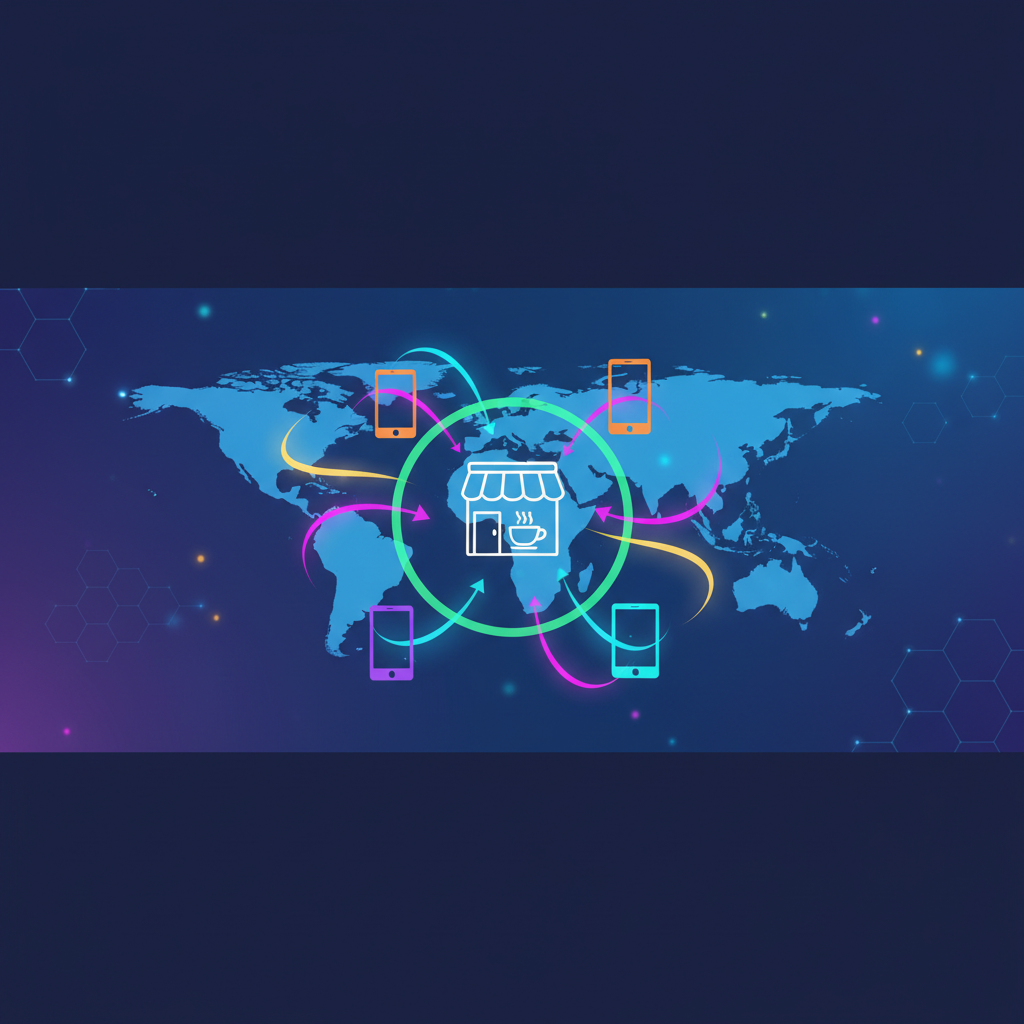
Geofencing advertising strategy is a powerful location-based marketing technique that creates virtual boundaries around specific geographic areas, enabling businesses to deliver targeted ads to consumers who enter or exit these zones. This approach helps local businesses drive increased foot traffic by reaching potential customers when they are physically near a store or relevant location. By leveraging precise location data, companies can engage with highly qualified leads, encouraging them to visit their brick-and-mortar establishments.
Understanding Geofencing: How Location-Based Targeting Boosts Local Business Foot Traffic
Geofencing significantly boosts local business foot traffic by creating virtual perimeters around physical locations and serving targeted advertisements to smartphone users who cross these digital boundaries. This allows businesses to engage with potential customers precisely when they are most likely to be receptive to a local offer or reminder. The core of a successful geofencing advertising strategy lies in its ability to deliver hyper-relevant messages based on a user’s real-world movements.
Defining Geofencing and Its Core Mechanics for Local Businesses
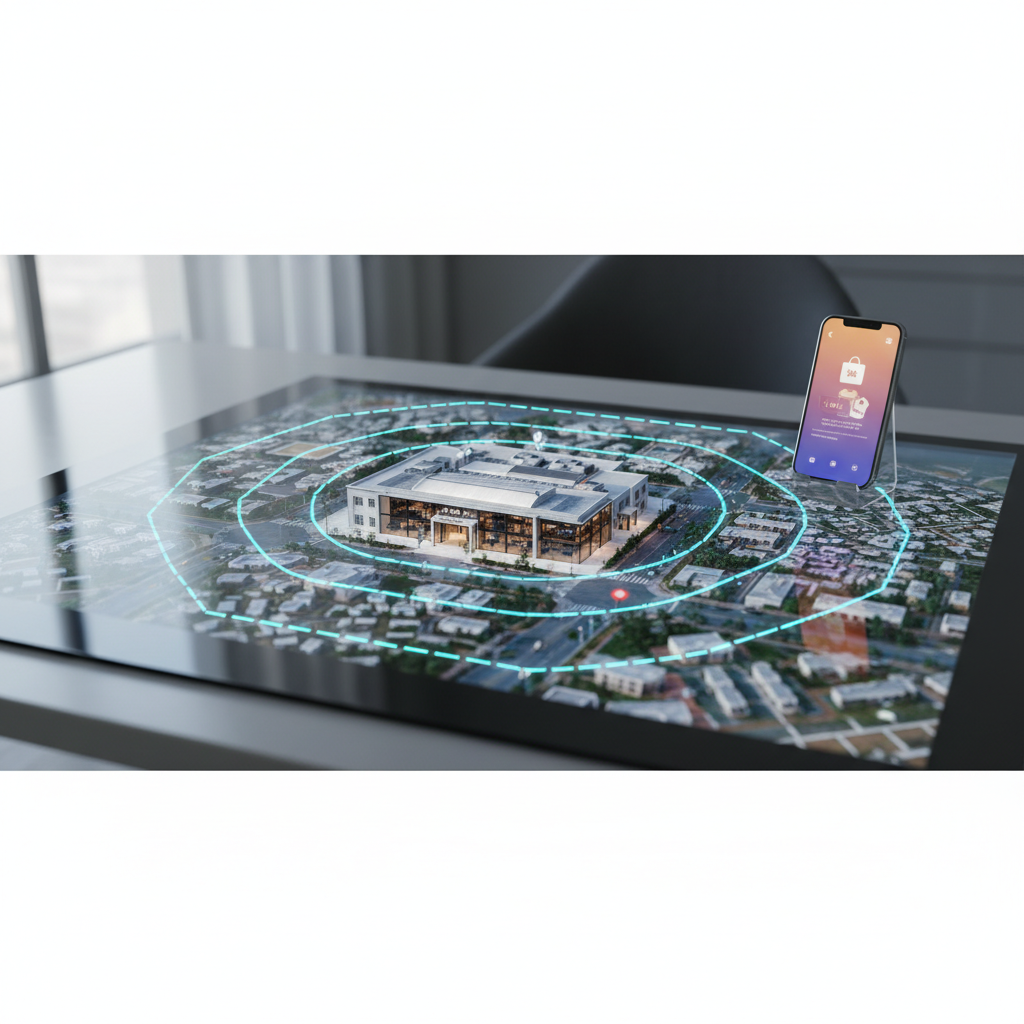
Geofencing is a location-based service that uses GPS, Wi-Fi, or cellular data to trigger a pre-programmed action when a mobile device enters or exits a virtual boundary. For local businesses, this means setting up digital fences around their own storefronts, competitor locations, or relevant points of interest. When a consumer with a geofencing-enabled app or browser enters one of these zones, they can receive a push notification, an in-app ad, or a display ad on a website. This precise targeting ensures that marketing efforts reach individuals who are physically close and therefore more likely to convert into in-store visitors.
The Strategic Advantage of Location-Based Targeting for Local Growth
Location-based targeting offers a distinct advantage for local businesses by focusing marketing spend on the most promising audiences. Instead of broad, untargeted campaigns, geofencing allows for highly specific outreach. Businesses can target consumers who live, work, or frequently visit areas near their store. This reduces wasted ad impressions and increases the likelihood of driving actual store visits. For instance, a coffee shop could target office workers during morning commute hours.
Types of Geofences and Their Applications for Driving Store Visits
Various types of geofences can be deployed to achieve different marketing objectives. A common approach involves creating a “conversion zone” around a business’s own location to track store visits after ad exposure. Another effective strategy is to establish “conquest zones” around competitor locations. Businesses can also set up “event zones” around local festivals or markets to capture temporary audiences. Each type serves a unique purpose in a comprehensive geofencing strategy, from direct customer acquisition to competitive advantage.
Setting Up Geofence Ads: How to Target Competitor Locations Effectively
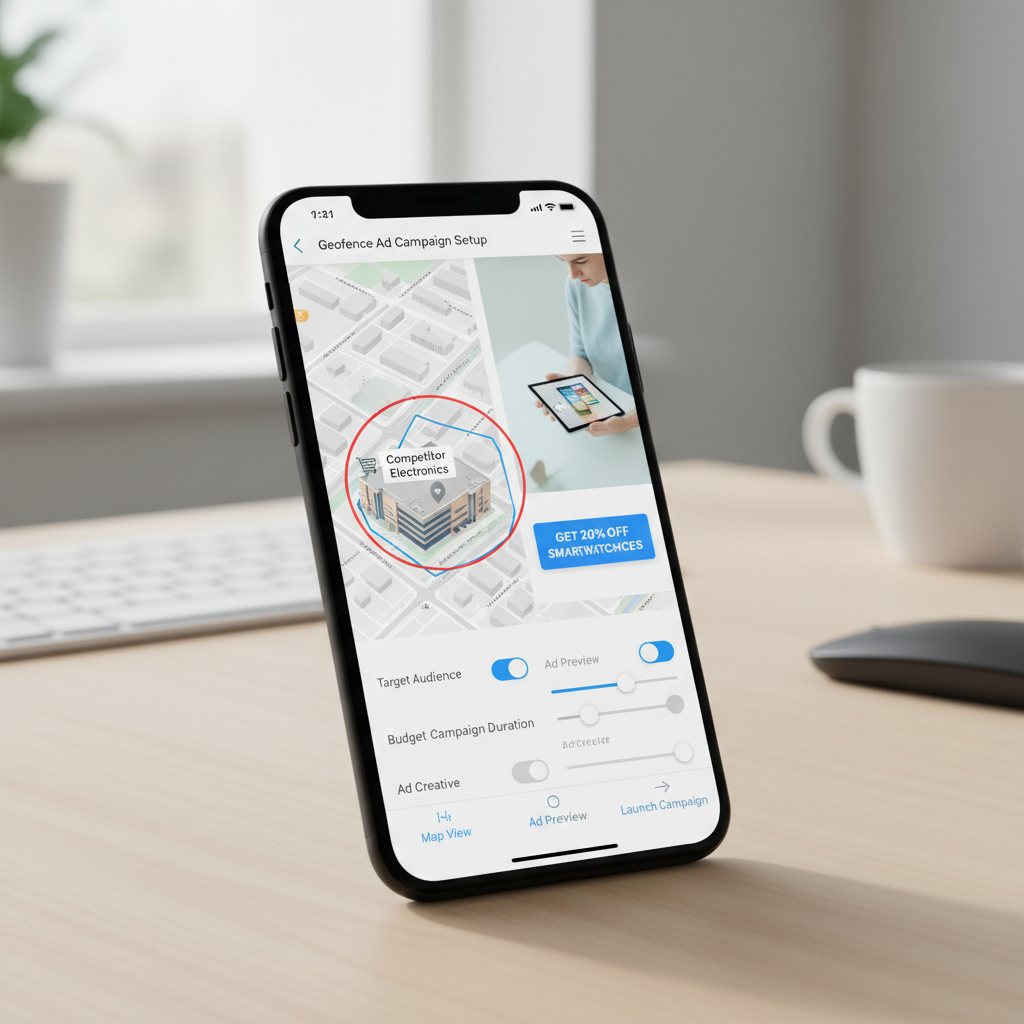
To effectively set up geofence ads to target competitor locations, businesses must first identify key rival establishments and then create precise virtual boundaries around them. This tactic, often called “geoconquesting,” allows local brands to intercept potential customers who are already in a buying mindset and physically near a competitor. The goal is to divert that foot traffic to your own store with compelling offers. For more insights, check out our guide on Digital Marketing Services.
The Process of Creating Geofences Around Competitor Stores
The process of setting up geofences around competitor locations involves several key steps. First, businesses need to use a geofencing platform or a demand-side platform (DSP) that supports location-based targeting. Within the platform, you can draw custom shapes or circles around specific addresses of competitor stores. It is crucial to make these geofences small enough to be precise but large enough to capture relevant foot traffic. These virtual boundaries can range from a few dozen meters to several hundred meters in radius, depending on the competitor’s footprint and surrounding area.
Crafting Compelling Ad Copy and Offers for Competitor Geofences
Once geofences are established, the next critical step is crafting compelling ad copy and offers that entice customers away from competitors. These ads should highlight your unique selling propositions, special promotions, or superior customer experience. For example, an ad triggered near a competitor’s restaurant might offer a “Buy One Get One Free” deal at your establishment. The message must be clear, concise, and offer immediate value to capture attention. Consider using dynamic ad content that can be updated in real-time.
Best Practices for Geoconquesting: Ethical Considerations and Campaign Optimization
While geoconquesting can be highly effective, it’s essential to adhere to ethical advertising practices and focus on providing genuine value. Avoid overly aggressive or misleading claims. Instead, emphasize what makes your business a better choice. Campaign optimization involves continuously monitoring ad performance, adjusting bid strategies, and refining ad creatives based on click-through rates (CTR) and conversion data. A/B testing different ad messages and offers within competitor geofences can reveal what resonates most with your target audience. Regularly review competitor locations to ensure your geofences remain accurate and relevant.
Geofencing vs. Proximity Marketing: Which Drives Better Store Visits for Local Brands?
Geofencing and proximity marketing both leverage location data, but they operate at different scales and use distinct technologies, with geofencing generally offering broader reach for initial customer capture and proximity marketing providing deeper engagement for those already very close. Understanding their differences is crucial for local brands deciding which geofencing advertising strategy or complementary approach will drive better store visits.
Understanding the Core Differences Between Geofencing and Proximity Marketing
Geofencing uses GPS, Wi-Fi, or cellular data to create virtual boundaries, typically ranging from a few hundred feet to several miles. It targets users who enter or exit these defined areas, often delivering ads via mobile apps or web browsers. Proximity marketing, conversely, operates at a much smaller, more granular scale, usually within a few dozen feet. It relies on technologies like beacons (Bluetooth Low Energy) or NFC (Near Field Communication) to communicate with users’ devices when they are very close to a specific point of interest, such as a product display or store entrance.
| Feature | Geofencing | Proximity Marketing (Beacons/NFC) |
|---|---|---|
| Range | Medium to large (hundreds of feet to miles) | Short (inches to tens of feet) |
| Technology | GPS, Wi-Fi, Cellular Data | Bluetooth Low Energy (BLE), NFC |
| Primary Goal | Drive initial awareness, attract customers to store | Enhance in-store experience, encourage specific actions |
| Target Audience | People entering or exiting a virtual zone | People very close to a specific physical point |
| Use Cases | Competitor targeting, event zones, general awareness | Product info, loyalty offers at checkout, interactive displays |
| Setup Complexity | Software-based, requires location data provider | Hardware installation (beacons), software integration |
When to Use Geofencing for Broader Reach and Initial Engagement
Geofencing is ideal for attracting new customers or reminding existing ones to visit. It excels at driving initial awareness and directing foot traffic from a wider area. For example, a local restaurant might use geofencing to target people within a two-mile radius during lunch hours with a special offer. This strategy helps capture individuals who might not have considered your business otherwise. It’s also perfect for campaigns like “how to set up geofence ads to target competitor locations,” where the goal is to intercept customers before they reach a rival.
When Proximity Marketing Excels for In-Store Engagement and Conversion
Proximity marketing shines when the goal is to enhance the in-store experience and drive immediate conversions once a customer is already inside or very near the premises. A retail store, for instance, could use beacons to send a notification about a discount on a specific product when a customer stands near that item. This level of granular interaction is not possible with geofencing. While geofencing brings them to the door, proximity marketing can guide their journey within the store and influence purchasing decisions. Many businesses find that combining both strategies offers the most comprehensive approach to driving and converting store visits, making them complementary rather than mutually exclusive. For businesses seeking comprehensive location-based marketing solutions, exploring a range of Digital Marketing Services can provide tailored strategies.
Real-Time Audience Capture: Event Geofencing Advertising Strategy Explained
Event geofencing advertising strategy is a dynamic approach that capitalizes on temporary gatherings by creating virtual boundaries around event venues to capture and engage highly relevant audiences in real time. This strategy allows local businesses to connect with potential customers who are already assembled and sharing a common interest, making them exceptionally receptive to targeted messages. For more insights, check out our guide on Digital Marketing Services.
Leveraging Event Geofencing for Timely Audience Engagement
Event geofencing is particularly effective because it targets individuals during moments of heightened engagement and specific intent. Imagine a local food truck deploying a geofence around a music festival. As attendees enter the festival grounds, they could receive an ad for the food truck’s special menu item, complete with directions to its location within the event. This real-time, contextually relevant advertising significantly increases the likelihood of immediate conversion. The temporary nature of events makes this a potent tool for capturing fleeting opportunities.
Setting Up Geofences Around Festivals, Concerts, and Local Gatherings
Setting up geofences for events requires careful planning and execution. Businesses need to identify relevant local events that align with their target demographic. Once an event is chosen, a precise geofence must be drawn around the venue using a geofencing platform. It’s important to consider the size and layout of the event space to ensure the geofence accurately captures attendees without including irrelevant areas. Timing is also critical: ads should be scheduled to run during the event’s operational hours, perhaps starting just before and ending shortly after.
Crafting Event-Specific Ad Campaigns for Maximum Impact
The success of an event geofencing campaign hinges on the relevance and appeal of the ad content. Messages should be tailored specifically to the event and the likely interests of its attendees. For a sporting event, a nearby sports bar might offer a “game day special.” For a craft fair, a local artisan might promote a unique, limited-edition item. Incorporating urgency (e.g., “Offer valid only during the festival!”) can further motivate immediate action.
Here are key elements for impactful event-specific ads:
* Clear Call to Action: Tell users exactly what you want them to do (e.g., “Visit our booth,” “Claim your discount now”).
* Relevant Offer: Provide a special deal or information directly related to the event’s theme.
* Location Guidance: Include directions or a map to your physical location if you are off-site but nearby.
* Visual Appeal: Use eye-catching images or videos that resonate with the event’s atmosphere.
* Urgency: Create a sense of immediacy to encourage quick decisions.
By focusing on these elements, businesses can maximize their chances of converting event attendees into valuable customers.
Measuring Success: Geofencing Campaign Measurement and Attribution for Local Brands
Measuring success in a geofencing advertising strategy involves tracking key metrics and attributing store visits directly to campaign exposure, providing local brands with clear insights into their return on investment. Effective measurement ensures that marketing efforts are optimized for maximum impact on foot traffic and sales.
Key Performance Indicators (KPIs) for Geofencing Campaigns
Several key performance indicators (KPIs) are crucial for evaluating the effectiveness of geofencing campaigns. The most important metric for local businesses is often “store visits” or “foot traffic attribution.” This tracks how many users exposed to a geofence ad subsequently visited the physical store. Other vital KPIs include:
* Impressions: The total number of times your ad was displayed.
* Click-Through Rate (CTR): The percentage of users who clicked on your ad after seeing it.
* Cost Per Visit (CPV): The total campaign cost divided by the number of attributed store visits.
* Conversion Rate: The percentage of ad exposures or clicks that resulted in a desired action, such as a store visit or purchase.
* Reach: The number of unique users who saw your ad.
Monitoring these metrics provides a holistic view of campaign performance.
Attribution Models: Connecting Ad Exposure to Actual Store Visits
Attribution is the process of linking a specific marketing touchpoint, like a geofence ad, to a customer’s subsequent action, such as a store visit. For geofencing, “foot traffic attribution” models are paramount. These models typically use location data to identify users who were shown an ad within a geofenced area and then subsequently entered the advertiser’s physical store within a defined timeframe (e.g., 24-72 hours). Advanced platforms can differentiate between “exposed” and “control” groups to provide more accurate causal attribution. This helps answer the fundamental question: did the geofence ad actually drive the store visit?
Tools and Platforms for Geofencing Analytics and Reporting
Various tools and platforms are available to help local brands measure and report on their geofencing campaigns. Most dedicated geofencing platforms and demand-side platforms (DSPs) offer robust analytics dashboards. These platforms provide real-time data on impressions, clicks, and, most importantly, attributed store visits. They often integrate with other analytics tools and CRM systems to offer a more complete picture of customer journeys. When selecting a platform, look for features like:
* Customizable Reporting: Ability to generate reports tailored to your specific KPIs.
* Geo-Lift Analysis: Tools to compare foot traffic in geofenced areas versus non-geofenced control areas.
* Audience Insights: Data on the demographics and behaviors of users exposed to your ads.
* Integration Capabilities: Seamless connection with other marketing and sales tools.
By leveraging these sophisticated tools, businesses can gain deep insights into their geofencing advertising strategy performance and make data-driven decisions to optimize future campaigns. This is essential for understanding “geofencing campaign measurement and attribution for local brands.”
Optimizing Your Geofencing Advertising Strategy for Maximum Impact
Optimizing your geofencing advertising strategy involves continuous refinement of targeting, ad creatives, and budget allocation based on performance data to ensure maximum impact on local business foot traffic. A dynamic approach to campaign management is key to achieving the best possible return on investment.
Refining Geofence Boundaries and Audience Segmentation
One of the most effective ways to optimize a geofencing campaign is by continuously refining the geofence boundaries themselves. Analyze which geofences are performing best in terms of driving store visits and consider adjusting the size or shape of underperforming zones. For example, if a large geofence around a shopping mall yields low conversions, try shrinking it to target only the immediate vicinity of your store entrance. Furthermore, segmenting your audience within these geofences can dramatically improve results. Instead of targeting all users, focus on specific demographics or interests that align with your product or service. This ensures your message reaches the most receptive individuals.
A/B Testing Ad Creatives and Call-to-Actions for Better Engagement
A/B testing is a fundamental practice for optimizing any advertising campaign, and geofencing is no exception. Experiment with different ad creatives, including images, headlines, and body copy, to see which variations resonate most with your target audience. Similarly, test various calls-to-action (CTAs). Does “Visit Our Store Now!” perform better than “Get 10% Off In-Store!”? Small changes in wording or visual elements can lead to significant improvements in click-through rates and ultimately, store visits. Regularly rotating ad creatives also helps prevent ad fatigue among your audience.
Budget Allocation and Bid Strategy Adjustments for Enhanced ROI
Strategic budget allocation and bid strategy adjustments are crucial for maximizing the return on investment (ROI) of your geofencing campaigns. Analyze which geofences and ad sets are delivering the highest number of attributed store visits at the lowest cost per visit. Allocate more budget to these high-performing segments. Conversely, consider pausing or re-evaluating underperforming segments. Adjusting your bid strategy – whether it’s optimizing for clicks, impressions, or conversions – can also impact efficiency. For instance, if your primary goal is store visits, ensure your platform’s bidding algorithm is optimized for that conversion event. Regular monitoring and agile adjustments are essential for a successful and cost-effective geofencing advertising strategy.
What is geofencing in simple terms?
Geofencing is a location-based technology that creates a virtual boundary around a real-world geographic area. When a mobile device enters or exits this defined zone, it triggers a pre-set action, such as sending a targeted advertisement or notification to the user’s phone. It’s like drawing an invisible fence on a map.
How does geofencing drive foot traffic to local businesses?
Geofencing drives foot traffic by allowing local businesses to deliver highly relevant ads to potential customers when they are physically near the store or a related location. By reaching consumers at opportune moments, businesses can entice them to visit their physical establishments with timely offers or reminders.
Can I target specific demographics with geofencing?
Yes, geofencing can be combined with other targeting parameters, including demographics, interests, and past behaviors. This allows businesses to refine their audience within a geofenced area, ensuring that ads are shown only to the most relevant potential customers, increasing campaign efficiency.
What is the typical cost of a geofencing campaign?
The cost of a geofencing campaign varies widely based on factors like the platform used, the size and number of geofences, audience targeting, campaign duration, and ad spend. Many platforms offer flexible pricing models, often based on impressions or clicks, making it accessible for various budget sizes.
How accurate is geofencing for targeting?
Geofencing accuracy depends on the technology used (GPS, Wi-Fi, cellular data) and environmental factors. Modern geofencing solutions can be highly accurate, often within a few meters, especially in urban areas with strong Wi-Fi and cellular signals. This precision allows for very targeted ad delivery.
Is user consent required for geofencing ads?
Yes, user consent is typically required. For a device to be geofenced, the user must have location services enabled and have granted permission to a relevant app or website to access their location data. Ethical geofencing practices always prioritize user privacy and transparency.
A well-executed geofencing advertising strategy is an indispensable tool for local businesses aiming to significantly boost their foot traffic and enhance customer engagement. By leveraging precise location-based targeting, companies can connect with potential customers at the most impactful moments, transforming nearby individuals into in-store visitors.
Key takeaways for maximizing your geofencing efforts include:
* Strategic Geofence Placement: Define virtual boundaries around your store, competitor locations, and relevant events to capture diverse audiences.
* Compelling Ad Content: Craft highly relevant and enticing offers that motivate immediate action from users within your geofences.
* Continuous Optimization: Regularly analyze campaign performance, A/B test ad creatives, and adjust targeting and bids to improve ROI.
* Measurement and Attribution: Utilize robust analytics to accurately track store visits and understand the direct impact of your geofencing campaigns.
Embracing geofencing allows local brands to move beyond traditional advertising, delivering hyper-targeted messages that resonate deeply with consumers based on their real-world context. This innovative approach ensures marketing budgets are spent efficiently, driving tangible results in the form of increased customer visits and stronger local presence.