
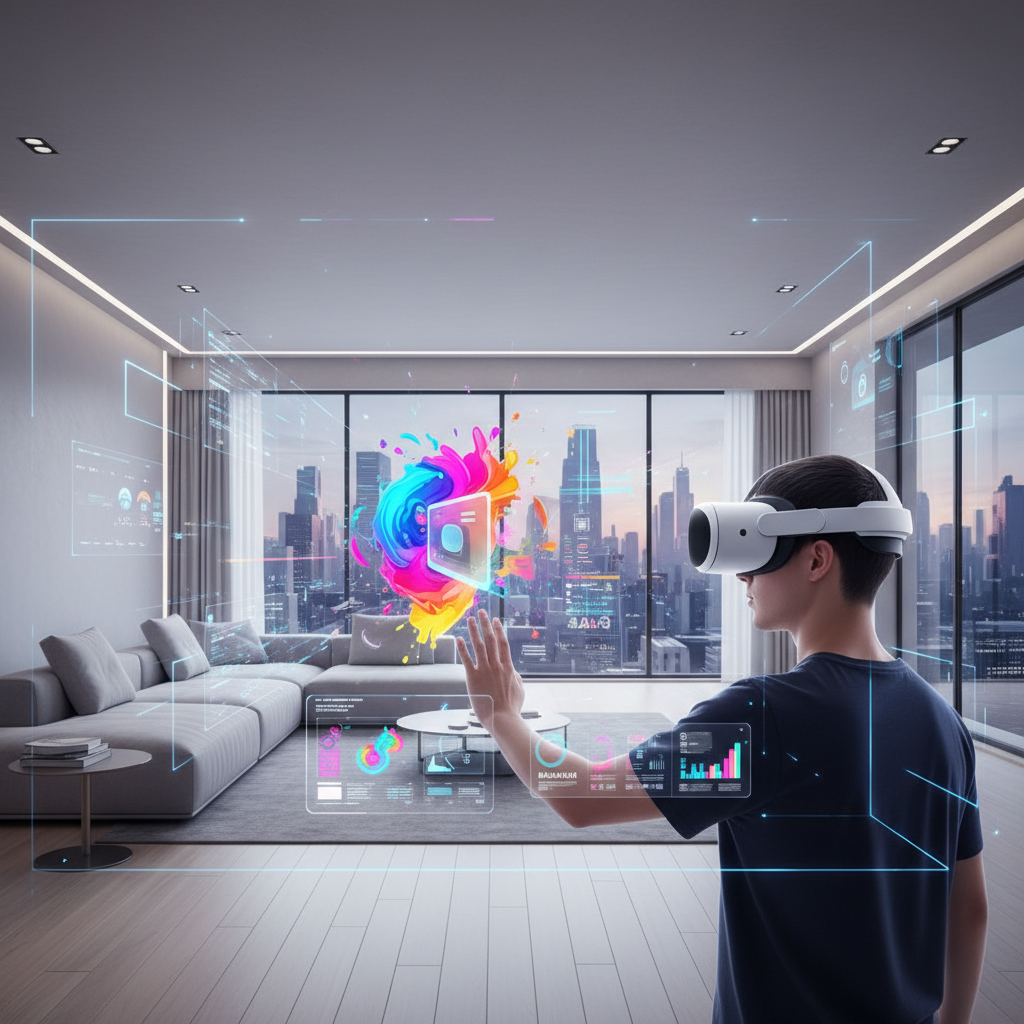
Spatial Computing Marketing Strategy For Apple Vision Pro 2026
The spatial computing marketing strategy for Apple Vision Pro involves understanding and leveraging the unique capabilities of this revolutionary device to create deeply immersive and interactive brand experiences. This approach goes beyond traditional digital marketing, focusing on how brands can effectively engage consumers within a three-dimensional, mixed-reality environment. As Apple Vision Pro continues to define the spatial computing landscape, marketers must adapt their tactics to capture attention, build loyalty, and drive conversions in this nascent yet rapidly expanding frontier.
Developing Effective Spatial Computing Brand Experiences for Vision Pro Users
Creating compelling spatial computing brand experiences for Vision Pro users means designing interactive narratives and utilities that seamlessly blend digital content with the user’s physical surroundings. Brands should focus on utility, entertainment, and genuine connection within the spatial canvas. This involves crafting applications and augmented reality overlays that enhance daily life or provide novel forms of engagement. The goal is to make the brand an indispensable part of the user’s spatial environment.
How to Create Immersive Brand Narratives in Spatial Computing
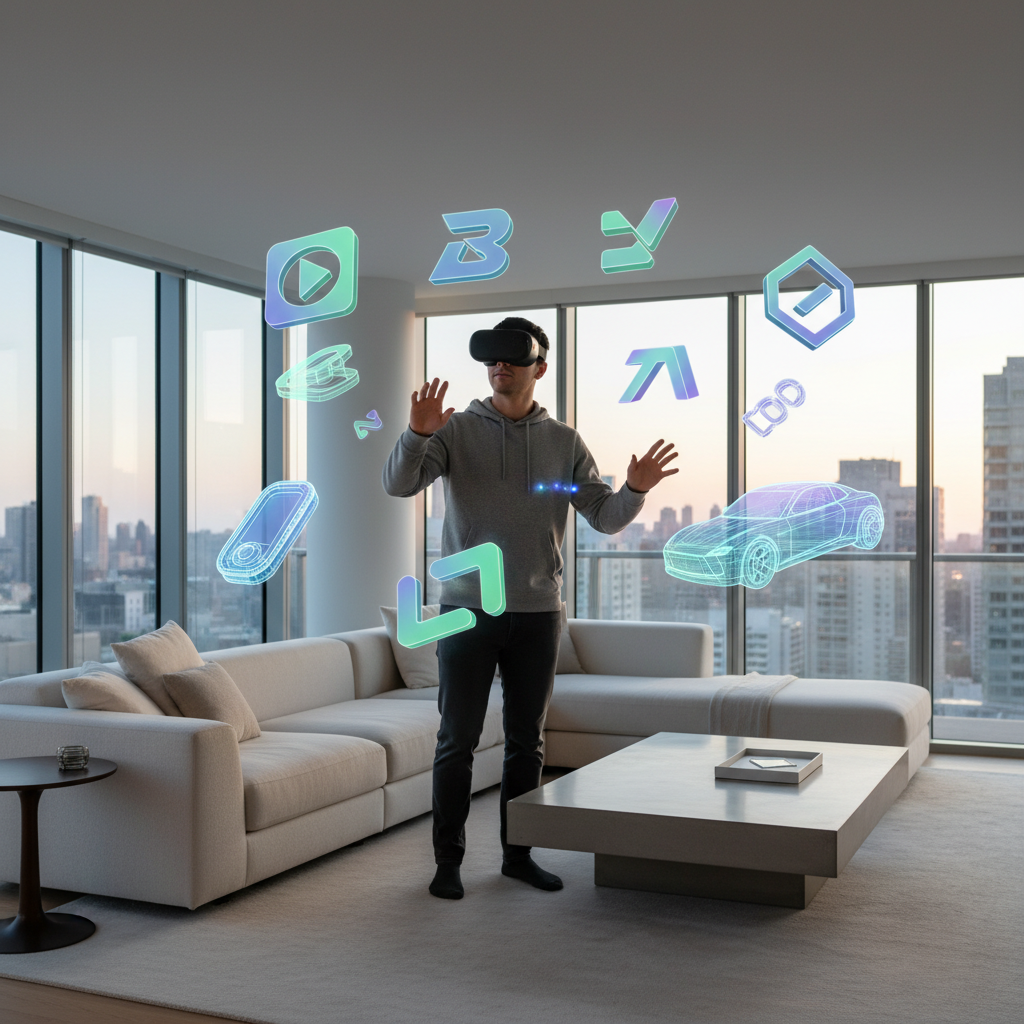
Immersive brand narratives in spatial computing are built by allowing users to step inside a brand’s story, interacting with its elements in a 3D space. This could involve virtual showrooms, interactive product demonstrations, or gamified experiences that reflect brand values. Storytelling becomes experiential, enabling users to manipulate virtual objects, explore environments, and even participate in brand-driven events. The key is to provide agency and a sense of presence.
Leveraging Vision Pro’s Unique Capabilities for Brand Engagement
Apple Vision Pro offers unparalleled capabilities for brand engagement, including high-resolution passthrough video, precise eye and hand tracking, and spatial audio. Brands can leverage these features to create hyper-realistic product visualizations, intuitive gesture-based interactions, and personalized audio cues. For instance, a furniture brand could allow users to “place” virtual sofas in their living room and walk around them. This level of immersion fosters deeper emotional connections and reduces purchase friction.
Designing User-Centric Spatial Interactions for Brands
User-centric design in spatial computing prioritizes natural and intuitive interactions that feel like an extension of the user’s physical world. Brands must consider how users will navigate, select, and manipulate virtual content using their gaze, pinch gestures, and voice commands. This requires extensive user testing and iterative design to ensure the experience is not only innovative but also effortless and enjoyable. A well-designed spatial interaction enhances usability and reinforces positive brand perception.
Crafting Mixed Reality Advertising Formats for Apple and Meta Headsets
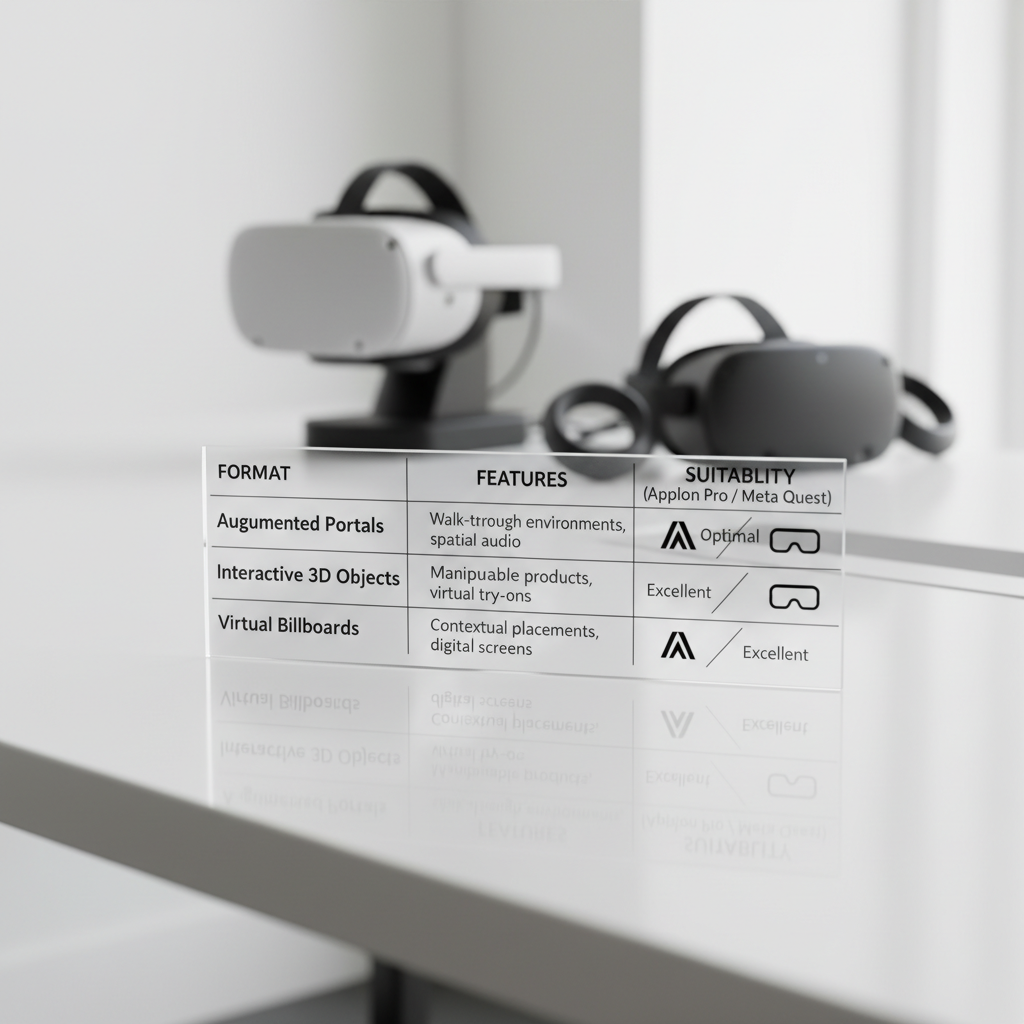
Mixed reality advertising formats for Apple and Meta headsets represent a paradigm shift from traditional 2D ads, offering interactive, three-dimensional placements that integrate directly into the user’s environment. These formats move beyond passive viewing, inviting users to engage with products and services in a spatial context. Effective mixed reality ads are non-intrusive, contextually relevant, and provide clear value to the user, enhancing their spatial computing experience rather than disrupting it.
Exploring Dynamic Advertising Placements in Spatial Environments
Dynamic advertising placements in spatial environments utilize real-time data and user context to deliver highly relevant ads that appear as virtual objects or overlays within the user’s view. This could range from a virtual billboard on a digital building in a game to an interactive product model appearing on a coffee table during a browsing session. Brands can use AI to determine optimal placement and timing, ensuring ads feel natural and additive. This approach maximizes engagement while minimizing perceived intrusiveness.
Interactive Advertising Models for Immersive Platforms
Interactive advertising models for immersive platforms transform static advertisements into engaging experiences. Instead of merely seeing an ad for a car, a user might be able to virtually “sit” inside it, customize its features, and even take it for a simulated test drive. These models leverage the interactive nature of spatial computing to provide rich, informative, and entertaining brand interactions. Brands can track engagement metrics like interaction time and feature exploration to refine their campaigns.
Best Practices for Cross-Platform Mixed Reality Campaigns
Executing cross-platform mixed reality campaigns requires understanding the nuances of different headsets, such as Apple Vision Pro and Meta Quest. While both offer immersive experiences, their input methods, graphical capabilities, and ecosystem integrations may vary. Best practices include designing adaptable content that can scale across platforms, focusing on core interactive elements, and leveraging platform-specific APIs for optimal performance. Consistency in brand messaging across these diverse environments is also paramount for building a strong brand identity.
Implementing a Spatial Commerce Strategy for Immersive Retail
A robust spatial commerce strategy for brands in immersive retail involves transforming the traditional online shopping experience into a deeply interactive and personalized journey within a 3D environment. This strategy allows consumers to browse, try on, and purchase products in virtual or mixed reality spaces, blurring the lines between physical and digital retail. By creating virtual storefronts and interactive product displays, brands can offer unparalleled product exploration and foster stronger purchasing confidence.
Designing Virtual Storefronts and Showrooms
Designing virtual storefronts and showrooms in spatial computing offers brands an opportunity to create highly customizable and engaging retail environments. These spaces can mimic physical stores, or they can be entirely fantastical, showcasing products in creative and memorable ways. Key considerations include intuitive navigation, high-fidelity product rendering, and interactive elements that allow customers to examine items from all angles. Virtual showrooms can also host exclusive launches or personalized shopping appointments.
Enhancing Product Visualization and Try-On Experiences
Spatial commerce significantly enhances product visualization and try-on experiences by allowing customers to interact with virtual products in their own space. For example, clothing brands can offer virtual try-on features where users see garments draped realistically on their avatars or even overlaid on their own bodies via passthrough video. Furniture retailers can let customers place virtual items in their homes to check fit and aesthetics. This reduces returns and boosts customer satisfaction.
Integrating Seamless Purchase Journeys in Spatial Retail
Integrating seamless purchase journeys in spatial retail is crucial for converting engagement into sales. This means enabling users to add items to a cart, review details, and complete transactions directly within the spatial environment, often using intuitive gestures or voice commands. Secure payment integrations and clear checkout flows are essential. The goal is to minimize friction and make the buying process as effortless as possible, mirroring the ease of one-click purchases in traditional e-commerce. Brands looking to innovate in this space might explore Digital Marketing Services that specialize in spatial computing.
Optimizing Apple Vision Pro App Marketing for Consumer Brands
Apple Vision Pro app marketing strategy for consumer brands focuses on driving discovery, engagement, and retention for applications designed specifically for Apple’s spatial computing platform. This requires a multi-faceted approach that leverages traditional app store optimization (ASO) techniques alongside new strategies tailored to the unique characteristics of spatial apps. Success hinges on communicating the immersive value proposition clearly and making the app easily discoverable within the Vision Pro ecosystem.
App Store Optimization for Spatial Computing Applications
App Store Optimization (ASO) for spatial computing applications involves optimizing app titles, descriptions, keywords, and visual assets to rank higher in the App Store and attract relevant users. For Vision Pro, this means emphasizing spatial capabilities, unique mixed reality features, and how the app enhances the user’s environment. High-quality 3D screenshots and immersive video previews are critical for showcasing the app’s potential. Regular updates and positive user reviews also play a significant role in visibility.
Promoting Spatial Apps Through Immersive Content and Influencers
Promoting spatial apps through immersive content and influencers is an effective way to generate excitement and demonstrate the app’s value. Brands can create compelling video demonstrations that highlight the app’s interactive features and real-world integration. Collaborating with tech influencers who have early access to Vision Pro can provide authentic reviews and reach a highly engaged audience. Live streaming mixed reality experiences can also offer a powerful glimpse into the app’s capabilities.
Driving User Engagement and Retention in Vision Pro Apps
Driving user engagement and retention in Vision Pro apps requires continuous innovation and a deep understanding of user behavior within spatial environments. Brands should design apps with intuitive onboarding, clear value propositions, and ongoing content updates. Gamification, social features, and personalized experiences can encourage repeat usage. Analyzing spatial analytics, such as gaze patterns and interaction hotspots, provides valuable insights for optimizing the user experience and keeping users coming back.
Measuring ROI and Analytics in Spatial Marketing Campaigns
Measuring ROI and analytics in spatial marketing campaigns presents new challenges and opportunities, requiring marketers to adapt traditional metrics for a three-dimensional, interactive environment. While traditional metrics like impressions and clicks still hold some relevance, deeper insights come from tracking user interactions within the spatial environment. This involves analyzing gaze duration, interaction points, navigation paths, and emotional responses to virtual content.
Key Performance Indicators for Spatial Advertising
Key Performance Indicators (KPIs) for spatial advertising extend beyond traditional digital metrics to include engagement depth and interaction quality. Relevant KPIs might include:
* Interaction Rate: Percentage of users who actively engage with a spatial ad.
* Gaze Duration: How long users focus their attention on specific virtual objects or ads.
* Spatial Navigation Paths: The routes users take through virtual showrooms or interactive experiences.
* Conversion Events: Purchases, sign-ups, or other desired actions completed within the spatial environment.
* Sentiment Analysis: User feedback and emotional responses to immersive brand content.
These metrics provide a holistic view of campaign effectiveness.
Tools and Technologies for Spatial Analytics
A new suite of tools and technologies is emerging to support spatial analytics, providing marketers with the data needed to optimize their campaigns. These include:
* Eye-tracking software: Built into headsets like Vision Pro, it offers precise data on user attention.
* Gesture recognition analytics: Tracks how users interact with virtual objects using hand movements.
* Heatmaps for 3D environments: Visualizes popular interaction points within a spatial scene.
* Behavioral analytics platforms: Adapted for spatial computing, these track user journeys and engagement patterns.
* A/B testing tools for spatial content: Allows for optimizing virtual object placement, ad formats, and interactive elements.
Leveraging these tools helps refine strategies for maximum impact.
Benchmarking and Optimizing Spatial Marketing Efforts
Benchmarking and optimizing spatial marketing efforts involve establishing baseline performance metrics and iteratively improving campaigns based on data insights. As the spatial computing market matures, industry benchmarks for engagement, conversion, and retention will emerge. Marketers should conduct regular A/B testing on different spatial ad formats, content variations, and interaction models. Continuous optimization ensures that marketing spend is efficiently allocated and that campaigns deliver the highest possible ROI in this evolving landscape.
Future Trends in Spatial Computing Marketing and Brand Engagement
Future trends in spatial computing marketing and brand engagement point towards increasingly personalized, intelligent, and interconnected immersive experiences. As the technology matures and adoption grows, brands will have unprecedented opportunities to integrate themselves into the fabric of users’ digital and physical lives. The evolution will likely see more sophisticated AI-driven personalization, seamless interoperability between virtual worlds, and the rise of hyper-realistic digital twins for products and services.
The Role of AI and Personalization in Spatial Marketing
Artificial intelligence will play a transformative role in spatial marketing, enabling hyper-personalized brand experiences that adapt in real-time to user preferences and contexts. AI can power dynamic content generation, intelligent virtual assistants, and predictive analytics that anticipate user needs. Imagine a spatial ad that customizes its appearance and interaction based on your mood or current activity. This level of personalization will make brand interactions feel more relevant and less like traditional advertising.
Interoperability and the Open Metaverse for Brands
The concept of an open metaverse, where digital assets and identities can seamlessly move between different virtual environments, holds immense potential for brands. Interoperability will allow brands to create persistent digital assets, such as virtual clothing or collectible NFTs, that users can own and display across various platforms. This fosters a sense of digital ownership and extends brand presence beyond a single application. Brands that embrace interoperability will build stronger, more enduring connections with their communities.
Ethical Considerations and Consumer Trust in Spatial Advertising
As spatial advertising becomes more pervasive, ethical considerations and consumer trust will be paramount. Brands must prioritize transparency regarding data collection, ensure user privacy, and avoid manipulative or overly intrusive advertising practices. Clear consent mechanisms for spatial data usage and the ability for users to control their immersive ad experience will be critical. Building trust in this new medium will be essential for long-term brand success and widespread adoption of spatial computing.
What is spatial computing in the context of marketing?
Spatial computing in marketing refers to the use of technology that blends digital content with the physical world, creating interactive 3D experiences. For brands, this means engaging consumers through augmented and mixed reality applications that allow for immersive product exploration and brand storytelling, moving beyond flat screens into a three-dimensional environment. It enables new forms of advertising and commerce.
How can brands create effective spatial computing brand experiences for Vision Pro?
Brands can create effective spatial computing brand experiences for Vision Pro by focusing on utility, entertainment, and seamless integration with the user’s environment. This involves designing intuitive 3D interfaces, leveraging Vision Pro’s advanced tracking and display capabilities, and developing interactive content that provides genuine value or unique forms of engagement, such as virtual try-ons or interactive product showcases.
What are mixed reality advertising formats?
Mixed reality advertising formats are interactive, three-dimensional advertisements that appear within a user’s physical environment when viewed through a mixed reality headset like Apple Vision Pro or Meta Quest. These ads can be virtual objects, interactive scenes, or contextual overlays that users can engage with, offering a more immersive and less intrusive alternative to traditional 2D ads.
What is a spatial commerce strategy for brands?
A spatial commerce strategy for brands involves conducting retail activities within immersive 3D environments. This includes creating virtual storefronts, enabling interactive product visualization, and facilitating purchases directly within mixed reality spaces. The goal is to provide a highly engaging and personalized shopping experience that leverages the unique capabilities of spatial computing to enhance product discovery and reduce purchase barriers.
How can consumer brands optimize their Apple Vision Pro app marketing?
Consumer brands can optimize their Apple Vision Pro app marketing by employing robust App Store Optimization (ASO) tailored for spatial apps, creating compelling immersive content for promotion, and engaging with tech influencers. Focus on showcasing the app’s unique mixed reality features through high-quality visuals and videos. Continuous updates and user feedback integration are also crucial for long-term engagement and retention.
Why is understanding spatial computing important for marketers?
Understanding spatial computing is vital for marketers because it represents the next evolution of digital interaction, offering unprecedented opportunities for brand engagement. It allows for deeply immersive, interactive, and personalized experiences that can build stronger customer connections and drive innovative commerce models. Early adoption and strategic planning in this space will provide a significant competitive advantage for brands.
The advent of Apple Vision Pro signals a pivotal moment for marketing, ushering in an era of spatial computing marketing strategy. Brands must shift their focus from flat screens to immersive, three-dimensional canvases, embracing new paradigms for advertising, commerce, and brand experience.
Key takeaways for navigating this new frontier include:
* Prioritize creating valuable, interactive spatial computing brand experiences for Vision Pro users that seamlessly blend with their reality.
* Experiment with novel mixed reality advertising formats for Apple and Meta headsets that are contextual and engaging, moving beyond traditional banners.
* Develop a comprehensive spatial commerce strategy for brands in immersive retail to transform shopping into an interactive journey.
* Optimize Apple Vision Pro app marketing strategy for consumer brands by highlighting unique spatial features and leveraging new promotional channels.
* Invest in new analytics tools to measure engagement and ROI effectively in spatial environments.
By proactively adapting to the principles of spatial computing, brands can forge deeper connections with consumers, unlock new revenue streams, and secure a leading position in the evolving digital landscape. The future of brand engagement is spatial, and the time to build is now.