
Google Maps Marketing Strategy For Local Business Visibility 2026
In today’s competitive digital landscape, a robust Google Maps marketing strategy is essential for local businesses seeking enhanced online visibility. This strategy involves optimizing your Google Business Profile to appear prominently in local search results, driving more foot traffic and online engagement. By focusing on key optimization tactics, businesses can effectively reach nearby customers actively searching for their products or services. A well-executed Google Maps strategy ensures your business stands out, connecting you directly with your target audience at the moment of need.
Optimizing Google Maps Listing for AI-Driven Local Search
Optimizing your Google Maps listing for AI-driven local search involves meticulously refining your Google Business Profile (GBP) to align with how Google’s algorithms interpret user intent and business relevance. This process ensures your business appears for highly specific and conversational local queries, which are increasingly powered by artificial intelligence. For more insights, check out our guide on Digital Marketing Services.

AI-driven local search emphasizes understanding context and natural language. Businesses must provide comprehensive and accurate information to satisfy these advanced algorithms. This includes selecting the most precise business categories and consistently updating all profile sections. For instance, if a user searches for “best vegan cafes near me with outdoor seating,” AI aims to match them with businesses explicitly stating these attributes. A well-optimized profile clearly communicates these details.
How to Prepare Your Google Business Profile for AI Local Search Queries
To prepare your Google Business Profile for AI local search queries, focus on completeness and specificity. Ensure every field in your GBP is filled out accurately and thoroughly. This includes your business name, address, phone number, website, hours of operation, and a detailed description of your services or products. AI models analyze this data to understand the nuances of your business. Incomplete profiles can be overlooked by sophisticated search algorithms.
Furthermore, use relevant keywords naturally within your business description and service listings. Avoid keyword stuffing, as AI prioritizes natural language and helpful content. Think about the specific questions customers might ask about your business. For example, if you run a plumbing service, include terms like “emergency plumber,” “drain cleaning,” or “water heater repair” in your service descriptions. This helps AI connect your offerings with user queries.
Selecting the Best Google Business Profile Categories for Enhanced Visibility
Selecting the best Google Business Profile categories is crucial for enhanced visibility in local search. Categories tell Google what your business is and what services or products you offer. Choose the most specific primary category that accurately describes your core business. For example, instead of just “Restaurant,” opt for “Italian Restaurant” or “Sushi Restaurant.”
After selecting your primary category, add as many relevant secondary categories as apply to your business. Google allows you to add multiple categories, which helps broaden your reach for various search queries. However, ensure all categories are genuinely applicable. Misleading categories can harm your ranking and user trust. Regularly review and update your categories as your business evolves or as new, more specific categories become available from Google.
Implementing a Google Maps Photo and Review Strategy for Higher Map Pack Ranking
An effective Google Maps photo and review strategy is paramount for achieving higher visibility and ranking within the coveted Google Map Pack. High-quality images and a consistent stream of positive customer reviews signal to Google that your business is active, reputable, and provides valuable experiences. These elements directly influence local search algorithms and user perception. For more insights, check out our guide on Digital Marketing Services.
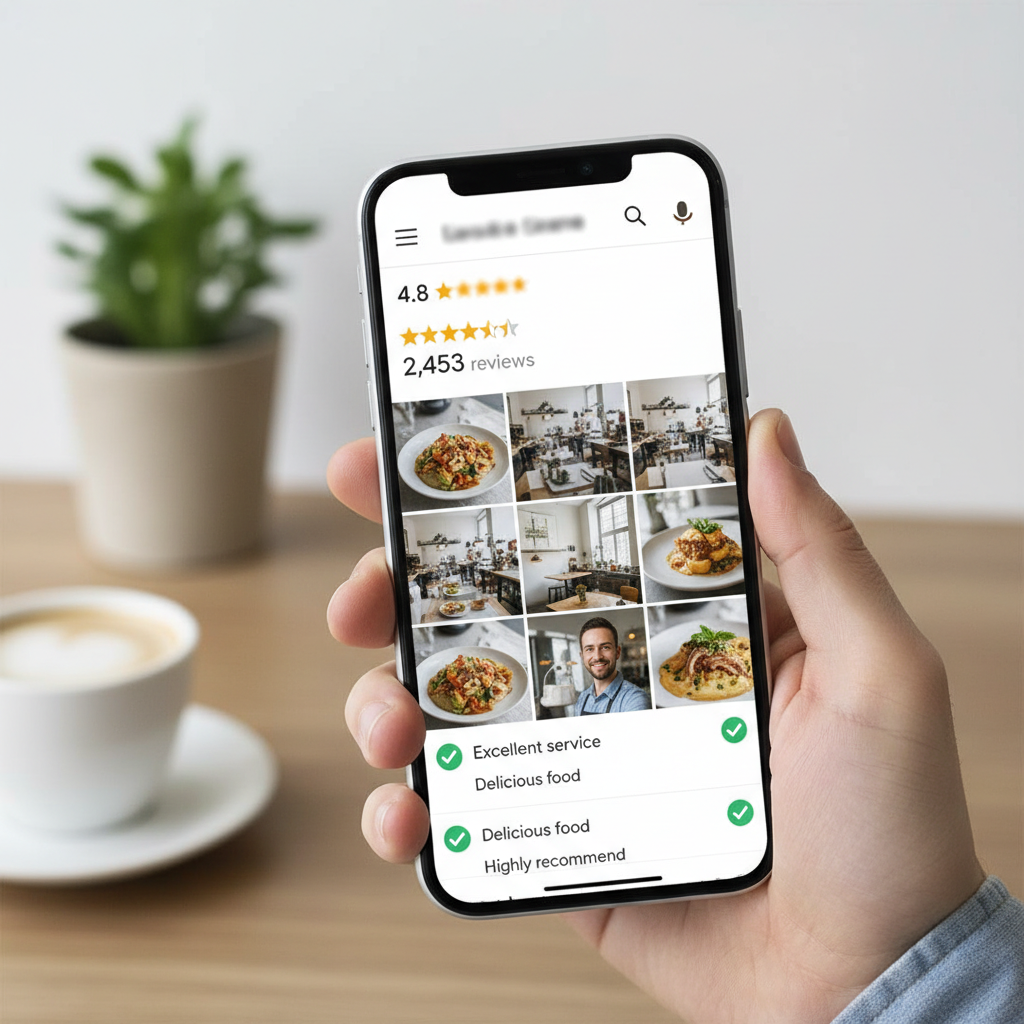
Businesses that actively manage their visual content and customer feedback often see significant improvements in their local search performance. Photos provide potential customers with a visual preview of your business, while reviews offer social proof and insights into customer satisfaction. Together, they build trust and encourage engagement, which are critical factors for Google’s ranking system.
Best Practices for Google Maps Photos to Attract Local Customers
For Google Maps photos to attract local customers, prioritize high-quality, relevant, and diverse imagery. Upload clear, well-lit photos that showcase your business’s exterior, interior, products, and services. Include photos of your team in action, if appropriate, to add a human touch. Ensure your main profile photo is professional and easily identifiable as your business.
Consider adding a virtual tour if available, as this provides an immersive experience for potential customers. Regularly update your photo gallery to reflect new products, seasonal changes, or renovations. Encourage customers to upload their photos too, as user-generated content adds authenticity. Always ensure photos are appropriately tagged and free of watermarks or excessive text overlays. Google prefers natural, informative images that help users make informed decisions.
Developing an Effective Google Review Generation and Response System
Developing an effective Google review generation and response system is crucial for improving your map pack ranking. Start by consistently asking satisfied customers for reviews. This can be done in person, via email, or through signage at your business. Make the process easy by providing a direct link to your Google Business Profile review section.
Once reviews start coming in, respond to every single one, whether positive or negative. A prompt and professional response shows you value customer feedback and are attentive to their experiences. Thank customers for positive reviews and address any concerns raised in negative ones, offering solutions or inviting further discussion offline. This demonstrates excellent customer service and can even turn a negative experience into a positive impression. Consistent engagement with reviews boosts your business’s credibility and authority in Google’s eyes.
Developing a Local Citation Consistency Strategy for Google Maps Authority
Developing a local citation consistency strategy is fundamental for building strong Google Maps authority and improving your local search rankings. Citations are online mentions of your business’s name, address, and phone number (NAP), and their accuracy across various platforms signals trustworthiness and legitimacy to Google’s algorithms.
Inconsistent NAP information can confuse search engines, potentially leading to lower rankings and reduced visibility in the Google Map Pack. Conversely, a consistent citation profile reinforces your business’s identity and helps Google confidently display your business in relevant local searches. This strategy involves auditing existing citations and actively building new, accurate ones. Many businesses benefit from a comprehensive approach to their Digital Marketing Services, including citation management.
Auditing and Correcting Existing Local Citations for Accuracy
Auditing and correcting existing local citations for accuracy is the first critical step in building Google Maps authority. Begin by compiling a list of all online directories, social media platforms, and websites where your business is listed. Tools are available to help identify these citations. Once you have your list, meticulously check each entry for discrepancies in your business name, address, and phone number (NAP).
Common inconsistencies include variations in street abbreviations (e.g., “St.” vs. “Street”), different phone numbers, or slight misspellings of your business name. Even minor errors can confuse search engines. Systematically correct any inaccurate information you find. This often involves logging into individual platforms and updating your business details. Prioritize high-authority directories like Yelp, Yellow Pages, and industry-specific sites. This cleanup process ensures a unified digital footprint.
Building New High-Quality Local Citations for Enhanced Google Maps Ranking
Building new high-quality local citations is essential for enhancing your Google Maps ranking after correcting existing inconsistencies. Focus on acquiring citations from reputable and relevant online directories. These include major data aggregators, local business associations, and industry-specific listing sites. The quality and relevance of the citation source are more important than the sheer number of citations.
When creating new listings, always ensure your NAP information is identical to your Google Business Profile. Provide as much detail as possible, including your website, hours, and a brief description of your business. Participating in local community events or sponsoring local sports teams can also lead to valuable, natural citations from local news sites or event listings. A robust and consistent citation profile acts as a strong vote of confidence for Google, signaling your business’s importance in the local ecosystem.
Crafting a Google Maps Advertising Strategy for Service Area Businesses
Crafting a Google Maps advertising strategy is particularly vital for service area businesses (SABs) that operate without a physical storefront customers can visit, such as plumbers, electricians, or cleaning services. This strategy leverages Google Local Services Ads and traditional Google Ads to ensure your business appears prominently for local searches within your defined service areas.
Unlike brick-and-mortar stores, SABs rely heavily on their ability to reach customers at their homes or offices. Google Maps advertising provides the necessary tools to target specific geographic regions and showcase your services directly to users searching for them in those locations. This approach is highly effective for generating qualified leads and service requests.
Utilizing Google Local Services Ads for Targeted Service Area Reach
Utilizing Google Local Services Ads (LSAs) is a highly effective way for service area businesses to achieve targeted reach. LSAs appear at the very top of Google search results, often above traditional paid ads and organic listings. They feature a “Google Guaranteed” badge, which builds immediate trust with potential customers. This badge signifies that Google has vetted and background-checked the business.
LSAs are pay-per-lead, meaning you only pay when a customer contacts you directly through the ad. This makes them a cost-effective option for many SABs. To set up LSAs, you define your service areas, business categories, and budget. When a user in your service area searches for a relevant service, your LSA can appear, allowing them to call or message you directly from the search results. This direct connection streamlines the lead generation process.
Implementing Traditional Google Ads for Enhanced Local Visibility
Implementing traditional Google Ads, specifically search ads with location targeting, can significantly enhance local visibility for service area businesses. While LSAs are excellent for direct leads, standard Google Ads offer more control over ad copy, targeting options, and audience segmentation. You can create campaigns that specifically target users within your service areas.
Use location extensions to display your business address (if applicable, or a service area indicator) and phone number directly in your ad. Bid strategically on local keywords such as “plumber in [city name]” or “electrician near me.” You can also layer demographic and interest-based targeting to reach your ideal customer within your service zones. This multi-faceted approach ensures your business captures a broader range of local search queries and appears across different sections of the search results page.
Leveraging Google Maps Posts and Q&A for Enhanced Local Engagement
Leveraging Google Maps Posts and the Q&A feature within your Google Business Profile is an excellent way to foster enhanced local engagement and keep your audience informed. These dynamic features allow businesses to share timely updates, promotions, and answer customer queries directly on their Google listing.
Active use of these tools demonstrates to both potential customers and Google that your business is responsive and provides current information. This can lead to increased clicks, calls, and visits, ultimately contributing to a stronger local presence and improved search performance. It’s a direct line of communication that builds community and trust.
Creating Engaging Google Business Profile Posts for Local Audiences
Creating engaging Google Business Profile Posts is a powerful method to connect with local audiences. Posts allow you to share various types of content directly on your business listing, visible to users searching for you on Google Maps and Search. You can announce new products, highlight special offers, share company news, or promote upcoming events.
When creating posts, use compelling visuals, such as high-quality photos or short videos. Write concise, informative copy that includes a clear call to action (CTA), such as “Learn More,” “Order Online,” or “Call Now.” Aim for a friendly and informative tone. Regularly posting keeps your profile fresh and gives users a reason to engage with your listing. Consider creating a content calendar for your posts to maintain consistency and relevance.
Managing Google Business Profile Q&A for Customer Service and SEO Benefits
Managing your Google Business Profile Q&A section effectively offers both customer service and SEO benefits. This feature allows anyone to ask a question about your business, and anyone (including you) can answer. Proactively monitoring and responding to these questions demonstrates excellent customer service and provides valuable information to future customers.
Regularly check for new questions and provide accurate, helpful answers promptly. You can also “seed” the Q&A section by asking and answering common questions about your business yourself. This pre-empts common inquiries and ensures accurate information is readily available. The content within the Q&A section can also be indexed by Google, potentially helping your business rank for specific long-tail queries related to the questions and answers provided. This makes it a valuable, often overlooked, SEO asset.
What is a Google Maps marketing strategy?
A Google Maps marketing strategy is a comprehensive plan to optimize a business’s online presence on Google Maps and Google Search. It aims to increase local visibility, attract nearby customers, and drive engagement through a well-managed Google Business Profile. This strategy incorporates various tactics like profile optimization, review management, and local advertising.
How often should I update my Google Business Profile?
You should update your Google Business Profile whenever there are changes to your business information, such as hours, services, or contact details. Beyond that, it’s beneficial to post regularly (weekly or bi-weekly) using Google Posts to share updates, promotions, and news. Regularly refreshing your profile keeps it relevant and engaging for potential customers.
What is the “Google Map Pack” and why is it important?
The “Google Map Pack” refers to the block of 3-4 local business listings that appear at the top of Google’s search results for local queries, often accompanied by a map. It’s crucial because these listings receive a disproportionate amount of clicks and attention, making them highly valuable for local businesses seeking visibility and customer traffic.
Can I advertise on Google Maps if I don’t have a physical store?
Yes, absolutely. Service area businesses (SABs) without a physical storefront can effectively advertise on Google Maps. Google Local Services Ads are specifically designed for SABs, allowing them to target customers within defined service areas. Traditional Google Ads with location targeting also provide excellent opportunities for enhanced local visibility.
How do reviews impact my Google Maps ranking?
Reviews significantly impact your Google Maps ranking by signaling trust, relevance, and authority to Google. A higher quantity of positive reviews, along with consistent and thoughtful responses from the business owner, can boost your visibility in the Map Pack. Reviews also provide valuable social proof, influencing customer decisions.
What are local citations and why are they important for Google Maps?
Local citations are online mentions of your business’s name, address, and phone number (NAP) on various websites and directories. They are crucial for Google Maps because consistent and accurate citations across the web build your business’s authority and trustworthiness in Google’s eyes. Inconsistencies can confuse search engines and hinder local ranking.
Is it necessary to use secondary keywords in my Google Maps strategy?
Yes, incorporating secondary keywords naturally into your Google Maps strategy is highly beneficial. These keywords help Google better understand the full scope of your business offerings and match your profile to a wider range of specific customer queries. They contribute to a more comprehensive and effective local SEO approach.
A well-executed Google Maps marketing strategy is no longer optional but a fundamental requirement for local businesses aiming to thrive in the digital age. By meticulously optimizing your Google Business Profile, you establish a strong foundation for online visibility. Focusing on high-quality photos and actively managing customer reviews builds trust and boosts your ranking in the local map pack. Furthermore, a consistent local citation strategy solidifies your business’s authority across the web. For service area businesses, strategic Google Maps advertising offers a direct pathway to qualified leads.
Key takeaways for your Google Maps success:
* Optimize Your Profile: Keep all GBP information accurate, complete, and regularly updated.
* Embrace Visuals & Reviews: Leverage compelling photos and cultivate a strong review generation and response system.
* Ensure NAP Consistency: Maintain identical Name, Address, Phone number across all online citations.
* Consider Local Ads: Utilize Google Local Services Ads or targeted Google Ads for expanded reach, especially for SABs.
* Engage Actively: Use Google Posts and Q&A to communicate with customers and enhance your profile’s dynamism.
By implementing these strategies, your local business can significantly enhance its presence on Google Maps, attracting more customers and fostering sustainable growth.