
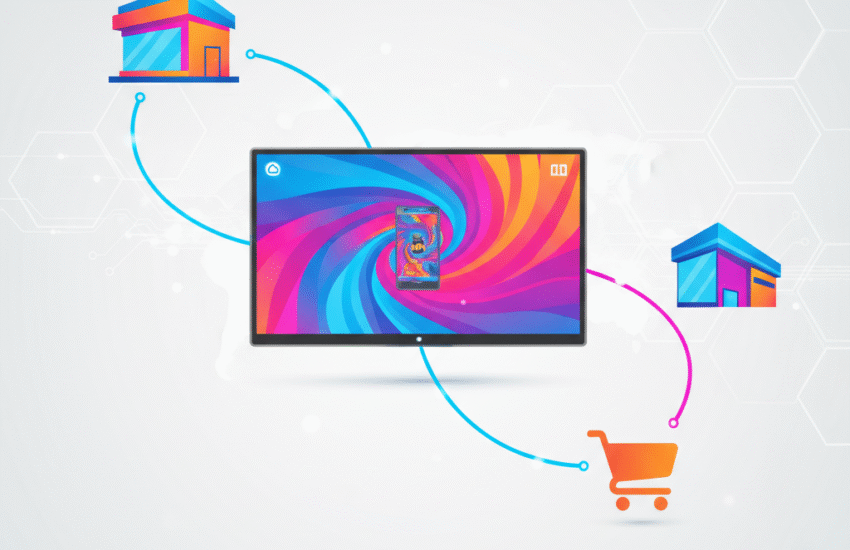
CTV Retail Media Integration: The Undeniable Edge for Omnichannel Brands
I spent years chasing fragmented audiences across digital channels, constantly wondering why our campaigns felt like they were shouting into the void. We’d see clicks, sure, but connecting those dots to actual purchases, especially in-store, felt like trying to solve a Rubik’s Cube blindfolded. It was frustrating, and honestly, a massive drain on budgets and morale.
In this post, you’ll discover how a strategic CTV retail media integration can revolutionize your marketing, learn why a truly omnichannel approach is no longer optional, and get actionable insights to boost your ROI — all backed by real-world experience.
Why This Matters Now: Bridging the Digital-Physical Divide

The marketing landscape has shifted dramatically, and if you’re still treating Connected TV (CTV) and retail media as separate silos, you’re leaving serious money on the table. Consumers today don’t live in a single channel. They browse on their phones, watch streaming content on their smart TVs, and shop both online and in physical stores. This fragmented journey demands a unified strategy.
The urgency isn’t just about keeping up; it’s about gaining a competitive advantage. Brands that master omnichannel retail media are seeing unprecedented clarity in their customer journeys. They’re not just guessing anymore; they’re connecting the dots from that engaging streaming TV ad all the way to a purchase, whether it’s online or at the checkout counter. This integrated approach is no longer a “nice-to-have”; it’s a fundamental requirement for growth.
The Power Play: Integrating CTV with Retail Media

Overview: Unlocking the Synergy of CTV Retail Media Integration
CTV retail media integration is the strategic convergence of Connected TV advertising with retail media networks, allowing brands to leverage rich first-party retailer data for highly targeted ad delivery and comprehensive attribution across the entire customer journey. This powerful synergy transforms traditional streaming TV advertising into a performance marketing engine, directly influencing both online and in-store sales. It’s about creating a seamless, measurable loop where viewing an ad on a big screen directly correlates with purchasing intent and action.
This integration is particularly vital for omnichannel retail media strategies, as it addresses the challenge of connecting upper-funnel brand awareness with lower-funnel conversion. By combining the immersive experience of CTV with the granular purchase data from retail media platforms, brands can achieve unparalleled precision in their ad spend. The goal is to move beyond simple impressions and truly understand the impact of every ad dollar. This is where the magic of CTV and retail media convergence strategy truly shines, offering a holistic view of consumer behavior.
What is CTV Retail Media Integration?
CTV retail media integration is the process of linking your Connected TV advertising campaigns with the proprietary data and advertising platforms of retail media networks. This means using a retailer’s first-party purchase data to inform who sees your ads on streaming TV, and then using that same data to measure the direct impact of those ads on sales, both online and in physical stores. It’s about making your streaming TV advertising smarter and more accountable.
This convergence allows for incredibly precise CTV audience targeting, moving beyond broad demographics to reach consumers based on their actual purchase history and predicted future intent. Imagine targeting households that recently bought a competitor’s product, or those who frequently purchase items in a specific category. This level of granularity is a game-changer for performance marketing CTV.
How Does CTV Advertising Connect with Retail Media Attribution?
Connecting CTV advertising with retail media attribution involves a sophisticated blend of data matching and measurement techniques. When a brand runs a CTV campaign, the ad impressions are linked back to the retail media network’s first-party data through secure, privacy-compliant methods like household graphing or clean rooms. This allows marketers to see which households exposed to a Connected TV advertising strategy subsequently made a purchase at the retailer.
This connection provides crucial insights into ad measurement and attribution, especially for streaming TV ads linked to in-store purchase measurement. By analyzing sales data from the retail media network, brands can attribute specific online and offline purchases directly to CTV ad exposure. This helps in measuring ROI of CTV ads for omnichannel brands by providing a clearer picture of the ad’s direct impact on sales, rather than relying solely on proxy metrics.
Leveraging First-Party Data in CTV Retail Media
Leveraging first-party data in CTV retail media is the cornerstone of effective integration. Retailers possess a treasure trove of anonymized purchase data, loyalty program information, and browsing behavior. When this data is activated within a CTV advertising environment, it allows for hyper-targeted campaigns that resonate deeply with specific consumer segments. This is a massive advantage over traditional broad-reach TV advertising.
This data activation enables brands to identify high-value customers, lapsed buyers, or even those who have shown interest in complementary products. By synchronizing connected TV audience data and retail media network sync, brands can ensure their ads are seen by the most relevant households, drastically improving campaign efficiency and effectiveness. This precision targeting is a key differentiator for successful retailer data activation.
Best Practices for CTV Retail Media Integration
Implementing best practices for CTV retail media integration requires a thoughtful, strategic approach. First, prioritize strong data partnerships with key retailers, ensuring secure and compliant data sharing. Second, focus on a unified creative strategy that resonates across both CTV and retailer platforms, maintaining brand consistency. Third, invest in robust measurement tools that can track both online and offline conversions.
Another crucial best practice is to start small, test, and iterate. Don’t try to integrate everything at once. Focus on one or two key retail partners and specific campaign objectives. Continuously analyze performance data to refine your cross-channel marketing synergy and optimize your spending. For next-gen capabilities in this space, exploring advanced Digital Marketing services can provide a significant competitive edge.
| Aspect | Traditional CTV Advertising | CTV Retail Media Integration |
|---|---|---|
| Audience Targeting | Demographics, general interests | First-party purchase history, loyalty data, behavioral segments |
| Attribution | Website visits, app installs, brand lift studies | Online sales, in-store purchases, basket analysis, LTV |
| Data Source | Third-party data, content consumption | Retailer’s first-party purchase data |
| Campaign Goal | Awareness, reach, engagement | Performance, direct sales, measurable ROI |
| Measurement | Impressions, video completes | Sales uplift, return on ad spend (ROAS) |
Building an Omnichannel Retail Media Strategy with CTV
Building an omnichannel retail media strategy with CTV involves more than just running ads on streaming platforms. It’s about creating a cohesive customer experience where every touchpoint, from the TV screen to the store aisle, works in harmony. This requires a deep understanding of your customer’s journey and how CTV can influence different stages. It starts with a clear strategy for how your Connected TV advertising strategy will complement other marketing efforts.
The goal is to eliminate friction and provide a seamless path to purchase. This could involve using CTV ads to drive traffic to a retailer’s product page, promoting in-store offers that were first highlighted on streaming TV, or even retargeting CTV viewers with personalized ads on other digital channels. This holistic approach is key to maximizing the impact of your retail media networks and achieving true cross-channel marketing synergy.
Real-World Case Study: How “FreshBites” Boosted Sales by 18%
Situation: FreshBites, a regional organic grocery brand, struggled to directly link their brand-building CTV campaigns to actual sales. They knew their streaming TV advertising was increasing brand awareness, but proving ROI, especially for in-store purchases, was a constant challenge. Their existing attribution models were too broad and couldn’t isolate the impact of CTV.
Action: FreshBites partnered with a major grocery chain’s retail media network. They used the retailer’s anonymized first-party purchase data to create custom CTV audience targeting segments. For example, they targeted households that had purchased organic produce in the last 90 days but hadn’t bought FreshBites products, as well as households that were loyal FreshBites customers. Their Connected TV advertising strategy then delivered tailored ads to these segments, promoting specific product lines and new seasonal offerings. They also implemented a robust measurement framework that securely matched CTV ad exposures to both online and in-store transactions through the retail media network’s clean room technology.
Result: Within a single quarter, FreshBites saw an 18% increase in sales among households exposed to their integrated CTV campaigns compared to a control group. Crucially, 60% of this uplift came from in-store purchases, directly demonstrating the power of streaming TV ads linked to in-store purchase measurement. Their ad measurement and attribution became significantly clearer, allowing them to optimize their spend and achieve a 3.5x ROAS on their CTV investment. This success validated their CTV retail media integration efforts.
Common Mistakes That Are Costing You Results

1. Treating CTV as Just Another Digital Channel
Many brands make the mistake of simply porting over their display or social ad creatives to CTV without adapting them for the big screen and lean-back viewing experience. CTV is a unique medium that demands high-quality, engaging video content. It’s not just another banner ad.
Instead, invest in compelling storytelling that captures attention in a living room environment. Think about how your message resonates when viewed on a 60-inch screen, not a 6-inch phone. This approach is vital for effective Connected TV advertising strategy.
2. Ignoring First-Party Data Integration
The biggest missed opportunity in CTV retail media integration is failing to fully leverage first-party data from your retail partners. Without this data, you’re essentially flying blind, unable to precisely target or accurately measure the impact of your campaigns. This makes measuring ROI of CTV ads for omnichannel brands incredibly difficult.
Prioritize building secure data partnerships and activating that retailer data activation within your CTV platforms. This is where the true power of granular targeting and attribution lies, moving beyond generic segments.
3. Neglecting Cross-Channel Marketing Synergy
A common pitfall is running CTV campaigns in isolation, without considering how they interact with other marketing efforts. If your CTV ads aren’t aligned with your social, search, or in-store promotions, you’re missing out on powerful cross-channel marketing synergy. Your omnichannel retail media strategy needs to be truly unified.
Ensure your messaging and offers are consistent across all channels. Use CTV to drive awareness, then retarget with specific offers on social or email. This integrated approach amplifies the impact of each channel.
4. Overlooking In-Store Purchase Measurement
One of the primary challenges of CTV retail media integration is accurately attributing in-store sales. Many brands focus solely on online conversions, missing a huge piece of the puzzle, especially for brick-and-mortar retailers. This oversight severely limits your ability to assess the full impact of your performance marketing CTV efforts.
Work with retail media networks that offer robust solutions for streaming TV ads linked to in-store purchase measurement. Demand clear, privacy-compliant attribution models that connect CTV exposure to physical store transactions.
Frequently Asked Questions

1. What is CTV retail media integration?
CTV retail media integration is the strategic convergence of Connected TV advertising with retail media networks, enabling brands to use a retailer’s first-party purchase data for precise ad targeting on streaming platforms and comprehensive measurement of campaign impact on both online and in-store sales. It’s about creating a direct, measurable link between your big-screen ads and actual purchases.
2. How does CTV advertising connect with retail media attribution?
CTV advertising connects with retail media attribution by securely matching CTV ad exposures to anonymized first-party purchase data from retail media networks, often through data clean rooms or household graphing. This allows brands to track which households saw an ad and subsequently made a purchase, providing clear insights into the ad’s direct impact on sales.
3. Why is an omnichannel approach important for CTV retail media?
An omnichannel approach is crucial for CTV retail media because consumers interact with brands across multiple touchpoints, both digital and physical. Integrating CTV into an omnichannel strategy ensures a seamless customer journey, allowing brands to influence purchasing decisions at every stage and accurately measure the combined impact of their marketing efforts across all channels.
4. What are the benefits of integrating CTV with retail media networks?
The benefits of integrating CTV with retail media networks include highly precise audience targeting based on purchase history, improved ad measurement and attribution for both online and in-store sales, enhanced ROI through optimized ad spend, and the ability to build a more cohesive and effective cross-channel marketing synergy. It transforms CTV from a branding tool into a powerful performance marketing channel.
5. How can brands measure in-store purchases from streaming TV ads?
Brands can measure in-store purchases from streaming TV ads by partnering with retail media networks that offer robust attribution solutions. This typically involves securely matching CTV ad exposure data with the retailer’s first-party transaction data, often at a household level, to identify sales uplift directly attributable to the CTV campaign among exposed audiences.
Why I Disagree With the “Always-On” CTV Campaign Advice
Most people advocate for an “always-on” approach to CTV campaigns, believing constant presence is key. I think that’s often wrong, especially for mid-sized brands with finite budgets. My experience shows that while consistent presence is good, a more strategic, flighted approach, tied to seasonal promotions or new product launches, can yield significantly higher ROI. You get better bang for your buck by concentrating your spend when purchase intent is naturally higher, rather than diluting it across periods of lower consumer activity.
The key is to be present when it matters most, using the precision of CTV audience targeting to hit consumers at peak buying times, rather than just being “on” for the sake of it.
The future of retail marketing isn’t just about reaching audiences; it’s about understanding their entire journey and connecting every touchpoint. Pick one thing from this post – perhaps focusing on leveraging first-party data in CTV retail media – and try implementing it this week. That’s it. You’ll start to see the difference.