

Mastering Your Brand Entity SERP Audit for Digital Dominance
A brand entity SERP audit is a comprehensive process designed to evaluate and optimize how your brand appears across search engine results pages. It involves analyzing every element associated with your brand in search, from your website listings to your knowledge panel, social media profiles, and third-party mentions. This audit is crucial for understanding your digital footprint and ensuring that search engines accurately reflect your brand’s identity and value. By meticulously reviewing these elements, businesses can identify opportunities to enhance their online presence, build trust, and ultimately drive more relevant traffic to their digital assets.
Understanding the Brand Entity SERP Audit: Why It Matters for Visibility
A brand entity SERP audit is vital for any business aiming to control its narrative and maximize its online visibility. This audit systematically examines all search results related to your brand, ensuring that search engines accurately understand and display your unique identity. It goes beyond traditional keyword rankings to assess the holistic representation of your brand as an entity.

The primary goal is to ensure consistency and accuracy across all digital touchpoints. Search engines like Google strive to provide users with the most relevant and trustworthy information. For brands, this means having a cohesive and positive presence across various SERP features. Neglecting this audit can lead to misinformation, missed opportunities, and a diluted brand message. Furthermore, a strong brand SERP acts as a powerful trust signal for potential customers. When users search for your brand, a well-optimized SERP instantly conveys credibility and professionalism.
Defining Your Brand as a Search Entity
Defining your brand as a search entity involves helping search engines understand who you are, what you do, and what you stand for. This goes beyond simple keywords. It’s about establishing clear connections between your brand and relevant concepts, people, and places. By doing so, you enable search engines to present a rich, comprehensive view of your brand. This includes ensuring your name, services, products, and key personnel are consistently identified. An entity is a “thing or concept that is singular, unique, well-defined, and distinguishable.” For brands, this means being recognized as a distinct and authoritative source of information.
Impact of Brand SERP on Customer Trust and Conversion
The way your brand appears on the SERP directly influences customer trust and conversion rates. A cluttered or negative brand SERP can deter potential customers before they even visit your website. Conversely, a clean, informative, and positive brand SERP builds immediate credibility. When users see a well-structured knowledge panel, positive reviews, and relevant social media links, they are more likely to trust your brand. This initial trust is a critical step in the customer journey. It can significantly impact whether a user clicks through to your site or chooses a competitor. A strong brand SERP acts as your digital storefront, making a powerful first impression.
How to Conduct a Comprehensive Brand Search Visibility Audit
Conducting a comprehensive brand search visibility audit requires a systematic approach to uncover every instance of your brand across search engine results pages. This audit involves meticulously examining various SERP features, identifying both opportunities and potential threats to your brand’s online presence. The objective is to gain a holistic understanding of how your brand is perceived by search engines and, consequently, by your target audience.
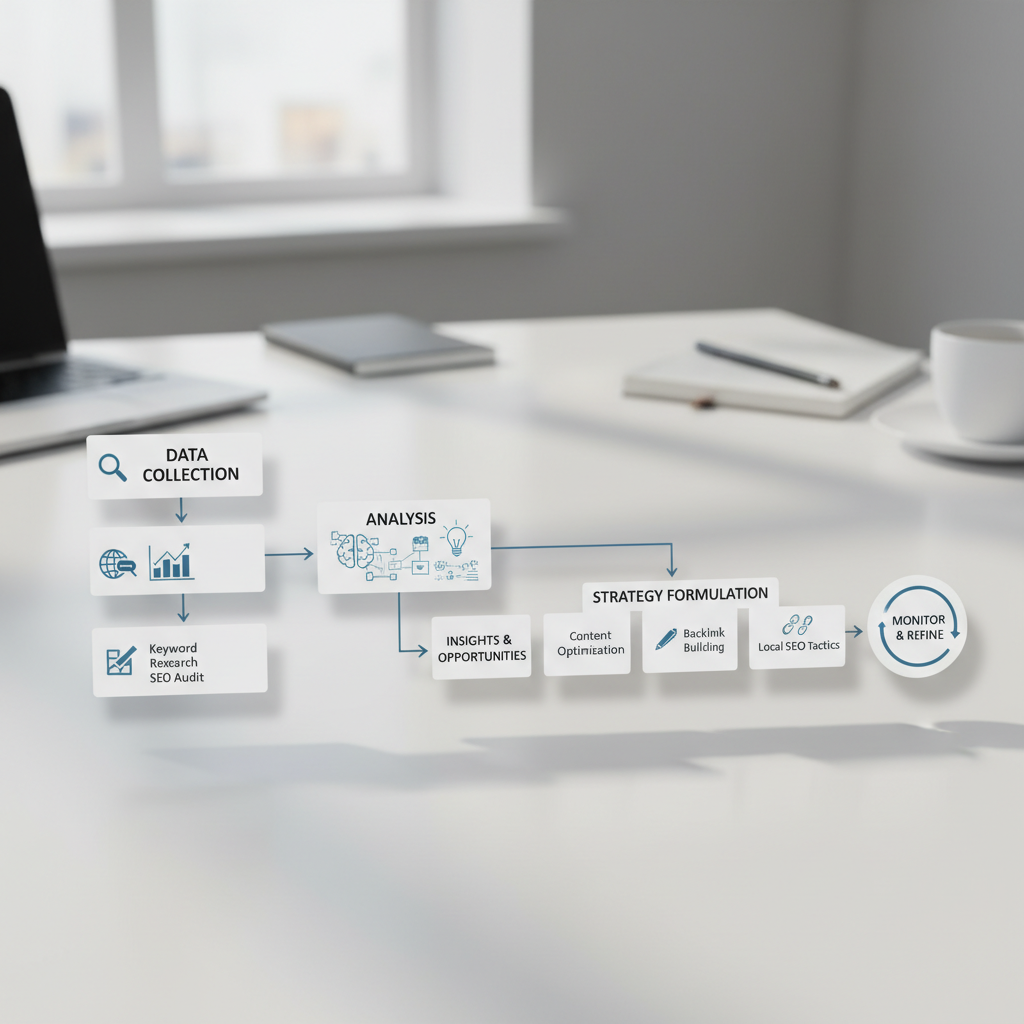
Start by performing searches for your brand name, variations, and key personnel. Document all types of results, including organic listings, news articles, images, videos, social media profiles, and review sites. Pay close attention to the sentiment and accuracy of these results. This initial data collection forms the foundation of your audit. Tools like Google Search Console and various third-party SEO platforms can provide valuable insights into your brand’s search performance and visibility. A thorough audit will reveal areas where your brand is strong and areas that require immediate attention.
Key Elements to Analyze in Your Brand SERP
When performing a brand entity SERP audit, several key elements demand close scrutiny. These elements collectively paint a picture of your brand’s digital identity.
* Organic Search Results: Examine the top 10-20 organic listings for your brand name. Are they your official properties, or are competitors or negative content ranking prominently?
* Knowledge Panel: Is your brand’s knowledge panel accurate, complete, and optimized? Does it display the correct logo, contact information, and relevant facts?
* Image and Video Results: Are the images and videos associated with your brand positive and professional? Do they accurately represent your offerings?
* News and Press Mentions: Monitor news results for positive and negative press. How recent are these mentions, and what is their overall tone?
* Social Media Profiles: Ensure your official social media profiles rank highly and are consistent with your brand messaging.
* Review Sites: Check prominent review platforms for your brand’s ratings and customer feedback. Address any negative reviews promptly and professionally.
Tools and Techniques for Monitoring Brand Mentions
Effective monitoring of brand mentions is crucial for maintaining a healthy brand SERP. Various tools and techniques can assist in this ongoing process. Google Alerts is a free and simple tool for tracking new mentions of your brand name across the web. More advanced paid tools offer deeper insights and broader coverage.
Here’s a comparison of common brand monitoring approaches:
| Monitoring Method | Description | Pros | Cons |
|---|---|---|---|
| Google Alerts | Email notifications for new web content matching specific keywords. | Free, easy to set up, good for basic tracking. | Limited depth, can miss some mentions, less real-time. |
| Social Listening Tools | Platforms that monitor social media for mentions, sentiment, and trends. | Real-time insights, sentiment analysis, competitive intelligence. | Can be expensive, steep learning curve for advanced features. |
| Dedicated Brand Monitoring Software | Comprehensive platforms for tracking web, news, forums, and social media. | Extensive coverage, detailed reporting, historical data. | Higher cost, requires dedicated resources for analysis. |
| Manual Searches | Periodically searching your brand name directly on search engines. | Free, direct view of current SERP. | Time-consuming, easy to miss nuances, not scalable. |
Regularly using a combination of these methods ensures you stay informed about your brand’s online narrative. This proactive approach allows for quick responses to both positive and negative developments. For comprehensive digital marketing services that include advanced brand monitoring and SERP optimization, consider exploring our Digital Marketing Services.
Optimizing for Knowledge Panel Trust Signals and Brand Authority
Optimizing for knowledge panel trust signals is paramount for establishing and reinforcing your brand’s authority in the eyes of search engines and users alike. A well-curated knowledge panel serves as a powerful endorsement of your brand’s legitimacy and expertise. It acts as a concise summary of your brand, displayed prominently on the SERP.
A knowledge panel is an information box that appears on Google when you search for entities (people, places, organizations, or things) that are in Google’s Knowledge Graph. These panels are automatically generated by Google, drawing information from various sources across the web. Optimizing your knowledge panel involves ensuring that these sources provide accurate, consistent, and authoritative information about your brand. This includes maintaining up-to-date profiles on Wikipedia, Wikidata, Crunchbase, and other reputable industry directories. The accuracy and completeness of your knowledge panel directly contribute to how search engines perceive your brand’s authority.
Strategies for Enhancing Your Brand’s Knowledge Panel
Enhancing your brand’s knowledge panel requires a multi-faceted approach focused on providing clear, consistent, and verifiable information to Google.
1. Claim Your Google Business Profile: For local businesses, a verified Google Business Profile is the foundation. Ensure all information is accurate and complete, including name, address, phone, website, hours, and photos.
2. Establish a Strong Wikipedia Presence: While not all brands qualify, a well-referenced Wikipedia page is a significant trust signal. It demonstrates notability and provides structured data.
3. Utilize Schema Markup: Implement structured data (Schema.org) on your website to explicitly tell search engines about your organization, products, services, and official social profiles.
4. Maintain Consistent NAP (Name, Address, Phone) Data: Ensure your brand’s NAP details are identical across all online directories, social media profiles, and your website. Inconsistencies can confuse search engines.
5. Build Authoritative Citations: Get mentioned on reputable industry websites, news outlets, and relevant databases. These external links and mentions act as votes of confidence.
6. Create a Wikidata Entry: Wikidata is a free, collaborative, multilingual secondary database, collecting structured data. An entry here can significantly aid Google in understanding your entity.
Building Authority Through Consistent Entity Recognition
Building authority through consistent entity recognition is about ensuring search engines reliably understand your brand as a distinct and credible entity. This involves repeatedly associating your brand with specific attributes, products, services, and industry leadership. When Google consistently sees your brand mentioned in conjunction with particular topics or as an authority in a niche, it strengthens your entity’s recognition. This consistency is built over time through high-quality content creation, strategic link building, and active engagement across relevant platforms. The more consistently your brand is recognized and referenced as an authority, the stronger its overall authority becomes in the eyes of search engines. This leads to better rankings and a more dominant brand SERP.
Leveraging Entity-Based SEO for Brands to Enhance SERP Presence
Leveraging entity-based SEO for brands is a sophisticated approach that moves beyond traditional keyword optimization to focus on how search engines understand your brand as a distinct entity. This strategy aims to build a comprehensive and accurate digital identity for your brand, which in turn enhances its presence across various SERP features. Instead of just optimizing for phrases, you’re optimizing for understanding.
Entity-based SEO centers on providing search engines with clear, unambiguous information about your brand. This helps them connect your brand to relevant concepts, industries, and audiences. When search engines fully grasp your brand’s identity, they can present richer, more diverse search results, including knowledge panels, featured snippets, and enhanced organic listings. This deeper understanding leads to improved visibility and a more authoritative online presence. It’s about establishing semantic relationships that elevate your brand’s standing in the digital ecosystem.
Integrating Structured Data for Entity Recognition
Integrating structured data is a cornerstone of effective entity-based SEO. Structured data, using Schema.org vocabulary, allows you to explicitly communicate details about your brand to search engines in a format they can easily understand. This includes information about your organization, products, services, events, and even key personnel.
Here’s how structured data helps:
* Clarity: It removes ambiguity, ensuring search engines interpret your information correctly.
* Rich Snippets: It enables your content to appear with rich snippets in search results, such as star ratings, prices, or availability, making your listings more appealing.
* Knowledge Panel Enhancement: It provides direct signals that can populate and update your brand’s knowledge panel.
* Voice Search Optimization: As voice search grows, structured data helps AI assistants accurately answer questions about your brand.
By implementing relevant schema types, such as `Organization`, `Product`, `Service`, and `LocalBusiness`, you provide search engines with a clear blueprint of your brand’s attributes and relationships.
Mapping Brand Entities to User Intent
Mapping brand entities to user intent involves understanding what users are truly looking for when they search for your brand or related topics. It’s about aligning your brand’s digital presence with the specific needs and questions of your audience. For example, if users frequently search for “your brand reviews,” ensuring positive reviews are prominent on your SERP directly addresses that intent.
This mapping process includes:
* Identifying Core Brand Queries: What are the most common ways users search for your brand?
* Analyzing Related Entities: What other entities (competitors, products, services, problems) are users searching for in conjunction with your brand?
* Understanding Question-Based Searches: What questions do users ask about your brand or industry?
By proactively optimizing your content and SERP elements to address these intents, you ensure that your brand is presented as the most relevant and authoritative answer. This strategic alignment significantly improves user experience and strengthens your brand’s position in search results.
Managing AI Assistant Brand Reputation in the Evolving Search Landscape
Managing AI assistant brand reputation is becoming increasingly critical as voice search and AI-powered assistants like Google Assistant, Siri, and Alexa play a larger role in information retrieval. These assistants often provide direct answers to user queries, bypassing traditional SERPs. Therefore, ensuring your brand’s information is accurate, positive, and readily accessible to these AI systems is paramount.
AI assistants primarily rely on structured data, authoritative sources, and well-defined entities to formulate their responses. If your brand’s online presence is fragmented or contains conflicting information, AI assistants may struggle to provide accurate answers, potentially damaging your reputation. A proactive approach involves meticulously optimizing your brand’s digital footprint to cater to these new search paradigms. This means ensuring your website’s content is clear, concise, and structured in a way that AI can easily parse. It also involves monitoring how your brand is being represented in direct answers provided by these assistants.
Optimizing Content for Voice Search and AI Answers
Optimizing content for voice search and AI answers requires a shift in content strategy. Traditional SEO focuses on keywords, but voice search often involves natural language queries.
Here are key optimization tactics:
* Answer User Questions Directly: Create content that directly answers common questions related to your brand, products, or services. Use clear, concise language.
* Use Conversational Language: Write content in a natural, conversational tone that mimics how people speak.
* Implement FAQ Schema: Utilize FAQPage schema markup to explicitly tell search engines the questions and answers on your page.
* Prioritize Featured Snippets: Optimize for featured snippets by providing direct answers to common questions at the beginning of relevant sections. AI assistants often pull answers from these snippets.
* Ensure Data Accuracy: Verify all factual information about your brand across your website and other authoritative sources.
By adopting these strategies, you increase the likelihood that AI assistants will accurately and positively represent your brand when users ask questions.
Monitoring Brand Mentions by AI Assistants
Monitoring brand mentions by AI assistants is a nascent but crucial aspect of reputation management. While direct tools for this are still evolving, several indirect methods can help you gauge your AI assistant brand reputation.
* Simulate Voice Searches: Regularly ask AI assistants questions about your brand, products, and services. Note the answers provided.
* Track Featured Snippets: Monitor which of your content ranks for featured snippets, as these are frequently used by AI assistants.
* Review Google Search Console Performance: Look for “position 0” rankings and “answer box” impressions, which indicate your content is being used for direct answers.
* Analyze User Feedback: Pay attention to customer service inquiries or social media mentions where users refer to information obtained from AI assistants.
As AI assistant capabilities grow, dedicated tools for monitoring their responses will likely emerge. For now, a combination of proactive optimization and diligent observation is essential to safeguard your brand’s reputation in this evolving landscape.
Advanced Strategies for Maintaining a Strong Brand SERP
Maintaining a strong brand entity SERP audit requires more than just initial optimization; it demands ongoing vigilance and the implementation of advanced strategies. The digital landscape is constantly shifting, with new SERP features emerging and algorithms evolving. Therefore, a proactive and adaptive approach is essential to ensure your brand consistently dominates its search results.
Advanced strategies focus on continuous improvement, reputation defense, and leveraging emerging technologies. This includes not only monitoring your own brand SERP but also understanding the competitive landscape and anticipating potential threats. By staying ahead of the curve, brands can solidify their authority, mitigate risks, and ensure their digital identity remains robust and positive. A strong brand SERP is a living entity that requires constant nurturing and strategic oversight to thrive.
Proactive Reputation Management and Crisis Preparedness
Proactive reputation management is crucial for protecting your brand’s digital image and being prepared for potential crises. This involves establishing systems to detect and address negative mentions swiftly.
Key components include:
* Early Warning Systems: Implement robust brand monitoring tools that alert you to new mentions, especially those with negative sentiment.
* Rapid Response Protocols: Develop clear guidelines and trained teams for responding to negative feedback, reviews, or news stories. Speed and transparency are vital.
* Content Saturation: Create a large volume of high-quality, positive content about your brand to push down any potential negative results on the SERP.
* Building Brand Advocates: Foster a community of loyal customers and partners who can organically promote your brand and defend it against misinformation.
By having a crisis preparedness plan in place, your brand can effectively navigate challenges and minimize damage to its online reputation.
Leveraging Digital PR and Influencer Outreach for SERP Dominance
Leveraging digital PR and influencer outreach is a powerful strategy for enhancing your brand’s SERP dominance. This involves securing mentions and endorsements from reputable third-party sources, which significantly boosts your brand’s authority and visibility.
* Strategic Media Placements: Aim for features and mentions in respected industry publications, news sites, and high-authority blogs. These external links and positive narratives strengthen your brand entity.
* Influencer Collaborations: Partner with relevant influencers who align with your brand values. Their endorsements can introduce your brand to new audiences and generate valuable social signals and mentions.
* Thought Leadership Content: Position your brand as an industry leader by publishing insightful articles, whitepapers, and research. This content attracts media attention and organic mentions.
These activities not only improve your brand’s search rankings but also diversify the positive content appearing on your brand SERP. This creates a robust and resilient digital presence that is harder for competitors or negative content to displace.
What is a brand entity SERP audit?
A brand entity SERP audit is a comprehensive review of all search engine results pages related to your brand. It assesses how search engines understand and display your brand’s identity, including organic listings, knowledge panels, social profiles, and reviews. The goal is to ensure accuracy, consistency, and a positive representation of your brand online.
Why is a brand search visibility audit important?
A brand search visibility audit is crucial because it directly impacts customer trust and perception. It helps identify opportunities to improve your brand’s online presence, correct misinformation, and strengthen your digital footprint. A strong brand SERP builds credibility and can significantly influence conversion rates by making a positive first impression.
How do knowledge panel trust signals work?
Knowledge panel trust signals are indicators that Google uses to verify the authenticity and authority of your brand. These signals include consistent information across reputable sources like Wikipedia, Wikidata, and your Google Business Profile, as well as the implementation of structured data. A well-optimized knowledge panel enhances your brand’s credibility.
What is entity-based SEO for brands?
Entity-based SEO for brands is an advanced strategy focusing on helping search engines understand your brand as a distinct “entity” rather than just a collection of keywords. It involves providing clear, structured information about your brand, its relationships, and its attributes, leading to richer SERP features and improved semantic understanding by search engines.
How does an AI assistant brand reputation differ from traditional SEO?
AI assistant brand reputation focuses on how AI assistants (like Google Assistant or Siri) represent your brand in direct answers, often bypassing traditional SERPs. It requires optimizing content for natural language queries, featured snippets, and structured data to ensure AI assistants provide accurate and positive information about your brand when asked.
What tools are useful for monitoring brand mentions?
Several tools can help monitor brand mentions. Google Alerts is a free option for basic tracking. More advanced social listening tools and dedicated brand monitoring software offer real-time insights, sentiment analysis, and broader coverage across various web sources. Manual searches also provide a direct view of your current SERP.
A comprehensive brand entity SERP audit is no longer a luxury but a necessity for any brand striving for digital excellence. By meticulously examining how your brand appears across search results, you gain unparalleled control over your online narrative.
Key takeaways from this discussion include:
* Your brand’s SERP is its digital storefront, directly impacting trust and conversions.
* A systematic audit identifies strengths, weaknesses, and opportunities for improvement.
* Optimizing for knowledge panels and structured data builds crucial trust signals.
* Entity-based SEO ensures search engines deeply understand your brand’s identity.
* Proactive management of your AI assistant brand reputation is essential in the evolving search landscape.
* Continuous monitoring and advanced strategies are vital for sustained SERP dominance.
Embrace the power of a thorough brand entity SERP audit to sculpt your brand’s digital identity. Begin your journey toward a more controlled, authoritative, and impactful online presence today.